



This article is an on-site version of the India Business Briefing newsletter. To receive it in your inbox regularly, sign up if you’re a premium subscriber, or upgrade your subscription here.
Good morning. Yesterday saw oil prices crossing $110 per barrel before tumbling below $90 after Donald Trump told reporters late in the evening that the war would be over “very soon” — although the US president indicated that it would not be within this week. In New Delhi, foreign minister S Jaishankar informed parliament that India remained in favour of peace and diplomacy, that the region was key to India’s energy security, and “supply chain disruptions and a climate of instability are serious issues”.
In today’s newsletter, two state governments are calling for a ban on social media access for minors. But first, it looks like the spectrum feast is over.
Narrow spectrum
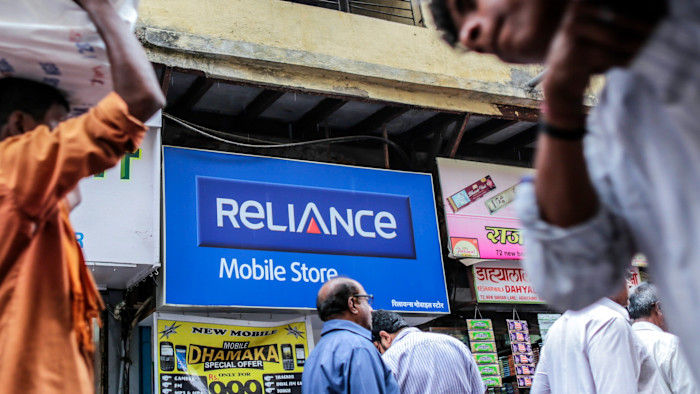
India’s telecom regulator has proposed a 40 per cent cut in the reserve price of spectrum, the radio frequencies used by the telecoms sector to transmit voice and data.
In the early years, spectrum sales used to fetch significant revenue windfalls for the government and even result in bidding wars. This spurred the regulator to consistently raise prices. The last significant year was 2022, when the government managed to raise Rs1.5tn ($17.9bn), with Mukesh Ambani’s Reliance Jio emerging as the top bidder. But demand has weakened as the telecom industry in India consolidated into two major players (three if you count the beleaguered Vodafone Idea). By 2024 revenues had dropped sharply to Rs113bn, and the last few auctions have seen lacklustre interest from operators.
The government is also sitting on a large pile of unsold spectrum now that the initial frenzy to acquire as much as possible has subsided. In 2016, it sold 40 per cent of what it offered. In 2024, the government sold less than a quarter of what it had made available. The regulator is now recommending that all available spectrum across nine frequency bands be put up for auction at a heavy discount. The reserve price for the 900Hz band, the most efficient one for mobile broadband, has been cut by half even for big cities such as Delhi and Mumbai.
While these moves suggest the regulator is finally admitting that its past strategy failed (I am old enough to remember the “spectrum is the new oil” days), they still fall short of a comprehensive overhaul the system needs. A more effective model, for example, would allocate spectrum based on demand, rather than an annual auction. The government may also not have fully absorbed the lessons of the past. The telecommunication department is reportedly considering a 5 per cent levy on adjusted gross revenue for satellite communication spectrum, the new cash cow, despite regulators recommending 4 per cent. To deploy yet another animal idiom, this risks killing the goose that laid the golden eggs. Again.
Recommended stories
-
G7 ‘stands ready’ to release emergency oil reserves.
-
What does the Iran war mean for Dubai? Also, Muscat airport is limiting private jet flights as the wealthy leave the region.
-
China said it ended poverty. But has it, really?
-
A former EY executive has launched a private equity-backed tax firm to challenge the Big Four.
-
Have you spent more than 47 seconds reading this newsletter? Has the human attention span really reduced?
Join FT journalists for a live FT subscriber webinar on March 11, 1-2pm GMT to discuss the war in the Middle East, and dissect the political, military and diplomatic calculations behind the conflict. Sign up here.
Social media ban


Indian states are beginning to enact their own version of a social media ban for young people, rather than waiting for the central government in New Delhi to formulate a national policy.
The southern state of Karnataka, India’s technology hub, announced its decision to ban social media for those under the age of 16 on Friday. Soon after, the chief minister of the neighbouring state of Andhra Pradesh declared his intention to introduce similar restrictions for children under the age of 13. However, neither state has yet explained how such changes would actually be implemented. Therein lies the rub.
Enforcing a ban would require social media platforms to go beyond simple age checks, ie asking users to confirm that they are above the qualifying age. A more robust mechanism would probably require users to upload identity documents or undergo biometric verification, both of which could violate existing privacy norms. Then there are the issues of interstate mobility. Apps do not require frequent logins, meaning accounts created outside a particular state could still be accessed within it — unless governments mandate that technology platforms build geolocation barriers to restrict it.
At the federal level, the government has said it is in discussions with social media companies but has yet to formulate a regulatory framework. That may need to happen sooner rather than later, with pressure mounting both domestically and internationally. Party officials in Andhra Pradesh have called on the IT minister to create a framework that would limit not just the age of users but also the amount of time they spend on platforms. During his visit last month, French President Emmanuel Macron urged Prime Minister Narendra Modi to join the group of countries banning social media for under-15s.
India should consider lessons from other countries, which have shown how difficult enforcing such restrictions can be. Young people, who are often more technologically adept than regulators, will almost certainly find ways to circumvent such restrictions. Critics also argue that such regulations in effect shift the responsibility for controlling children’s social media use from parents to corporations. But the negative impact of rampant social media use on children and the societies they live in cannot be overstated. Technology companies have been cavalier about child safety concerns and building addictive algorithms that keep users hooked on to their platforms. It is high time they begin to take responsibility. My view is that it is better to start with an imperfect solution than do nothing at all.
Do you think a social media ban for children is a good idea? Hit reply or email me at [email protected]
Go figure
Some economies will pay a disproportionately higher price for the war in the Middle East, as oil prices surge. India is one of the worst affected as households spend a much larger share of their income on energy bills. Which country will be one of the least affected? The US, of course.
Quick question
AI is fuelling a surge in recorded work meetings. We need to think about that more carefully, writes my colleague Pilita Clark. Do you like your meetings recorded? Tell us here.
Buzzer round
On Friday, we asked: Which 103-year-old company, that was recently the subject of a frenzied bidding war, first brought synchronised music and dialogue to cinema?
Answer is of course, Warner Bros, now owned by Paramount.
Vivek Kumar was first with the right answer, followed by Aniruddha Dutta, Milan D Golla, Mahithi Pillay and Himanshu Sharma. Congratulations!
Nice to see some new names. Should we pivot to being a purely business quiz? Send me your thoughts. Hit reply or email me at [email protected]
Thank you for reading. India Business Briefing is edited by Tee Zhuo. Please send feedback, suggestions (and gossip) to [email protected].