



Another day, another security scare. This time, Etherscan is warning users after detecting unauthorized access attempts against its customer support system that might have been hacked. But the timing could hardly be worse for an industry already dealing with a growing list of cyberattacks.
The warning comes just days after hackers exploited a vulnerability in Optimizely, injecting malicious code into websites operated by 178 organizations. The affected names included HSBC, BBC, Ledger, IKEA, Salesforce, Zoom, and CNN.
Meanwhile, crypto platforms have faced separate attacks involving compromised API keys, protocol vulnerabilities, and stolen customer information. Traditional banking has not escaped either, with a French bank recently losing approximately €100 million to hackers.
So what kind of security era are we entering? The problem is no longer confined to crypto exchanges or experimental DeFi protocols. Banks, technology companies, payment providers and blockchain businesses are increasingly exposed to the same interconnected digital infrastructure.
Discover: The Best Token Presales
Etherscan, Optimizely and 178 Websites Hacked: Nobody Seems Safe
Etherscan disclosed just a few minutes ago that attackers had attempted to gain unauthorized access to its Freshworks customer support and ticketing system. The company is investigating and has introduced precautionary measures. It has not confirmed that customer records were successfully accessed, but warned users about suspicious support communications, unexpected links, and requests for sensitive information.
The concern is particularly relevant because support impersonation remains an effective way to steal crypto and your money. An attacker posing as an Etherscan representative could exploit a user’s existing support request to make a phishing message appear legitimate.
But Etherscan is hardly the only name facing security questions this week. Just two days ago, hackers exploited a vulnerability in Optimizely’s Web Experimentation signup process. They injected malicious JavaScript into customer projects, allowing the code to run on websites using the affected software.
Security researchers identified 178 organizations whose websites carried the malicious code. The list included HSBC, BBC, Ledger, Zoom, Salesforce, CNN and Equifax. The injected script attempted to replace crypto wallet addresses with attacker-controlled alternatives. It also targeted payment-card information, cookies and screenshots, while attempting to deliver exploit code against older iPhones.
Optimizely confirmed the vulnerability and said it had removed the injected code and fixed the flaw. Its November 17 incident report said the unauthorized party exploited the signup process rather than stealing customer administrator passwords.
The financial damage remains unclear. It is reported that investigators could not establish how many visitors were affected or whether the attempted thefts succeeded.
The uncomfortable takeaway is that attackers did not need to breach 178 separate companies. They exploited one software provider whose code was embedded across hundreds of websites.
Crypto Exchanges and Banks Are Both Taking Hits
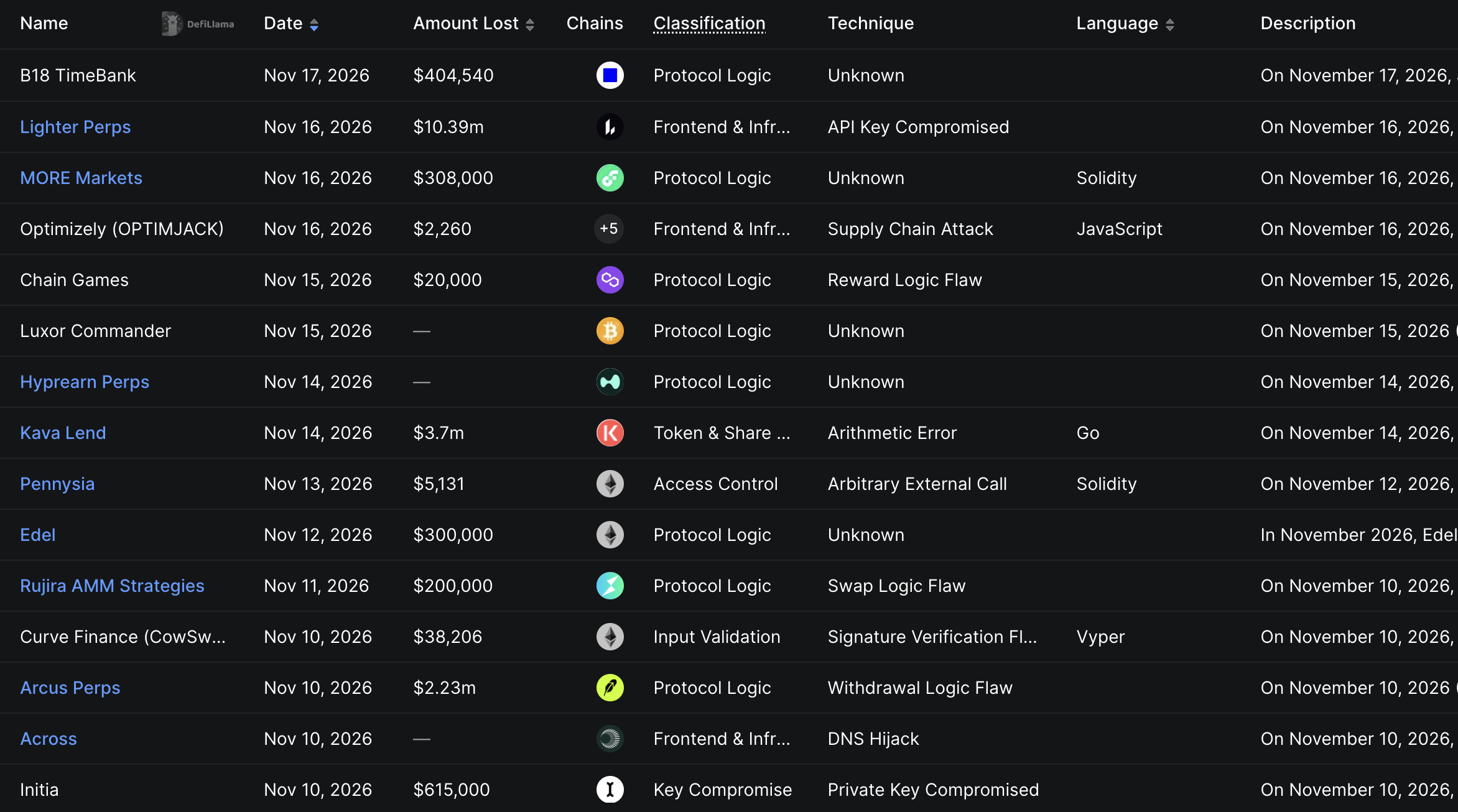
Crypto’s security problems extend beyond Etherscan and the Optimizely incident. DeFiLlama’s hack tracker recorded several attacks during the week, including a $10.39 million incident involving Lighter Perps on November 16. The attacker exploited a compromised trader API key, enabling unauthorized withdrawals.
Lighter said its protocol and smart contracts were not compromised. It temporarily suspended withdrawals and activated Guardian mode to prevent further unauthorized activity.
Another incident hit MORE Markets, where an attacker exploited a lending mechanism to drain approximately $308,000 in WFLOW. B18 TimeBank also suffered an exploit on November 17, losing $404,540 in USDC through its reward voucher redemption mechanism.
These incidents show different weaknesses across crypto infrastructure. Not every loss comes from a broken smart contract. Compromised credentials, vulnerable applications and flawed authorization mechanisms can be equally damaging.
Traditional finance faces its own problems. French lender Crédit Mutuel Arkéa disclosed a cyber heist earlier in November, with hackers stealing approximately €100 million through fraudulent transactions originating from the bank’s own accounts. The bank said customer assets were not affected, although some transactions were temporarily suspended.
Deutsche Bank also made headlines on November 17 after confidential internal documents surfaced through an international journalistic investigation. It was a document leak, not a confirmed breach of its current banking systems.
Deutsche Bank said security testing found no indication that its current IT environment, account information, login credentials, or payment data had been compromised. Yet, it has greater effects to geopolitics.
Banking institutions are not immune to major security incidents simply because they operate under traditional financial regulations.
Is Crypto Actually Less Safe Than Traditional Banking?
Crypto has suffered enormous losses. The October Binance incident alone involved $6.3 billion in stolen digital assets, making it one of the largest cryptocurrency heists on record. Yet, traditional finance also faces attacks involving payment infrastructure, third-party service providers, and internal transaction systems.
The Optimizely incident is particularly revealing. Both HSBC and Ledger appeared among the affected organizations. The vulnerability did not care whether visitors were interacting with a traditional financial institution or a crypto company.


Neither system offers complete protection. The real question is whether companies can secure the increasingly complex infrastructure connecting their services. A single compromised vendor can expose hundreds of organizations, while one stolen credential can bypass otherwise sophisticated security systems.
Crypto users have every reason to demand stronger protections. But traditional banking customers should not mistake regulation and familiar branding for immunity.
With Etherscan possibly being hacked, the data provider is now joining the growing list of companies investigating security incidents.
Discover: The Crypto Presales This Q4 2026
The post Etherscan Hacked? Crypto Users Have Had Enough as Support Security Scare Sparks Alarm appeared first on Cryptonews.