

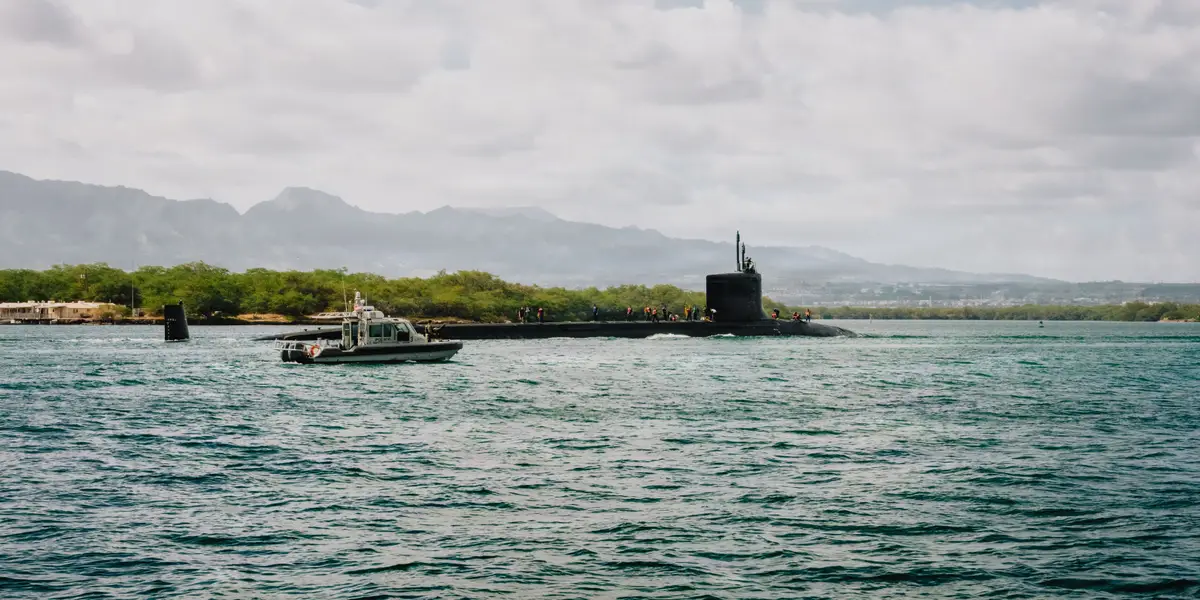
The US Navy and Anduril Industries are teaming up to build a new shipyard to produce critical parts for Virginia-class submarines.
Both the defense company, co-founded by Palmer Luckey, and the Navy will invest billions of dollars to construct the facility in Maryland, with plans to launch initial operations in 2030. The shipyard is the latest step to address gaps in the Navy’s submarine industrial base and supply chain, which have contributed to delays in the delivery of Virginia-class submarines and other vessels.
On Tuesday, Anduril and the White House announced the new facility, named Arsenal-2, in Baltimore County, Maryland. It comes with a $6.6 billion investment, $3.7 billion of which is private capital. The remaining $2.9 billion will come from the Navy. Anduril expects the shipyard will create over 3,000 direct jobs and support more than 11,000 jobs.
“The facility will manufacture critical components for the Virginia-class submarine, adding significant new capacity to America’s submarine industrial base in support of the Navy’s effort to increase attack submarine production,” Anduril said in a statement.
The Virginia-class submarine is built by General Dynamics Electric Boat and Huntington Ingalls Industries’ Newport News Shipbuilding. Anduril’s Arsenal 2 facility will build “complex components and large scale assemblies” for the vessels, according to the company.

Photo courtesy of Anduril
When the facility opens, it’ll start by producing smaller parts like torpedo tubes before expanding into more complex designs like full sections of the vessel. Anduril said that adding another source for this work will help boost submarine construction.
“We need to grow the maritime industrial base, the submarine industrial base, so that we can produce more submarines. So the goal here for Anduril is to contribute to that. This is not about taking food off the plate of anybody,” Chris Brose, Anduril’s president and chief strategy officer, told reporters on Tuesday, according to a transcript. “This is about putting more food on the table and being able to meet the requirements that our country has to produce more submarines.”
The Navy has been navigating issues with the production of Virginia-class submarines for years now, with the program and other shipbuilding projects facing delays and cost overruns. US officials and experts have raised concerns over an atrophied industrial base and a shortage of skilled workers to build vessels.
In July, a report from the US Government Accountability Office, a congressional watchdog, noted that late material deliveries and a limited skilled workforce have driven the trend of lower deliveries of Virginia-class submarines.
Want more Business Insider in your news feed?
Add BI in Google so our reporting is easier to find when you’re searching for what matters.
The Navy and industry’s priorities for fixing these issues have included investing in rebuilding the US shipbuilding industry, paying workers more, upgrading shipyards, and solidifying supply chains. Earlier this year, Adm. Daryl Caudle, chief of naval operations, told the House Appropriations Committee that he anticipates industry will start delivering two Virginia-class submarines a year by 2032.