





H-1B visa filings at major tech companies fell sharply late last year, according to federal data, as layoffs mount and new visa restrictions take hold.
The decline comes as changes to the work visa program since September have made the process costlier and placed applicants under tighter scrutiny, and as tech goliaths like Amazon, Google, Meta, and Microsoft have undergone successive rounds of job cuts.
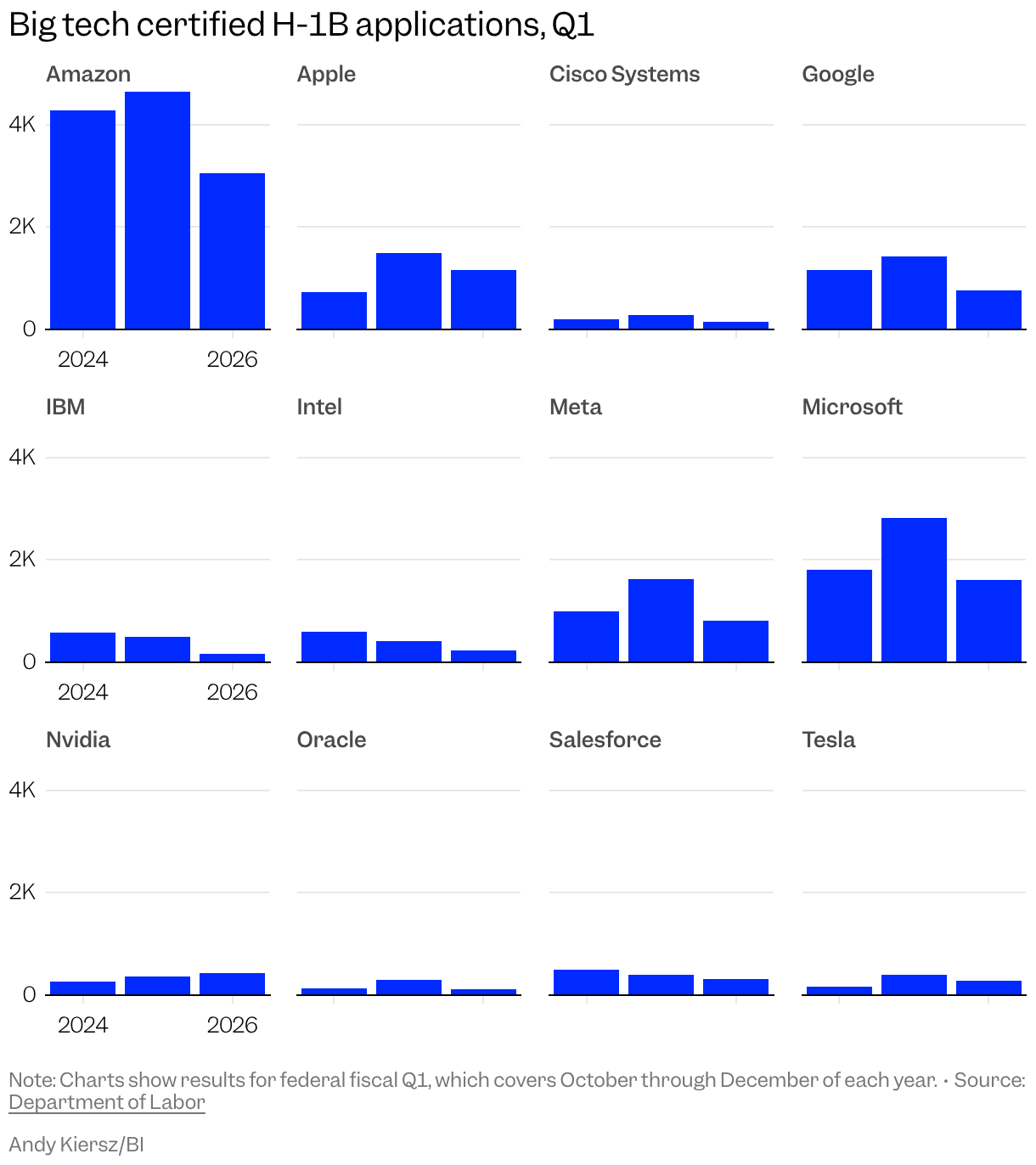
Department of Labor data shows that some employers filed markedly fewer H-1B visa applications in the first quarter of fiscal 2026 than they did a year earlier. On the federal calendar, Q1 runs from October through December.
Amazon had the highest number of certified applications and saw a steep decline, dropping from 4,647 in Q1 2025 to 3,057 in Q1 2026. Apple, Google, Meta, and Microsoft — also among the biggest visa sponsors — saw their certified applications drop from a year earlier. At Meta and Google, they dropped by roughly half.
Business Insider also found declines in visa filings at other tech companies compared with the previous year, including IBM, Salesforce, and Tesla. We broke out those numbers in the chart below.

Google, Meta, Microsoft, and Intel declined to comment. Amazon, Apple, Cisco, IBM, Nvidia, Oracle, Salesforce, and Tesla didn’t respond to email requests for comment.
As Big Tech spends at an unprecedented rate to build and deploy AI, it’s shrinking its workforce. Companies are trimming head count and focusing on smaller, more specialized teams.
One company bucked the trend. Nvidia’s H-1B filings increased year-over-year, from 369 in Q1 2025 to 434 in Q1 2026. CEO Jensen Huang, who was born in Taiwan, has said Nvidia will keep hiring immigrants after the Trump administration imposed a $100,000 fee on new H-1B applications.
The figures only reflect Labor Department certifications, not final visa approvals or lottery selections. Multiple filings can correspond to a single worker. And while Q1 numbers offer a preliminary snapshot, annual tallies could also vary based on hiring cycles or other factors.
Why H-1B filings are dropping across Big Tech
There are at least two plausible explanations for the broad decline: Washington has made the program harder and costlier to use, and companies may no longer need as many workers.
The Trump administration set new rules in motion that tilt the lottery in favor of the highest-paid applicants and place a $100,000 fee on new petitions for workers living abroad. The government said the moves aimed to curb fraud and encourage employers to hire Americans.
In practice, lawyers say the changes should give large tech companies an edge by allowing them to pay premium salaries and hire existing visa holders or new graduates who are already stateside. Still, companies face higher scrutiny of all visa applications in this new climate, said Jason Finkelman, a Texas lawyer who focuses on employment and family immigration.
Q1 H-1B filings are typically lower because, during that period, he said, employers mostly file petitions for visa holders seeking to switch jobs or extend their stays. Filings jump in Q2 when the H-1B lottery occurs, and companies try their luck securing one of the 85,000 visas awarded.
A slower pace of hiring across tech could weigh on demand, as companies that spent years staffing up have shifted into a leaner phase marked by routine layoffs and hiring freezes.
“I think companies are being more selective in who they sponsor,” Finkelman said.
Amazon, Meta, Google, and Microsoft have all cut jobs in recent years.
Amazon slashed 16,000 corporate roles in January, following 14,000 cuts in October, as part of an ongoing efficiency shift, while Meta laid off hundreds of employees in March.
Last year, Microsoft underwent multiple rounds of layoffs, cutting 15,000 employees between May and July, while Google made smaller rounds of cuts in recent years.
Have a tip? Contact the reporters via email at gweiss@businessinsider.com and mrussell@businessinsider.com. Use a personal email address and a non-work device; here’s our guide to sharing information securely.