



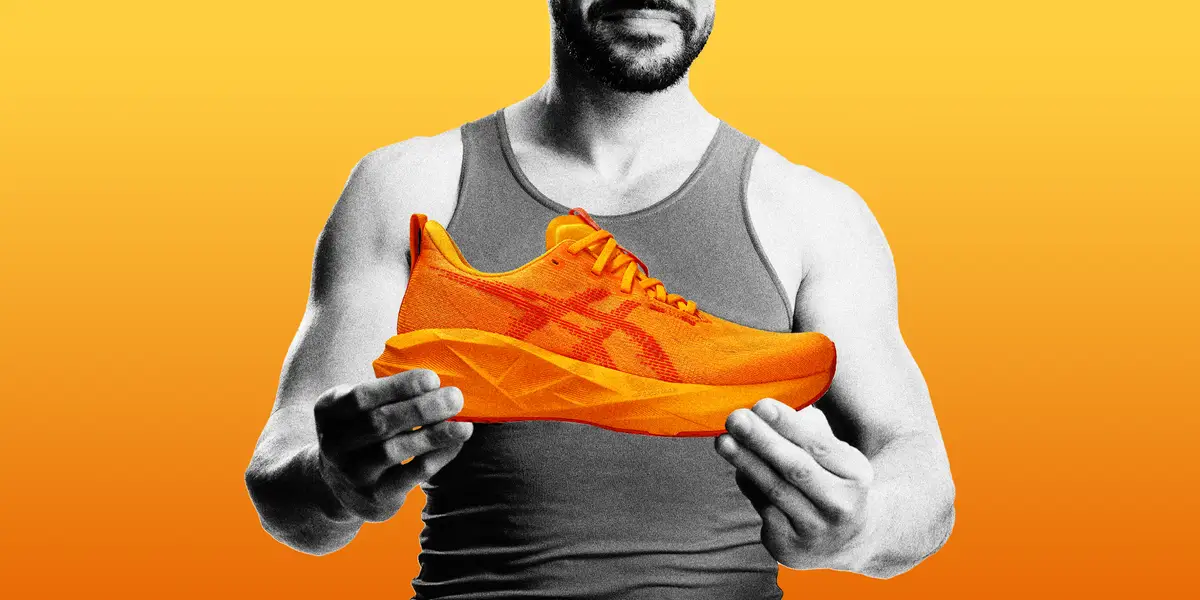
While Nike and Hoka have been some of the buzziest running brands in recent years, a new shoe reigned supreme this year: the Asics Novablast.
A recent Strava report, which tracked which optional “gear” users selected on their uploaded runs, found that Asics’ $150 sneakers beat out Nike Pegasus and Hoka Clifton models, both of which can retail for slightly more (depending on the exact model).
“After run number one, my feet were feeling happy,” Keltie O’Connor, a runner and YouTuber, said in her 2024 TikTok review. She raved about how soft they were, without feeling like a memory foam mattress.
Michael Mazzara, the CEO of Half Marathon Guide and Rogue Expeditions, a running tour company, said the data made sense; both complete beginners and more experienced runners gravitate toward the shoes’ extreme cushioning.
They also make it easier to run faster — so much so that some formal races, like the Ironman, ban them for giving runners too much of an advantage.
“It’s become a lot more common that people want really, really springy shoes to feel like they’re going faster or to reduce the impact on their joints,” Mazzara said. “They created a really accessible shoe to feel like you felt pretty invincible, even if you just got out there.”
While wearing bouncier shoes can feel great, even exhilarating, there are some long-term drawbacks. When it comes to long-distance running and extensive training, extreme comfort can be too much of a good thing, masking injuries around the corner.
A more forgiving shoe
Because of its high stack height, Mazzara said the shoe can feel very forgiving, especially for beginners. “You feel like you just have to think a little bit less about your cadence and your stride because the shoe’s doing a lot of the work for you.”
It’s also very fun to run in, he said, even though it’s not technically a race shoe. Novablasts are made for daily training and long runs, unlike carbon-plated race shoes such as Nike Alphaflys, which are designed to increase speed and shouldn’t be worn as frequently.
Even so, Novablasts feel like race shoes. “They’re really springy, and you feel like you’re running very fast,” he said. “It’s something that people haven’t really felt before about a daily trainer.”
Running shoes are getting bouncier
In general, running brands like Asics, Nike, Hoka, and Brooks have been investing in foamier, bouncier shoes.
Aylin Woodward of The Wall Street Journal reported that “super shoes” — sneakers with both carbon-plating and high stack heights — have blown up in the past decade after professional marathoners shaved minutes off their finish times with them.
Ultra-bouncy shoes like Novablasts can also feel like a solution to both new and burned-out runners alike, Mazzara said. If you’re a total beginner, new aches and pains can feel concerning — even discouraging. “Then, all of a sudden, you try on a shoe that feels like a Moon Boot to run in.” You’re immediately faster than ever, with no immediate downsides.
For long-term runners who’ve been running in the same, less-cushioned trainers for years, the sudden switch can be a much-needed mental refresh. Feeling automatically faster “reinvigorates the excitement of daily training and racing,” he said.
Too much pep in your step?
There are some downsides to the shoe-cushioning arms race.
Dr. Courtney Conley, chiropractic physician specializing in foot and gait mechanics, said in a Diary of a CEO interview that tall, bouncy shoes like Nike Alphaflys can weaken muscles in the foot.
“If you train in them all the time, and you never let your foot get stronger, it’s just a matter of time,” she said, before you start feeling hamstring issues.
In his own experience wearing Novablasts, Mazzara said he felt like he didn’t have to think about his running form as much. That eventually caught up with him: “I got injured disproportionately more than using a more conventional, less springy shoe,” he said.
Asics did not respond to Business Insider’s request to comment.
Mazzara and runners he knows, especially longtime ones in their 40s to 60s, prefer shoes like the Nike Pegasus or Hoka Clifton because they offer ample support without as much bounciness, Mazzara said. The shoes feel stabler in the long run, even if they’re a little less exciting.
For running beginners who don’t know where to start, Mazzara recommended going to a running store to find the perfect fit for your foot shape and stride.
The best principle to follow is also the simplest, he said: “When it comes to running, find something that you love to run in until you love running.”