



As backlash intensifies against data centers nationwide, Microsoft says it has a plan.
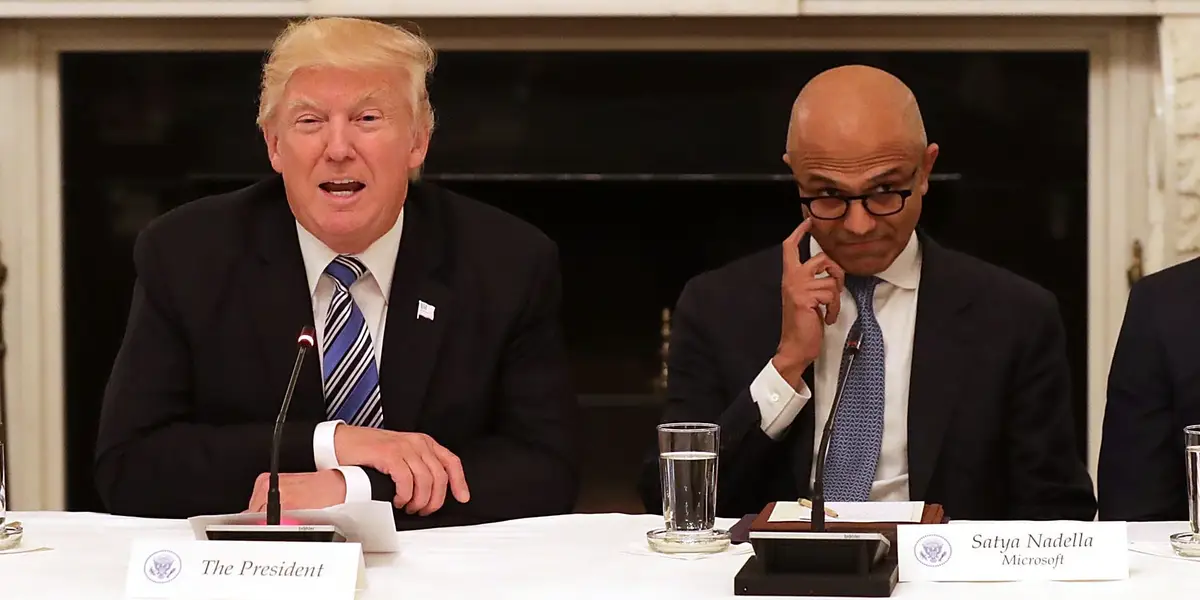
“We’ll pay our way to ensure our datacenters don’t increase your electricity prices,” Brad Smith, Microsoft’s president, wrote in a blog post one day after President Trump said in a Truth Social post that he does not want Americans to “pick up the tab” for data center electricity costs. Microsoft, he said, was “first up.”
The announcement comes amid an unprecedented data center construction boom across the US. Developers filed permits for 1,240 data centers in the US as of 2024 — roughly quadruple the level in 2010, according to a 2025 Business Insider investigation.
With it has come concerns over rising consumer electricity costs and grassroots opposition to construction buildouts.
Microsoft filed permits for 44 data centers as of the end of 2024, Business Insider found, the fifth highest count in our analysis. Half of Microsoft’s permitted facilities are among the very largest in the analysis — the 322 massive data centers that we estimated consume 40 megawatts of electricity or more each.

Every time Hannah publishes a story, you’ll get an alert straight to your inbox!
Stay connected to Hannah and get more of their work as it publishes.
Take a look at where Microsoft’s data centers are found:

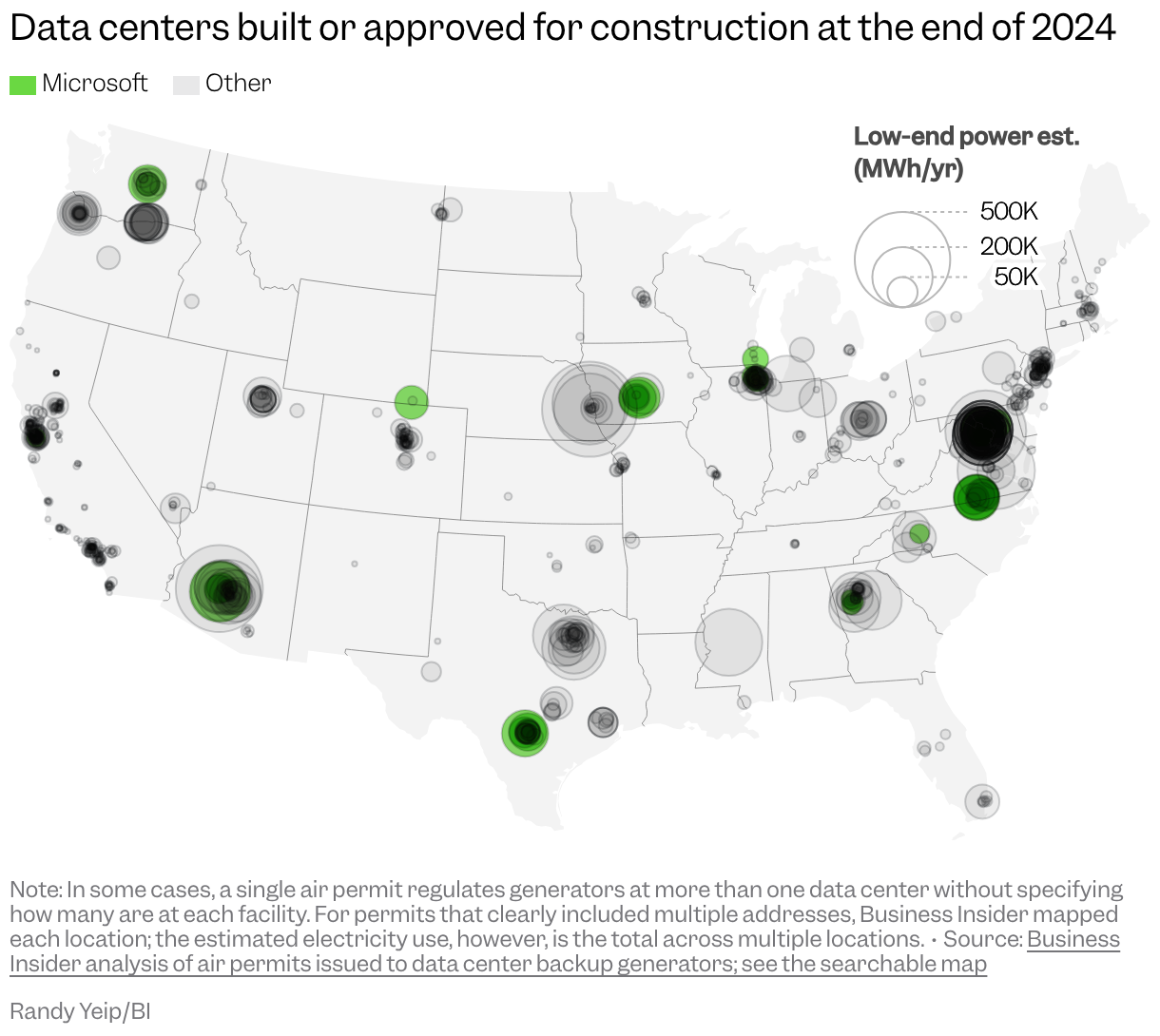
Twenty-four of Microsoft’s data centers are located in Virginia as of 2024, followed by Texas with eight, and Illinois and Iowa each with four, according to Business Insider’s count.
Microsoft’s data centers are extremely electricity-intensive, Business Insider’s analysis suggests. Its most power-intensive facility as of 2024 is in Maricopa County, Arizona, according to the analysis.
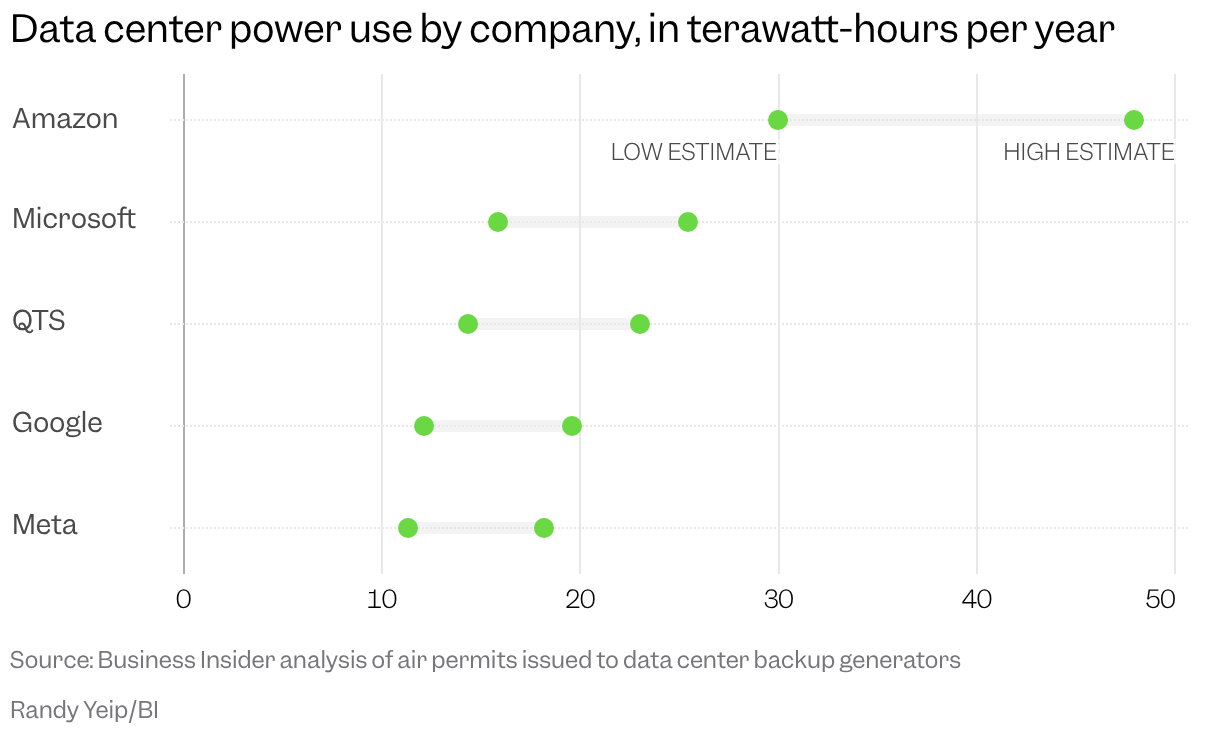
Amazon’s 177 data centers are on pace to command the highest electricity demand in Business Insider’s analysis at between 30 and 48 terawatt-hours a year. Microsoft — with only around a quarter of Amazon’s facilities — claims the next-highest spot.

When reached in 2025, a Microsoft spokesperson acknowledged that its data centers “do not always run at 100% of their installed capacity.” Amazon disputed Business Insider’s methodology, and QTS declined to comment. Google and Meta did not respond to Business Insider’s requests for comment.
If all of Microsoft’s 44 permitted facilities come online, their electricity demand could reach between 16 and 25 terawatt-hours a year, according to Business Insider’s estimate. The midpoint of that range is about as much electricity as 1.8 million US homes based on average annual use.
If every permitted facility in Business Insider’s dataset comes online, their electricity demand could reach between 149.6 terawatt-hours and 239.3 terawatt-hours annually, Business Insider’s investigation found.
The low end of Business Insider’s estimate is roughly equivalent to the state of Ohio’s electricity needs in 2023, and on the high end, is nearly as much power as the entire state of Florida used that same year. A 2024 federal report projects demand could reach levels at the higher end of Business Insider’s estimates by 2026.
The location of data centers has sparked a surge in community outcry, with neighboring residents concerned about their impact on rising electricity prices. Data centers’ extreme electricity demand frequently requires utilities to build out new grid infrastructure. Utilities often socialize the investment costs, shifting billions of dollars of costs to all ratepayers, including residential customers, a Business Insider investigation found.
“Utilities can fund discounts to Big Tech by socializing their costs through electricity prices charged to the public,” a 2025 Harvard Law study of regulatory proceedings about utility rates for data centers found.
To ensure Microsoft’s data centers do not increase residential electricity bills, Smith, Microsoft’s president, wrote that the tech giant plans to ask utilities and regulators to set the company’s rates high enough to cover its data centers’ electricity costs.
Smith pointed to Microsoft’s recent support of new electricity rates that charge “very large customers,” such as data centers, for the costs incurred to provide them with electricity. Smith also said that when grid infrastructure improvements were necessary to serve its data centers, the company would pay for those improvements.
“We believe the long-term success of AI infrastructure requires that tech companies pay their own way for the electricity costs they create,” Smith wrote.
The promise comes amid a broader affordability push from President Trump, including plans to lower mortgage rates and cap credit card interest rates.
Have a tip? Contact Hannah Beckler via email at hbeckler@businessinsider.com or Signal at hbeckler.72. Use a personal email address and a non-work device; here‘s our guide to sharing information securely.