


When I moved from Brooklyn to Puerto Rico two years ago, with my husband and then-3-year-old son, we were firmly “one and done.”
Life with a toddler in New York City was too hard; we spent weekends at chain-link fence-enclosed playgrounds that were either shadeless and sweltering in the summer or freezing and depressing in the winter, struggled to find affordable childcare, and didn’t have the village it takes to raise a kid.
Moving to Puerto Rico changed our tune. The near-constant sunshine, excellent and affordable bilingual schools, easy access to beaches, and welcoming people who instantly became our community had us considering a second.
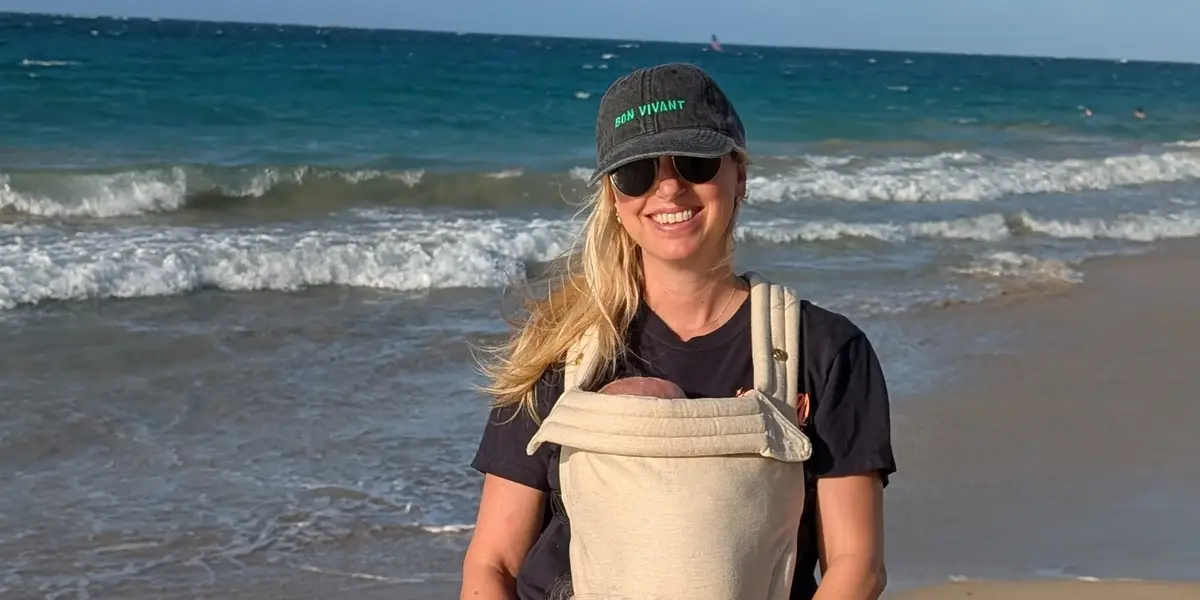
Fast forward to April 2026, and we welcomed a baby girl in San Juan.
My first child, now 5, was born in Southampton, New York, in August 2021. From the moment I started looking for an OB-GYN in San Juan, my experience being pregnant and giving birth in New York and Puerto Rico was strikingly different.
Here are some of the biggest contrasts I noticed.
In Puerto Rico, I had a hard time finding an OB-GYN open to new patients, and my appointments took forever

Sophie-Claire Hoeller
I kept hearing from friends and fellow parents from my son’s school that they were taking entire mornings or afternoons off work for standard doctor appointments — multi-hour waits were that common.
I didn’t believe it until I regularly found myself waiting three hours to see my obstetrician. In Southampton, I considered a 30-minute wait a bad day.
A potential reason is Puerto Rico’s severe doctor shortage. Lower reimbursement rates and wages than on the mainland have contributed to a long-running physician exodus, with many doctors leaving for better pay and working conditions.
Want more Business Insider in your news feed?
Add BI in Google so our reporting is easier to find when you’re searching for what matters.
Those who remain can end up juggling a lot of patients and overscheduling themselves to keep up, leading to the long wait times I (and many others) experience.
On top of that, it took me quite some time and a lot of searching to find an OB-GYN who was taking new patients in the first place.
Things I took for granted in New York had to be purchased from the hospital pharmacy in Puerto Rico

Sophie-Claire Hoeller
In Southampton, I just showed up to give birth — I didn’t really have to think about pillows, epidurals, or diapers.
In San Juan, patients must purchase these items from the on-site pharmacy. Pillows were $8 a pop, so I brought my own from home. I also brought my own blankets instead of buying them.
I ended up buying a mandatory baby care kit (containing things like a T-shirt, swaddle blanket, and diapers) and a delivery kit (with a hairnet and scrubs for my husband) for $35 and $25, respectively.
I was offered a bedpan for another $15 but declined. Had I had a boy I wanted circumcised, I would’ve had to purchase a circumcision tray for $100.
I had to buy my epidural in advance — and getting it was a whole process
In Southampton, I didn’t fill out any forms before arriving at the hospital, asked for the epidural once I got there, and received it with no fuss. As far as I remember, it was fully covered by our insurance.
In San Juan, I went through pre-admission, in which I filled out tons of paperwork a week before my due date.
Part of pre-admission included purchasing an epidural. Many fellow moms who had given birth at the same hospital warned me that it sometimes runs out of epidurals, and to make sure they know I want one (and boy, did I want one!) well in advance.
Thus, I purchased an epidural from the billing department for $1,000. I then had to make an appointment with a member of the hospital’s anesthesia provider group, present them with the paid invoice, and answer dozens of questions related to my medical history.
Once in labor, the anesthesiologist came to my bedside and gave me a presentation — including diagrams — explaining in great detail how the epidural works and asking for consent before administering it.
My husband was well-fed and got a full bed to sleep in for a small extra fee
Sophie-Claire Hoeller
In Southampton, I received a private room with an ensuite bathroom without having asked for it — lucky for me, the maternity ward at the hospital there doesn’t have any other kind.
My husband slept in a chair and complains about how uncomfortable it was to this day (I don’t remember there being enough room for another bed).
And while I received three full meals a day, my husband wasn’t provided any food — he was begrudingly given a cup of coffee when asked. That said, on our last night at the hospital, we were provided a celebratory steak dinner for two, which was sweet.
In San Juan, I was given a list of different hospital rooms to choose from during pre-admission, ranging from shared ones with limited visitor allowances to private suites with mini fridges and extra space.
Each room cost a different amount — the nicer ones weren’t covered by insurance and had to be prepaid — and came with different amenities.
Sophie-Claire Hoeller
The one we chose, for example, came with full meals for the patient’s partner, and so my husband received a tray of food every time I did.
It was also spacious enough to allow him to sleep on a full bed, which cost an additional $10 per night and could be folded and tucked away when not in use.
Ultimately, I had a positive experience giving birth in Puerto Rico
It was certainly interesting to give birth in separate parts of the United States, and my experience is just my own. Every hospital and every birth experience is different, even if two people are having a baby in the same city.
Despite long waits and some surprising quirks, my pregnancy care and delivery in Puerto Rico went smoothly, and I have no complaints.