


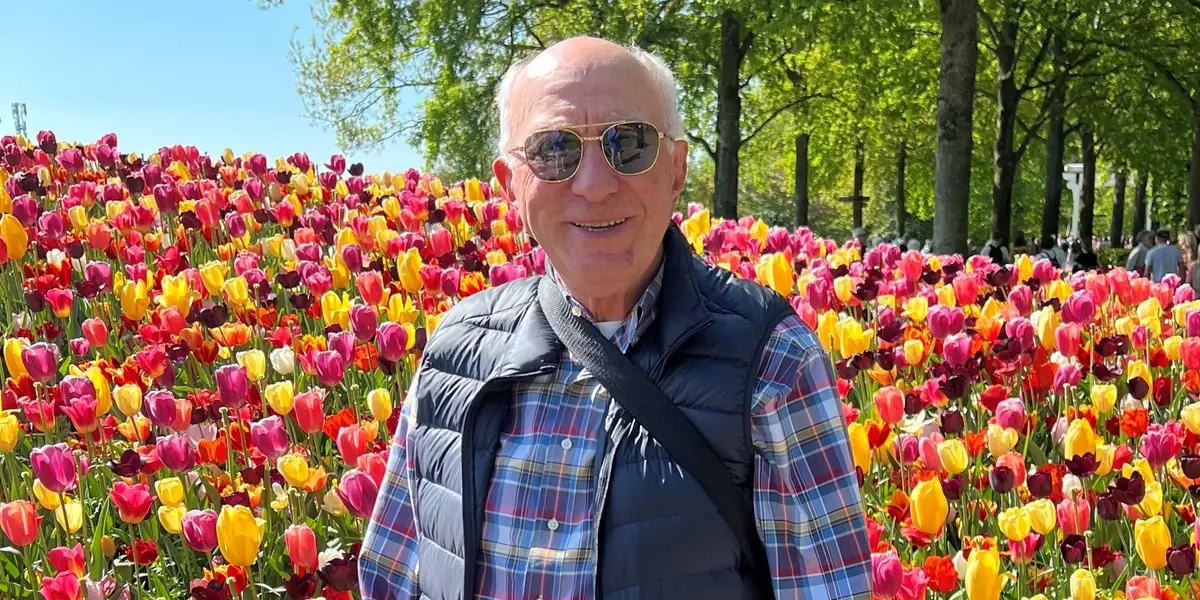
This as-told-to essay is based on a conversation with Charlie Nahabedian, the 85-year-old CEO of VK Digital Health, who lives in Bethesda, Maryland. It has been edited for length and clarity.
I’m the CEO and cofounder of VK Digital Health.
In 2006, I founded my first company, VideoKall, serving as CEO alongside two cofounders. The company enabled migrant workers to video visit relatives back home and transfer funds instantly during the call.
I led the pivot to healthcare after learning that, with the right configuration, we could bring outpatient services to the world. In 2009, we conducted market research, technical feasibility studies, and financial analyses. Our plan was to introduce uncrewed clinics and telecommunications technologies in the healthcare space.
In 2011, I became a full-time CEO
By 2015, still bootstrapping, we built and publicly demonstrated a basic system via satellite. By 2019, we demonstrated a complete patient examination room cabin with self-cleaning and self-sanitizing.
We’re currently raising capital to go to market. Our plan is to reach 2,500 locations, starting in underserved and unserved communities with mobile units.
In 2020, the pandemic inspired us to add products, including a smart clinic chair, and we rebranded as VK Digital Health. By 2024, we had raised over $2 million, demonstrated a minimal viable product, and accumulated four issued patents.
I continue as CEO at 85, preparing for a seed round and market introduction. Low-cost, conveniently accessible, quality healthcare is one of the best hopes we can have on earth.
I haven’t taken a salary in 15 years
The principal reason is that we haven’t raised enough capital to set up payroll. What keeps me motivated is the promise of bringing healthcare to patients, whether they’re at home, work, shopping, or traveling.
Making progress from an idea through design into implementation is success. As a startup, the concept has been in place for a decade, but we’ve overcome the skeptics, especially after proving that telehealth alone is not the answer and that our smart chair works.
A typical workday for me is interacting with the world
Courtesy of Charlie Nahabedian
I’m a widower living in a senior residential community with many amenities and activities. I lead an active social life here, have active roles at my church, and enjoy my two daughters’ families, with six grandchildren.
I work in an office in my condo six to seven days per week, except on vacation. My smartphone and laptop are my mobile office, so I connect with my team and others 24/7, up to 365 days a year, as needed.
My day typically starts at 7 a.m. and finishes at 10 p.m.
I have personal time squeezed in between. I watch the morning and evening news, read the newspaper, play a challenging game on my iPhone, and eat a good breakfast.
I have over 14,000 LinkedIn followers who loosely follow our progress. This has led to innovation awards and invitations to speak on panels or to speak as an individual. I’ve presented on our vision, market, economics, and status over a dozen times.
Family and friends know that I’m dedicated to my work and rarely interrupt me, but I’m always available to them. Health issues get my immediate attention, and I have nice doctors in and out of the VA watching me.
Seniors should keep active with exercises for the body, mind, and soul
When it’s time to work, work hard. When it’s time to play, play to enjoy. Care about others by engaging and enjoying family and friends. Be helpful and relevant.
I’m a highly motivated problem-solver, and I’m dedicated to serving where and when I can. Just as important, I have a sense of humor, laughing at others and myself.
I make time at church to socialize, sing in the choir, and work on committees. I enjoy dancing and can be found around the dance floor for many traditional ballroom, Armenian, and Greek dances.
In my condo community, I led the IT committee on WiFi upgrades throughout the complex and on installing fiber to every condo at no cost. I was also president of the condominium association.
I participate in holiday parties, dress up for Halloween, and act and sing in our community productions. I’ve organized several annual cruises with two to 12 friends.
I try to read a book a month and watch movies with friends. I’m a member of the walking club. I adhere to the philosophy in the book, “Live Long, Die Short.”
It is a miracle that I’m here today
Though not a cat lover (my wife, two daughters, and I have had at least seven over the years), I admired their “nine lives.” I’ve used up a few, and hopefully, I have a few more to go.
I survived appendicitis at 18 months old. I came back from Vietnam in one physical piece. Early detection and treatment for two different cancers have extended my life at least 10 years beyond what would have been expected 15 years ago.
I’m infinitely thankful and blessed to be here, and have great admiration for advances in medicine and medical technology. I’m excited to give back by extending those advances to the underserved and unserved in our country and beyond.
I have plans to retire after we’re successful in the market
At my typical retirement age, my wife and I were working and debating when she, at three years younger, would retire and if we would stay in New Jersey. Within two years, I was starting a venture while also teaching and managing the senior living project.
When we moved to Maryland to better care for my wife, I terminated all outside activities except the venture.
My wife and I had separate and combined retirement savings. Though sufficient, they weren’t enough for what we wanted to do. After her passing, and receiving Social Security and VA disability payments, I could terminate the venture and retire, but technology and market conditions suggested that this was the time for our revolutionary solution.
This is part of my motivation to continue working. I’m getting a younger generation leader ready to take the company forward.