



My mom often brings up a story from my childhood that shows how little financial literacy I had. When I was about 7 years old, I wanted to buy a toy, so I asked my mom to buy it for me, and she said she didn’t have any money on her. I then told her to use her credit card, but my mom replied that you needed money to pay for purchases made with it, so the answer was still no.
I was shocked. I didn’t understand how credit cards worked, so I assumed it was just magic. You swiped it, you got your product, and that was it.
Not wanting to repeat my parents’ mistakes, my husband and I decided to start teaching our kids about money (earning it, saving it, spending it) early. We gave them age-appropriate, simple chores, like setting the table before dinner, or emptying their backpacks after school, for which they’d get $0.25 each. With this strategy, it was up to them how much they’d earn every week. We were very proud of our creative approach and thought it would be a win-win.
A month later, my son had only earned a few dollars. I didn’t get it. Didn’t he want more money so he could buy the things that I didn’t want to buy for him? Then I realized, he just wasn’t motivated by money, and I decided I had to get creative.
We had to find what motivated each kid
At first, all three kids were very excited by our plan. The idea of getting a coin and putting it in their piggy bank was new, and I kept emphasizing that this money was for them to spend however they wanted.
My twins were more into the idea of saving, and have not spent any of their chore money since we started doing this a couple of years ago. My oldest was into getting paid at first, but I noticed that he slowly lost interest.
We tried using a visual list with emojis showing what they each had to do in the mornings and afternoons. He was excited about checking things off on a screen at first, but that also got old quickly for him, and it became more of a distraction than anything else.
I switched to paying with Pokémon cards
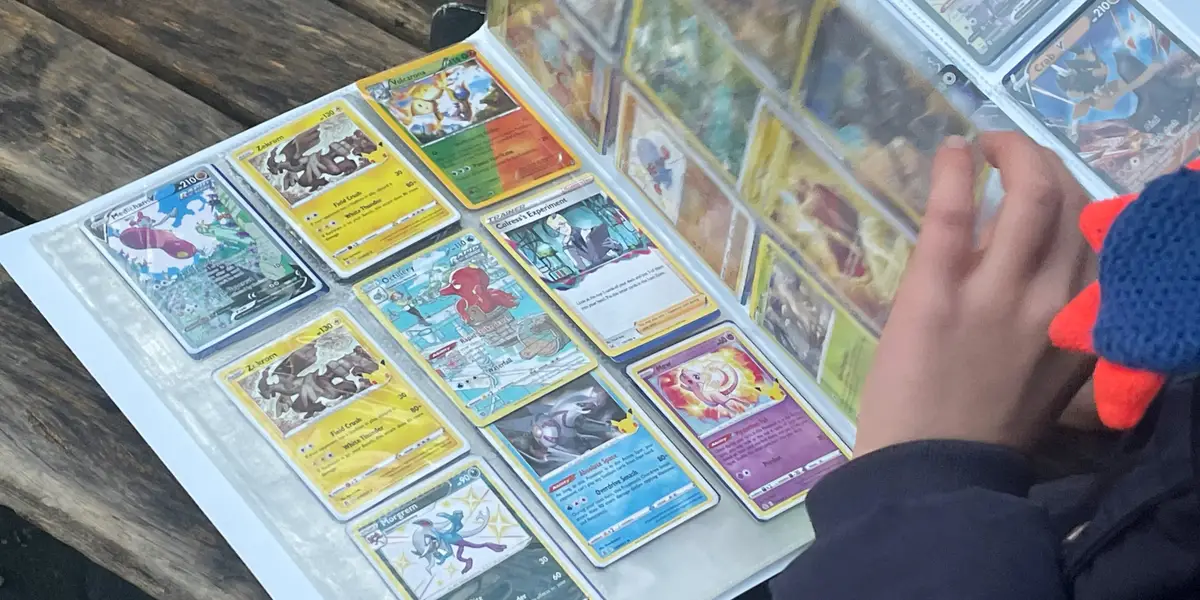
At school, my son discovered Pokémon cards from his friends, and quickly got into them. Knowing nothing about trading cards or Pokémon, I took him to a store to buy his first pack. He was excited to use the money he had earned and paid for a pack and a binder. I chipped in to buy him a second pack so he could have enough cards to start playing.
He took his binder everywhere and read and re-read every card multiple times. He explained everything each Pokémon could do, and asked if he could get more cards soon.
I saw an opportunity.
One night while preparing dinner, I asked if he wanted to help set the table. He barely looked up from his binder and said he was busy. So I asked if he’d want to do it for three Pokémon cards. I don’t think I’ve ever seen him jump up so quickly and finish a task in under a minute.
I buy secondhand cards for cheap
So that became our thing. I now buy used cards from Mercari from other parents whose kids have outgrown them. This saves me money, and I can buy bags with hundreds of cards.
I started giving out more cards for bigger chores, and he has yet to decline any chore that is paid off with Pokémon cards.
My theory is that money didn’t work for him because he rarely sees me or his dad use actual cash. I don’t even have a wallet, so maybe, to my 8-year-old, money isn’t valuable because he doesn’t see it used in his day-to-day. Pokémon cards, on the other hand, are very important in his grade, and he has learned how to differentiate a really good card from an OK card (I still haven’t gotten there), so I know he’s learning about value/worth.
I know this is just a phase, and that maybe very soon he’ll be interested in money (or having a debit card of his own). For now, I’ll keep offering him three cards to set the dinner table.