



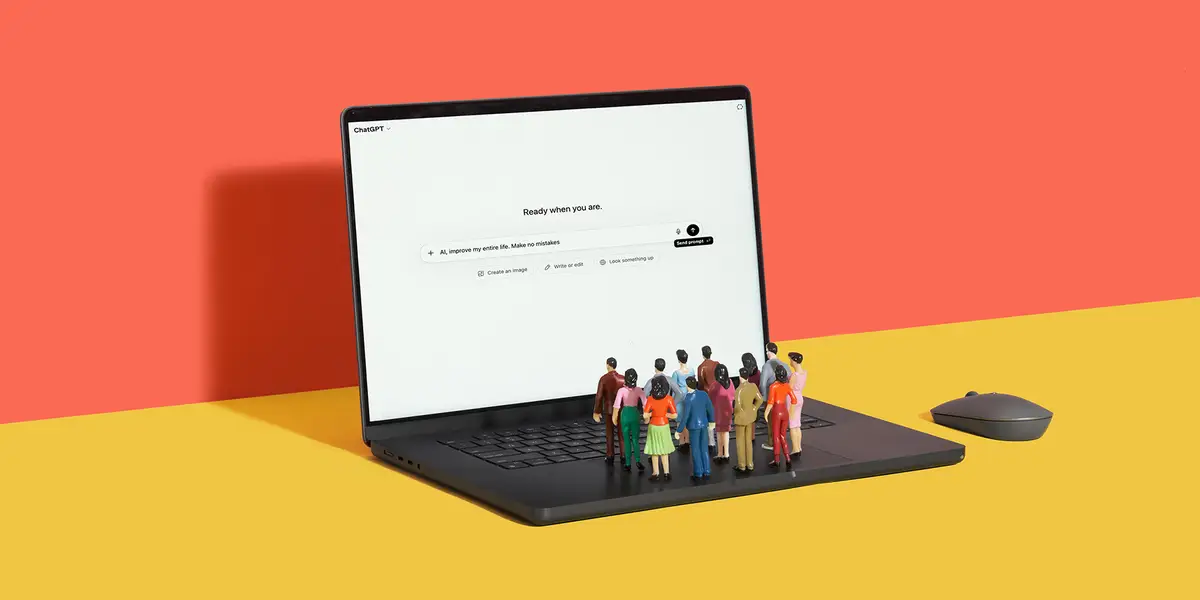
Every time I see someone opening ChatGPT on the subway or at the grocery store, I feel a tinge of dread. Surely, our basic questions can be answered with a bit of thinking, or a search that surfaces information that we can critically assess.
Most evidence suggests that I’m simply falling behind the times. About a third of Americans interact with AI several times a week. Plenty of people I respect use it in cool and interesting ways, and basic AI usage has become a fact of life.
When I was assigned to work on a project about the rise of vibe coding, where non-coders use AI programs to create apps, I had that same skepticism. What I discovered instead was a group of vibe coders of all ages and professions having a quaint, fun time — and a vision for how AI could meaningfully improve the lives of ordinary people. Rather than a source of brain rot or an all-conquering vision of a new economic world order, vibe coding seemed more reminiscent of coding a custom theme for your Tumblr — a type of useful tech for normies.
In college, Shayan Mirzazadeh failed computer science twice. A decade later, the 31-year-old account manager is vibe coding solutions for pain points at work and home, like an app to help his fiancée track her Pilates flows. Mirzazadeh’s co-worker and fellow vibe coding “side quester,” Jayne Ingram-Roberts, whipped up a fantasy-league-style app for the TV show “Big Brother.” Their biggest and latest project is called “Seatbee,” a website for crafting wedding seating plans. It’s something Ingram-Roberts struggled with planning her own wedding two years ago.
Users can input rules for who should (and shouldn’t) sit by each other. “It’s super important that all my work friends sit together, or it’s important that my sister and this drunk uncle are on opposite sides of the room,” Ingram-Roberts says. Once the rules are in, you click generate, and boom: out comes a seating plan. The duo says the website already has over 200 users.
Wedding seating plans may sound fairly specific, but they point to a larger vibe coding reality: These AI hobbyists aren’t creating tech that will blow up the world. They’re making apps for hyper-specific or singular purposes. Like many hobbies, most people are happily losing money. They’re really in it for the fun.
The vibe coding vibe shift
The vibe coding vibe shift started in November 2025, longtime coder and writer Paul Ford tells me. Before that point, AI could maybe produce a webpage, but the quality was hit-or-miss. It couldn’t necessarily debug itself along the way. AI coders still needed hand-holding. The tipping point came when models started being able to write code, run it, identify bugs, and then debug all on their own, seeing their own task through. That was turbocharged by the launch of coding-focused models from the big AI companies like Anthropic’s Claude Opus 4.5, Google’s Gemini 3, and OpenAI’s GPT-5.1.

Every time Juliana publishes a story, you’ll get an alert straight to your inbox!
Stay connected to Juliana and get more of their work as it publishes.
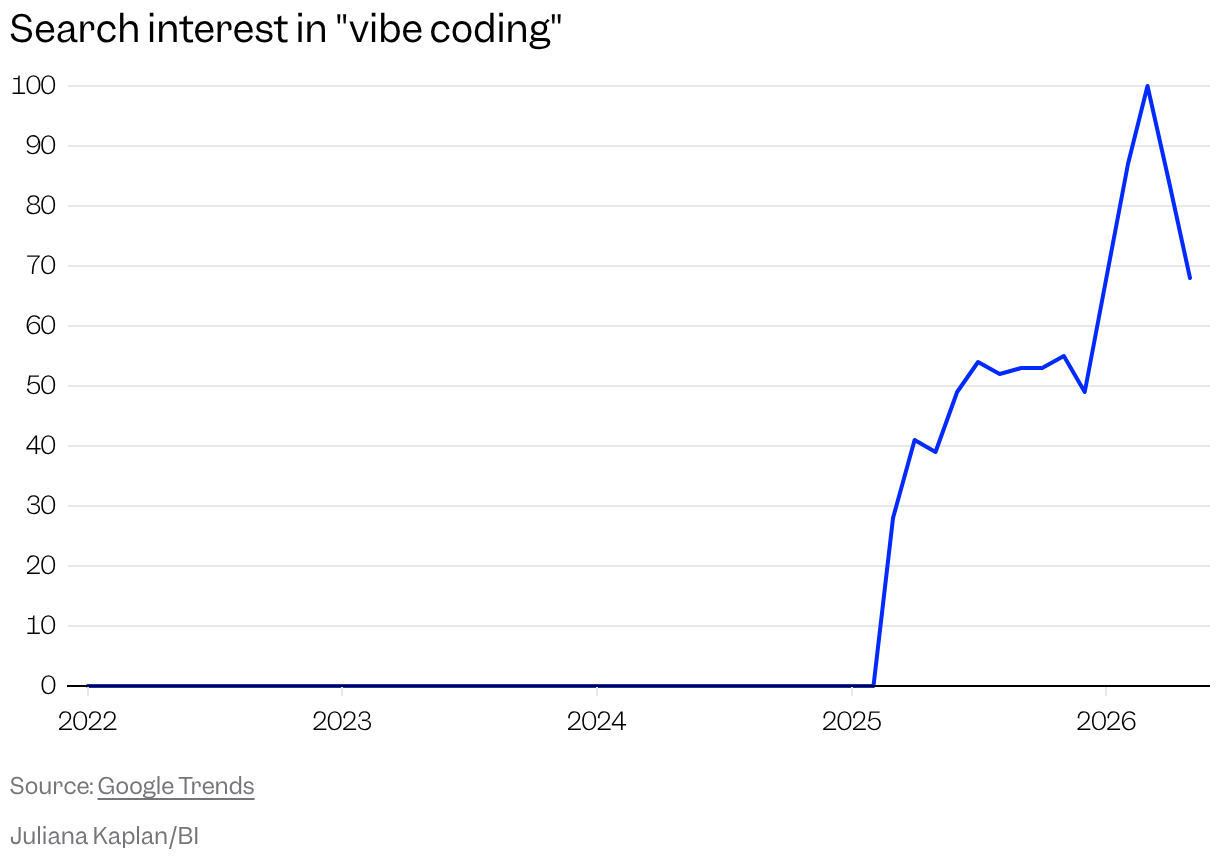

This unlocked a whole new world. Unlike AI-generated essays or photos, where we dissected the use of em-dashes or examined the number of fingers on the computer-generated hands, vibe coding either works, or it doesn’t. The AI either outputs a working program or goes back and tries again.
“That really is this baseline that doesn’t exist when it makes prose or art,” Ford says. “With coding, it was like, no, actually this works, and the computer doesn’t care whether it’s slop or not, it runs it.”
And unlike run-of-the-mill chatbot usage — which can worsen long-term critical thinking or deskill workers who use it to power through the day — vibe coders aren’t using AI as a one-to-one substitution for their brains. Instead, they’re using it to do something they otherwise couldn’t — and picking up skills along the way. One study of vibe coding likened the process to making pottery: The manipulation of the material — whether it be clay or code — is “inseparable from the potter’s thinking and the development of skill and intention.” Rather than just asking a chatbot for a fully formed pot, iterating on code with an AI model is akin to guiding a robot’s hand as it shapes the clay, learning when to stop it and when to tell it to adjust.
The vibe coders we’ve interviewed at Business Insider said they’ve learned about new coding languages, processes for getting apps up and running, and what debugging looks like. Jonathan Butler, a 56-year-old entrepreneur and vibe coder who used to rely on others to help him build websites, likened it to another craft. “It’s like being in your wood shop making something,” he says. His newest project is vibe coding the construction management process for his new home.
But the hyper-nicheness of vibe coding — and the doors it opens — is part of what makes it exciting. Enterprise apps are always reaching for scale, creating blunt instruments by adding features that might alienate users or putting favorite widgets behind a paywall. Vibe coding sets out to do the opposite: instead of starting with a big problem and winnowing it down to one solution, it starts with one small problem and comes up with an appropriately scaled solution.
Software engineers Maya Miller, 28, and Chloe Garden, 29, run the SiSTEM Collective, a New York-based group for Black and Latina women working in tech. Part of the group focuses on community-building workshops for the less tech-savvy. A recent workshop centered on vibe coding, where women came in with an idea for an app and left with a working prototype. Around 30 people showed up, with five or so complete amateurs, and about a quarter who had never really delved into the nitty-gritty. For those newbies — and the slightly more experienced — vibe coding allowed them to address the very specific problems that they face in their day-to-day lives.
“Two people were working on hair wash day routines — so just tracking the products, if it’s actually helping their hair goals, if they want to grow length or increase the elasticity of their hair,” Miller said. “I feel like that’s a really good example of a bespoke software that wasn’t really accessible.”
It’s the virtual version of finally fixing that leaky sink, or setting up a system for who feeds the cat so it doesn’t swindle its way into a double-dinner. Vibe coding tools have given folks like Scott Klipper the ability to book one-off nannies for school pickups, or saved firefighter Joe Poynton a few moments at the grocery store with a list that sorts items by location. It’s (kind of) bringing software to the masses: Those who get engrossed might pick up some actual coding hacks and learn more with time. But it’s more so stepping in to solve little daily problems. It’s not going to clean your house or automate your life completely, but it’ll tell you that, based on your workouts and brunch plans, it’s a good day to wash your hair.
VVibe coding won’t magically resolve the structural and societal questions that come with the AI boom. But it does give us real-world examples of how it can work for the average person. People can solve their own problems, or, at the very least, create micro-apps that won’t suddenly be enshittified by new paywalls and bloated features.
After talking to vibe coders and AI hobbyists, what struck me was their love for the game. Vibe coders aren’t trying to dominate app stores or become billionaires. They’re not creating never-ending customer service bot loops designed to annoy and extract money from you. They’re in it for, literally, the vibes. It’s a bit reminiscent of the older web — a more decentralized, bespoke version of the internet, where we made programs devoted to sending our friends the word “Yo,” or “drinking” a virtual beer.
Kyle Jensen, a developer and director of entrepreneurial programs at Yale’s School of Management, recently vibe coded an SAT prep app for his kid, made research apps for his wife, and search apps for his colleagues. He’s seen a “massive explosion” in interest in vibe coding in his circles — which are admittedly made up of people studying management or similarly attuned to the world of software. Even so, he says there are all sorts of services that could help more laypeople embrace the vibe-coding revolution.
“That probably points to a future where normies, regular people, are deploying apps pretty regularly,” Jensen says.
It’s all about threading the AI needle. Ford, the coder and writer, sees vibe coding as one way to give the masses more control over AI — people who don’t want to talk to robots all day but want to actually build something or get work done.
To cap off this story, I decided to try my hand at vibe coding. I wanted to solve a hyper-specific New York City conundrum: I have two grocery stores within walking distance, but one is up a fairly steep hill. I wanted to compare the weekly deals at the two, so I could make an informed decision on when to hoof it uphill.
What I learned was that it’s still very hard to scrape weekly circular PDFs — grocery stores are accidentally AI-resistant — but I did learn a lot about how scraping works and the systems code can use to decode information from archaic supermarket sites. And, as an AI Luddite, I learned a lot about effective prompting: I began by treating my Codex like a fellow reporter or editor brainstorming an app, unfortunately, it wasn’t capable of understanding that level of nuance. The whole practice required me to critically think about what exactly I wanted — a win for making me rely on those unique folds in my brain! And yes, it harkened back to when I did a crash course in HTML so I could make the cursor on my Tumblr page into a sparkly doughnut: Was it necessary? Of course not, but it added whimsy.
Ultimately, my app wasn’t as successful as I hoped. It ended up being defeated by the PDF circulars, but, like any good tech founder, I pivoted. I made an app that weighed whether a deal was worth the extra walk to get an item at the higher-altitude supermarket. Is this a bit silly? Yes, and I’m sure that many loved ones will mock me when I tell them about it. Will I be using it? Absolutely. My discount mozzarella and I will be laughing all the way down the hill.
Juliana Kaplan is a senior reporter on the economy team, where she covers the labor force, kitchen table economics, and the people behind the numbers.
Business Insider’s Discourse stories provide perspectives on the day’s most pressing issues, informed by analysis, reporting, and expertise.