


The giant, shimmering credit card was the first sign.
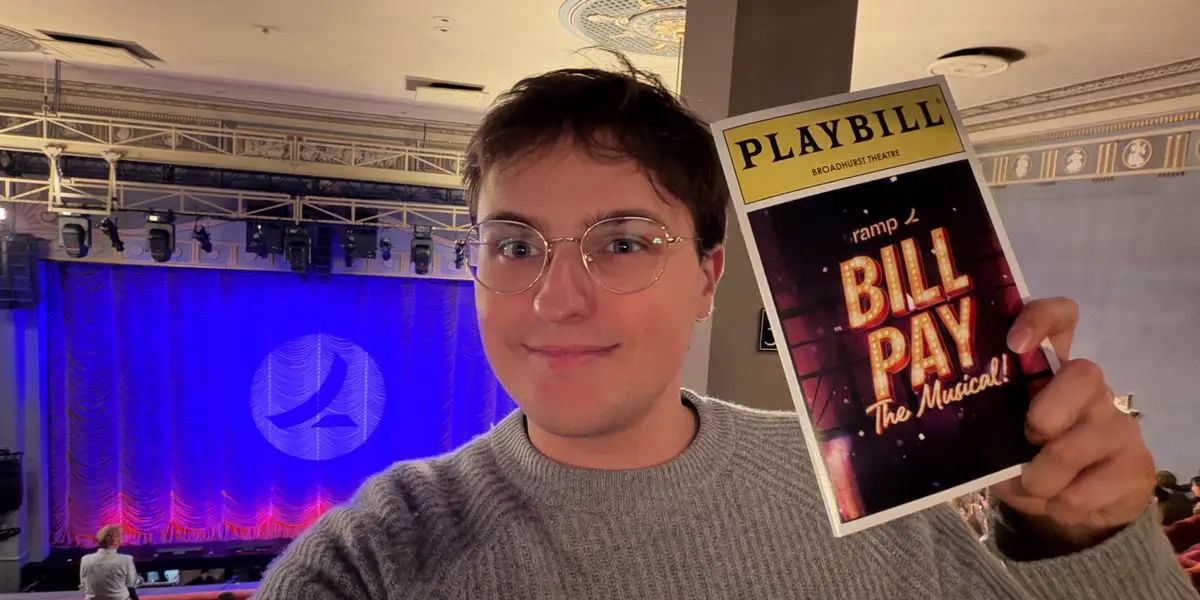
The fintech company Ramp, in a somewhat baffling move, staged a musical. They called it “Bill Pay” and took over Broadway’s Broadhurst Theatre. From the back of the mezzanine, I watched the hourlong, witless advertisement.
Let me clarify: it’s not that Ramp pretended this was high art. There were ample jokes about how stupid this show was. The audience of techies seemed to eat up the “Hamilton” parody — instead of “I am not throwing away my shot,” it was “I did not throw away my receipt” — and the tap-dancing hobbits.

Henry Chandonnet/Business Insider
But I couldn’t stop wondering: what the hell am I doing here? It felt like a great corporate bonding exercise for a company in IPO prep mode. And yet, they opened it to the public and invited a cabal of theatre influencers.
Ramp’s musical was good in theory. Spend big on employee perks! Better yet, pay theatre performers! The execution, though, was muddled and boring.
Ramp’s self-love fest of a musical
For a simple, promotional musical, the plot of “Bill Pay” was somewhat confusing.
Jessica Vosk played Lisa Blupey, a beleaguered Etsy seller who couldn’t handle an influx of orders. She was then sucked into a YouTube advertisement and had to navigate several types of bills to escape.
It’s not the bills you’re thinking of. There was an extended Bill-bo Baggins section, hence the tap-dancing hobbits. There was a candy-coated Billy Wonka section. (Were there not enough actual “Bills” to keep names unaltered?) And then there was Billy Zane, the sultry “Titanic” alum who came out for one steamy number.
Henry Chandonnet/Business Insider
The musical’s resolution was that Blupey could fix her life problems with — you guessed it — Ramp.
Want more Business Insider in your news feed?
Add BI in Google so our reporting is easier to find when you’re searching for what matters.
Billy Porter was the marquee star and the subject of Ramp’s advertisements. And yet, he was barely in the show. Porter opened the show, then later appeared in some one-off moments and had a brief chat with co-CEO Eric Glyman. One wondered whether he was being paid by the minute.
Much of the show was, as expected, kitschy. There were references to “A Chorus Line” and Billy Mays’ OxiClean ads. There was a surprise cameo from Brian Baumgartner, aka Kevin from “The Office,” who has been in Ramp’s ads before. We all broke and waved glow sticks in the middle of the show.
Henry Chandonnet/Business Insider
And yes, it was messy. There weren’t enough glow sticks for the whole audience. Actors forgot names. Hats fell off.
Messiness is part of live theatre. It’s what makes it fun! But I expect that from a cash-strapped Off-Broadway house, not a multi-billion-dollar tech company.
Tech bros and ‘industrial’ paychecks
I’ve been to my fair share of Broadway shows. The audience is almost always the same: octogenarians spending their retirement money, suburban gay guys in chinos, doting moms with their pubescent kids.
This was nothing like that. The audience was filled with tech people.
Many were suited up in tuxedos or bejeweled gowns. Many reloaded their Slacks in the moments leading up to the show. I heard M&A gossip murmurs from the audience.
So, I have to admit, this was not for me. It was for them.
The show began with an announcement that phones could be out for the whole performance, breaking Broadway standards. Then one of the opening lines explained that they wouldn’t make niche musical references. Everything would stay perfectly digestible.
To which I say: great! I’m happy the tech bros have a musical. But why open it to the general audience? Why not just keep it at invited guests, the investors you want to schmooze and the employees you want to reward?
Henry Chandonnet/Business Insider
The show had one other perk: the actors got paid. In his conversation with Glyman, Porter thanked him for bringing back the “industrial.” These were the corporate shows that actors would use to pay their bills. They have, as you can probably guess, faded away. Your boss isn’t putting on a musical for you now; he’s buying you a Cameo. (I asked Ramp how much it budgeted for the show — I’ll let you know if I hear back.)
I’m happy the ensemble dancers got paid. I’m happy that Vosk got a chance to ride Elphaba’s broomstick once more. I’m even happy that Porter got what was likely a big lump of money for his minutes.
Good on you, Ramp. You’re spending that hard-earned cash on Broadway, a sector that’s sorely lacking in funding.
Maybe next time, just make the show good.