
Users of Tesla Robotaxi are reporting routing issues with the autonomous ride-hailing provider as the company continues to expand its service area in Texas.
Tesla announced on Monday that it had significantly expanded the Houston geofence, a designated area where riders can hail a robotaxi, with boundary lines resembling the shape of a rocket — an apparent reference to Elon Musk’s SpaceX. The two companies are exploring a potential merger through “special committees of independent directors,” Musk has said.
“Houston, we have liftoff,” an X post from the Tesla Robotaxi account said. “Bigger service area now live.”
The new Houston service area represents an estimated additional 229 square miles, RobotaxiTracker, a third-party website that tracks autonomous-vehicle progress in the US, reported. The coverage area dwarfs that of Waymo’s geofence in the same city, which only covers about 50 square miles.
Some users, however, are reporting that the robotaxi takes unusually long routes and that not every part of the new geofence is actually available.
Hy Luu, a content creator and Tesla enthusiast, posted footage on his Instagram showing his first ride in a Tesla Robotaxi, from his house to his office — about a 13-mile drive.
In the video, he said the car took about 25 minutes to arrive. He was picked up at 8 a.m. and dropped off at 9:23 a.m.
Luu told Business Insider that the commute in his Tesla Model 3, with Full Self-Driving (Supervised), typically takes about 45 minutes.
“I think most people would not use this service as it is now because of the wait times for the car coming and then the detours it takes,” Luu told Business Insider.
Want more Business Insider in your news feed?
Add BI in Google so our reporting is easier to find when you’re searching for what matters.
A Tesla spokesperson did not respond to a request for comment.
In an X post on Tuesday, Ethan McKanna, founder of the RobotaxTracker site, also shared a screen recording of the Tesla Robotaxi app displaying “location not available” whenever a pin was dropped at random points within the geofence.
In other posts from McKanna, one route showed a three-hour walk to the pick-up point, while another ride showed a 40-minute trip to travel two blocks in downtown Houston.
“I get they were doing it so they could get the starship shape, but again this is another poor experience point,” McKanna wrote of the recent expansion.
McKanna added in another thread that, aside from those issues, “the service feels really good in Houston,” with reasonable wait times, a large service area, and a better ride experience than Waymo.
Routing issues are not unique to Tesla.
Business Insider previously reported that Alphabet’s Waymo appeared to avoid certain roads to reach a destination despite faster options.
A robotaxi may exclude some routes to avoid certain roads, such as those with railroad tracks, or to avoid highways if the service has not yet been made available, although those reasons don’t account for every routing choice.
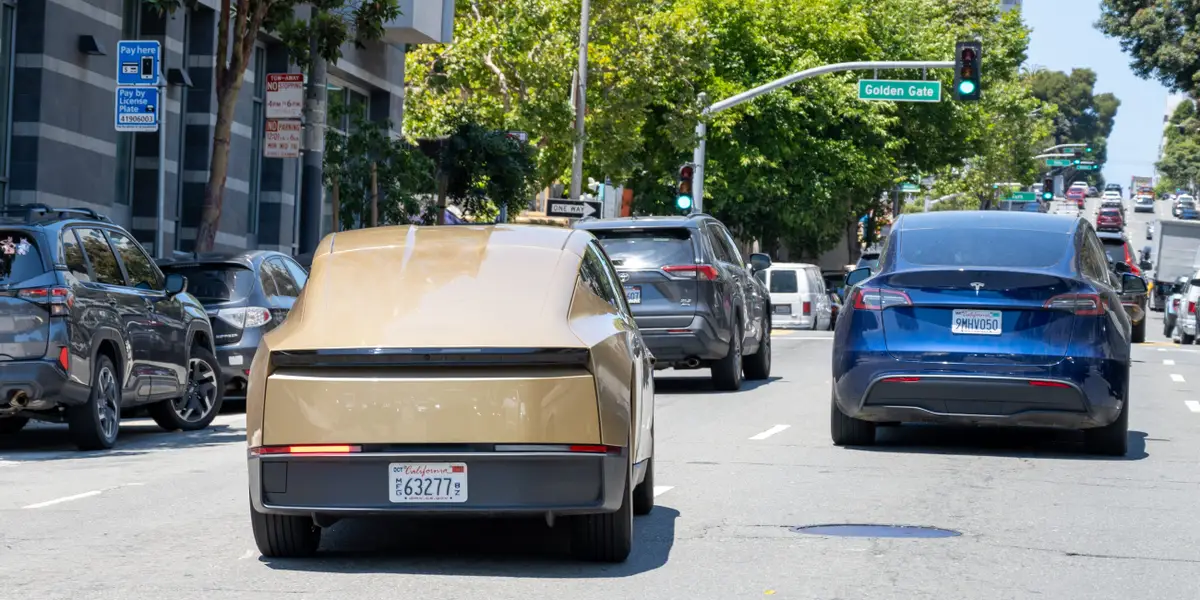
In recent weeks, Tesla has been working to scale up its robotaxi service, following the deployment of its purpose-built, two-door Cybercab on public roads in September.
Data from the Texas Department of Motor Vehicles showed the company has registered about 200 Cybercabs in the past week. That’s separate from cars that are actively deployed.
Luu said in an interview that robotaxis aren’t as ubiquitous in Houston. He hasn’t tried a Waymo yet.
“Houston’s a lot bigger,” he said. “People normally drive 25 miles to get anywhere, so it’s definitely a lot longer commutes.”