


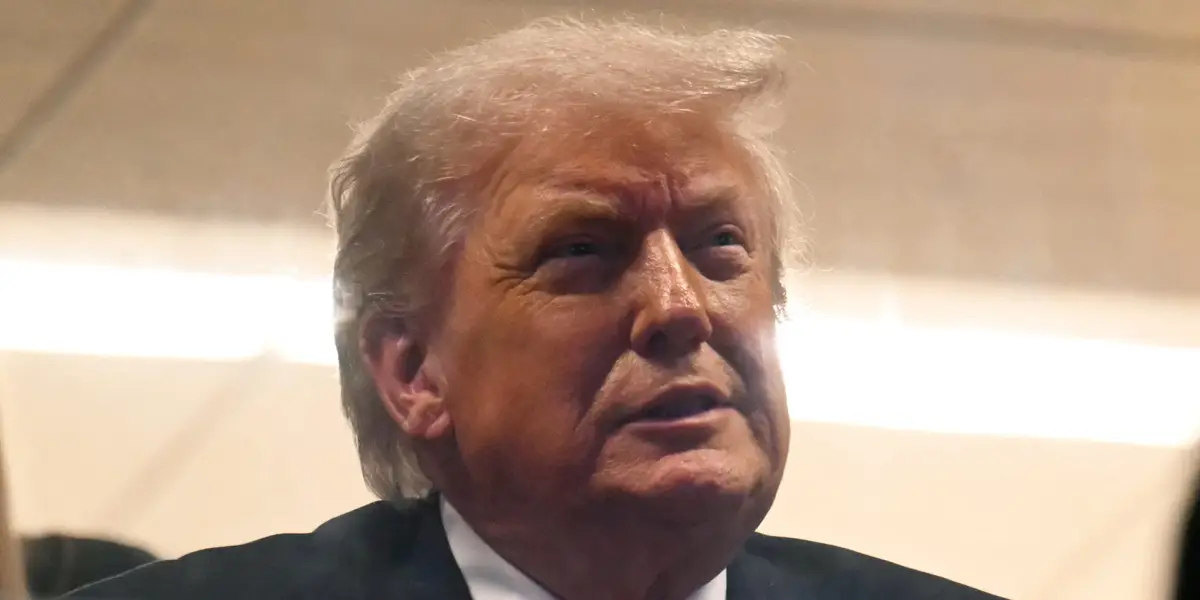
President Donald Trump has spent years using social media to bypass diplomatic norms.
Now he’s going a step further: posting screenshots of seemingly private messages from world leaders for millions to see.
In two posts on Truth Social on Tuesday, Trump published what appear to be private messages from NATO Secretary General Mark Rutte and French President Emmanuel Macron.
One message, attributed to Rutte, praised Trump’s actions in Syria.
“What you accomplished in Syria today is incredible,” the message read. It also said that Rutte planned to use media engagements at the World Economic Forum in Davos to highlight Trump’s work in Syria, Gaza, and Ukraine, before turning to Greenland: “I am committed to finding a way forward on Greenland. Can’t wait to see you.”

Every time Thibault publishes a story, you’ll get an alert straight to your inbox!
Stay connected to Thibault and get more of their work as it publishes.
In recent weeks, Trump has intensified his push for the US to acquire Greenland.
A NATO official confirmed the authenticity of the exchange to Business Insider.
Another screenshot showed a message from Macron addressed to Trump. In it, the French president says the two leaders are “totally in line on Syria,” adding, “We can do great things on Iran.”
However, he questioned Trump’s actions on Greenland, telling him, “I do not understand what you are doing on Greenland.”
The French president’s inner circle confirmed the authenticity of the message to Business Insider.
Private diplomacy, now public
Trump’s decision to publish the texts underscores how even private exchanges between close allies — once assumed to be off-limits — can now become social media content, blurring the line between diplomacy and public performance, former political advisors and academics told Business Insider.
John McTernan, who served as UK Prime Minister Tony Blair’s director of political operations from 2005 to 2007, said Trump’s decision to publish private messages fits a broader pattern of norm-breaking communication designed to project power and unpredictability.
Trump, he said, has mastered social media as a political tool and uses it to bypass diplomatic protocol, signaling that he does not see diplomacy as a negotiation so much as an assertion of will.
“This is a man with no sense of protocol, which I think is part of the attraction to his supporters,” he said.
The White House did not respond to Business Insider’s request for comment.
A cost to trust
Janice Stein, the Belzberg professor of Conflict Management and founding director of the Munk School of Global Affairs at the University of Toronto, said publicly sharing private messages comes at a steep cost to trust.
While such posts may deliver short-term gains with an audience, she said they encourage leaders to self-censor and erode confidence among counterparts.
Richard Stengel, who served as undersecretary of state for public diplomacy and public affairs under Democratic President Barack Obama from 2014 to 2016, took a stronger view.
He said diplomacy depends on privacy and secrecy to allow leaders to test ideas and speak candidly, and that exposing private exchanges publicly risks turning diplomacy into impulsive, performative behavior with little follow-through.
“Trump’s violation of that presumption of trust and secrecy is like exploding a bomb at the negotiating table,” he said.
Encryption can’t guarantee discretion
Some messaging apps can encrypt messages end-to-end, so only the sender and recipient can read them. This protects messages from third parties like hackers, but it can’t prevent the sender or recipient from sharing, screenshotting, or publishing them.
Rebecca Slayton, associate professor at Cornell University’s department of Science and Technology Studies, said: “The publishing of these messages is a reminder of the limits of technology for securing communications.”
These chats offer “very secure communications if the sender and the recipient choose to keep their communications private,” she said, “but the human element is always the weakest link in security.”