



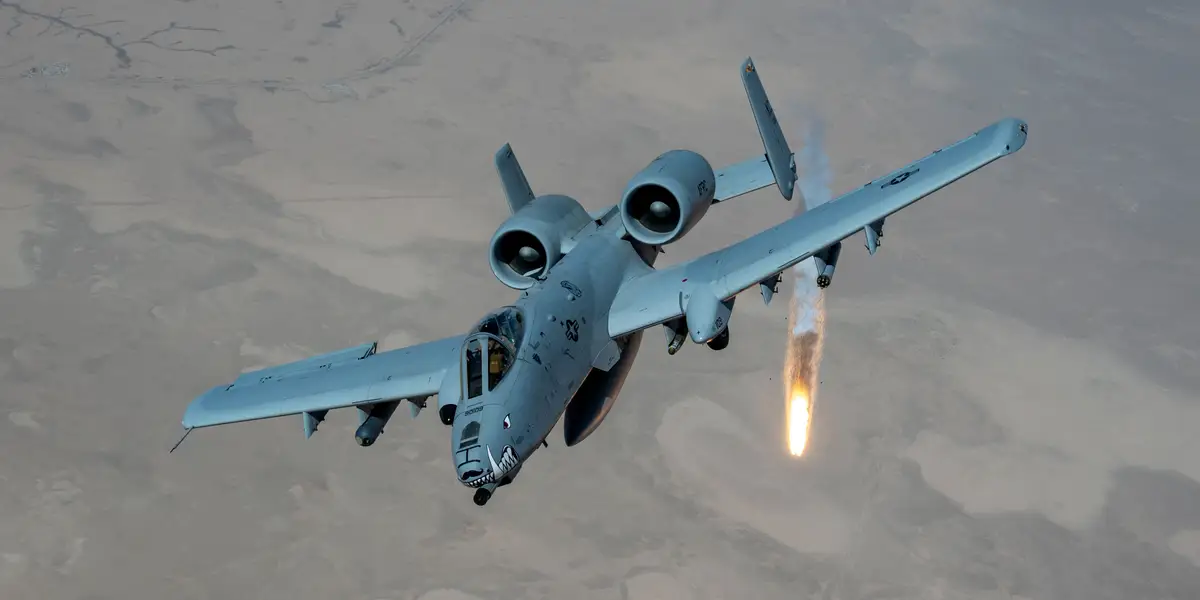
The US Air Force is extending the service life of the decades-old A-10 “Warthog” until at least 2030, again pushing back the attack aircraft’s retirement following heavy combat use against Iran.
Air Force Secretary Troy Meink shared the news in a social media post on Monday. He said the decision “preserves combat power as the Defense Industrial Base works to increase combat aircraft production.” Defense Secretary Pete Hegseth wrote in response: “Long live the Warthog.”
The move offers a new lease on life for the aging A-10 Thunderbolt II, which was first introduced in the 1970s. The Air Force has tried for years to retire the aircraft, designed for anti-tank operations, close air support, and combat search-and-rescue missions. Service officials argue the slow-flying plane won’t survive on future battlefields where it could face formidable enemy air defenses.
The Air Force has reviewed the possibility of replacing the A-10 with F-35A Lightning II stealth fighter jets for close air support missions. Previous evaluations have raised doubts about whether the F-35 can match the A-10’s performance in traditional close air support missions.
The Air Force was pushing to retire the A-10 this year, but congressional intervention, as it has done repeatedly, threw the plane a lifeline, moving retirement to 2029 and preventing the service from sending the entire fleet to the boneyard. With the new decision, the Warthog will continue to fly for longer, although it’s unclear how many of the roughly 160 in service today will serve until 2030.
US Air Force photo
Meink’s announcement comes as the Warthog has been highly active in the Middle East, where the aircraft has flown combat sorties against Iranian-backed militia groups in Iraq and supported operations against Iran directly.
During the US military’s Operation Epic Fury, A-10s have been used to attack Iranian fast boats in the Strait of Hormuz and are reportedly being used to help enforce the US military’s blockade of Iranian ports.
The attack planes also helped support the mission to rescue the crew of an American F-15 fighter jet shot down over Iran earlier this month. They flew in their “Sandy” roles — a combat search-and-rescue-mission call sign dating back to the A-1 Skyraider missions of the Vietnam War.
One of the A-10s was damaged by enemy fire during the operation, forcing the pilot to eject, but over friendly territory.
The A-10 has seen combat in the Middle East and Europe since its introduction. The plane, built by the former US aircraft manufacturer Fairchild Republic, was initially intended to be a tank-killer that could destroy Soviet armored vehicles.
It can be armed with rockets, missiles, and bombs to threaten ground forces. However, it is best known for its 30mm Gatling-style autocannon and the iconic sound it produces when fired.