

The Iran war is making travel more expensive.
Some airlines have announced that they will raise ticket prices due to geopolitical instability.
In particular, jet fuel costs have risen due to the war. Oil prices have faced considerable volatility, with tankers attacked in the Strait of Hormuz.
Brent crude surged past $100 per barrel in recent days, coming close to reaching $120 on March 19.
Meanwhile, the war is also changing flight maps.
The Gulf countries are home to airport megahubs that connect passengers from all over the world, helping to link Europe with Asia and Oceania.
Plus, the Gulf itself was one of the busiest air corridors in the world before traffic was forced to re-route when the first strikes were launched in late February.
More people have therefore been trying to book direct flights between Asia and Europe.
That increased demand and a lower capacity is also prompting price hikes.
Here are the airlines that have spoken about their plans:
SAS Scandinavian Airlines
Fabrice COFFRINI / AFP via Getty Images
In an interview with Swedish business newspaper Dagens Industri, SAS CEO Anko van der Werff said that the average short-haul flight with the airline will rise around $50, while Transatlantic flights will be almost $290 higher on average.
Van der Werff also said that the airline would cancel “at least a thousand” flights in the coming weeks.
“Even if we try to absorb cost increases as much as possible, this is a shock that directly hits the airline industry,” he said.
Qantas
DAVID GRAY / AFP via Getty Images
Australia’s flag carrier was one of the first airlines to bring in fare increases, telling local media of its plans earlier this week.
In a statement shared with Business Insider, it said that its flights to Europe are up to 90% full, while they’re typically only three-quarters full at this time of year.
“Qantas International is increasing fares this week in response to rising costs, including the significant increases in jet fuel prices,” it added. “These increases will vary from route to route.”
Air India
Mike Campbell/NurPhoto via Getty Images
Air India, the national carrier of India, said on March 10 that it will levy fuel surcharges on all passengers buying tickets in a three-phase rollout.
From March 12, the airline will add fuel surcharges to flight tickets in India, Western Asia, and the Middle East, and increase surcharges already levied on flights to Southeast Asis and Africa.
After March 18, all tickets to Europe, North America, and Australia will face surcharges increasing by up to $50. For instance, the current fuel surcharge for flights to America is $150, but will rise to $200.
Additional surcharges for flights to the Far East will be announced in due course.
Air India Express
Air India Express, which is owned by Air India, did not previously impose fuel surcharges but began doing so on March 12 as part of the airline group’s plan.
Air France-KLM
Patrick van Katwijk/Getty Images
The French-Dutch conglomerate said in a statement that the situation in the Middle East “has led to a sharp and sudden increase in fuel prices, particularly affecting jet fuel.”
“As a consequence, Air France and KLM will raise their fares on long-haul flights, for tickets issued as of March 11, 2026,” it added.
For people flying in economy, round-trip fares will be 50 euros ($57) more expensive.
Thai Airways
Thai Airways is raising ticket prices by 10% to 15% due to “overwhelming” demand and rising fuel costs, Chief Financial Officer Cherdchom Therdthirasak said this week.
“Passengers planning to travel should secure their tickets as soon as possible before fares rise further,” Cherdchom said, according to Bloomberg. “Over the next two weeks, tickets will be extremely limited across both European routes and other destinations.”
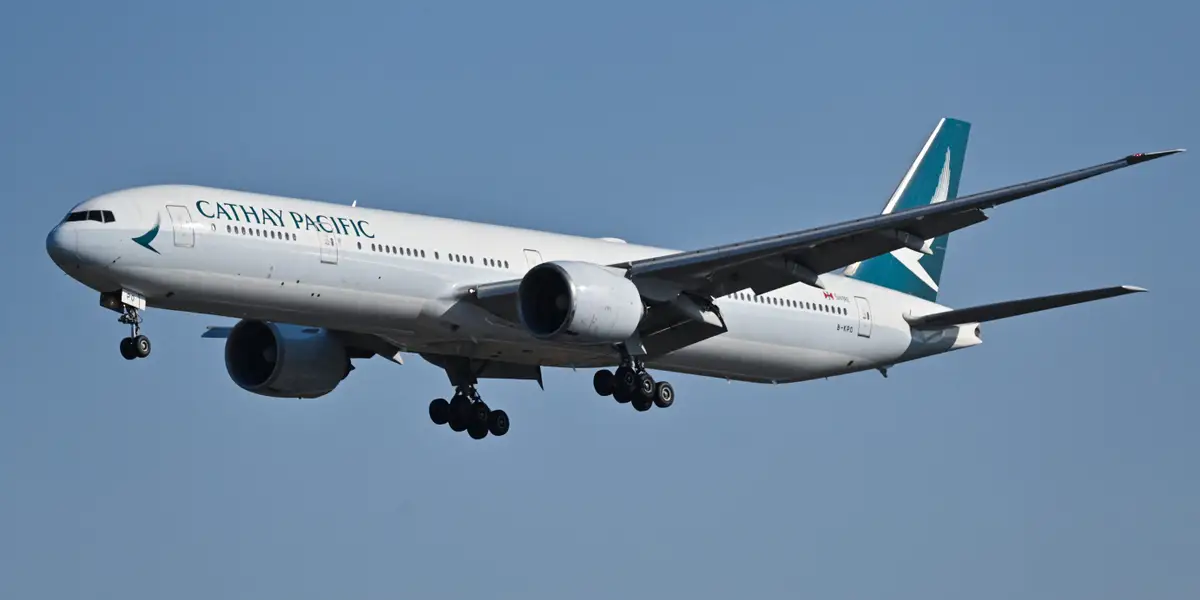
Cathay Pacific
ADEK BERRY/AFP via Getty Images
The CEO of Hong Kong’s flag carrier said at a news conference this week that fuel prices this month are twice the average, compared to the last two months.
“In March, like ever since the Middle East episode began, the costs of our fuel already doubled,” CEO Ronald Lam said, according to the AFP. “So we are going to announce (a surcharge rise) very soon.”
Air New Zealand
The Kiwi airline said it will cancel 1,100 flights affecting over 44,000 passengers between now and early May, its CEO Nikhil Ravishankar told Radio New Zealand.
“It’s an unprecedented issue as far as fuel price is concerned, but managing fuel spikes is a well-trodden path if you’re running an airline,” Ravishankar said.
FlySafair
In a statement posted on its website, South African budget carrier FlySafair said it would implement a fuel surcharge from March 12.
“Since late February 2026, global fuel prices have increased significantly following the conflict in the Middle East. This disruption has affected oil supply routes and caused aviation fuel prices to rise sharply,” it said in a statement.
“FlySafair absorbed these additional costs for as long as possible. However, to maintain affordable fares and continue operating sustainably, a Temporary Dynamic Fuel Surcharge has been introduced.”
Price increases on FlySafair’s flights will be relatively low, with fuel surcharges ranging from around $4 for shorter journeys to around $18 for longer flights.