




NEWYou can now listen to Fox News articles!
A federal judge on Monday ordered the Trump administration to provide due process to a class of Venezuelan migrants deported to El Salvador in March, and gave it two weeks to detail how it will do so – setting up another high-stakes clash between the White House and the federal courts.
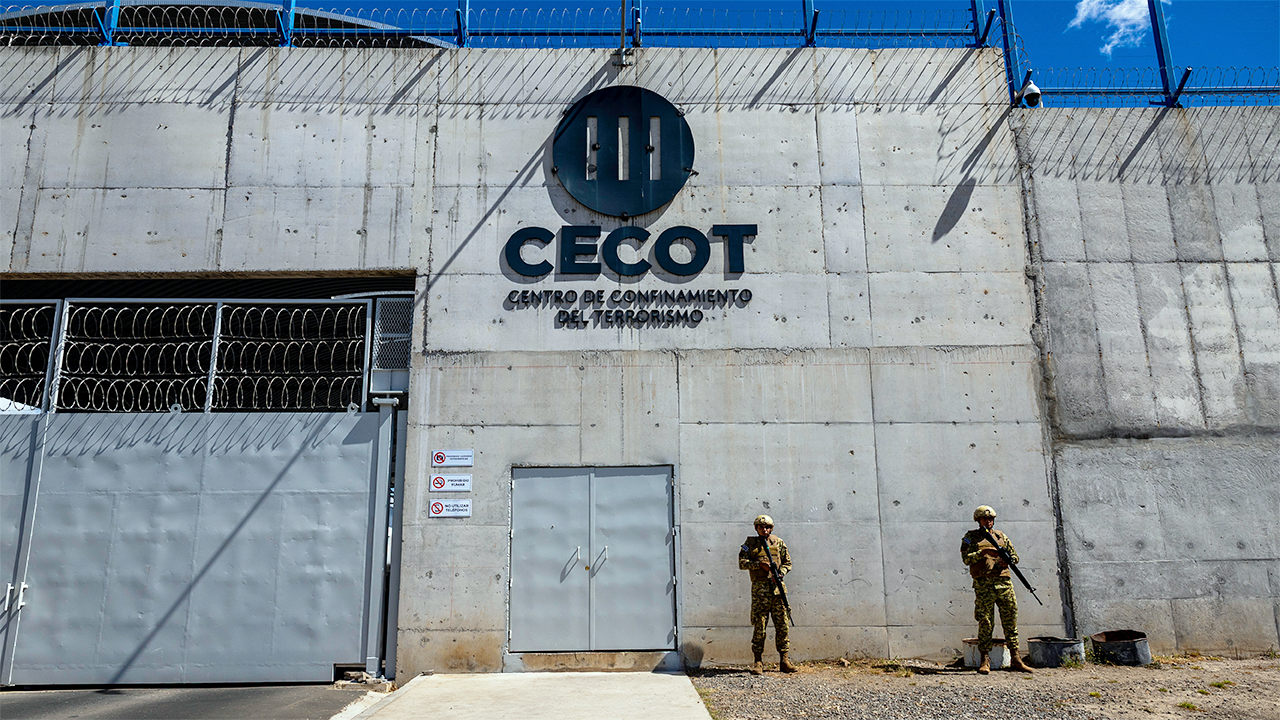
In March, U.S. District Judge James Boasberg ordered the Trump administration to halt its plans to immediately use the 1798 Alien Enemies Act wartime immigration law to quickly deport hundreds of Venezuelan migrants to CECOT, a Salvadoran maximum-security prison. That did not happen, and the planes landed in El Salvador hours later.
Boasberg concluded that the Trump administration’s actions were illegal, conducted in defiance of the court, and deprived the migrants in the CECOT class of their due process protections – including prior notice of removal, a “meaningful opportunity” to contest their removal from the U.S., and the ability to dispute their designation as a member of the Tren de Aragua gang.
He ordered the Trump administration to submit to the court by Jan. 5 its plan to provide due process protections to the CECOT class – which he said the administration could do by either returning the migrants to the U.S. to have their cases heard in person, or to otherwise facilitate hearings abroad with members of the class that “satisfy the requirements of due process.”
“On the merits, the Court concludes that this class was denied their due-process rights and will thus require the Government to facilitate their ability to obtain such hearing,” Boasberg said Monday. “Our law requires no less.”
APPEALS COURT BLOCKS TRUMP ADMIN’S DEPORTATION FLIGHTS IN ALIEN ENEMIES ACT IMMIGRATION SUIT

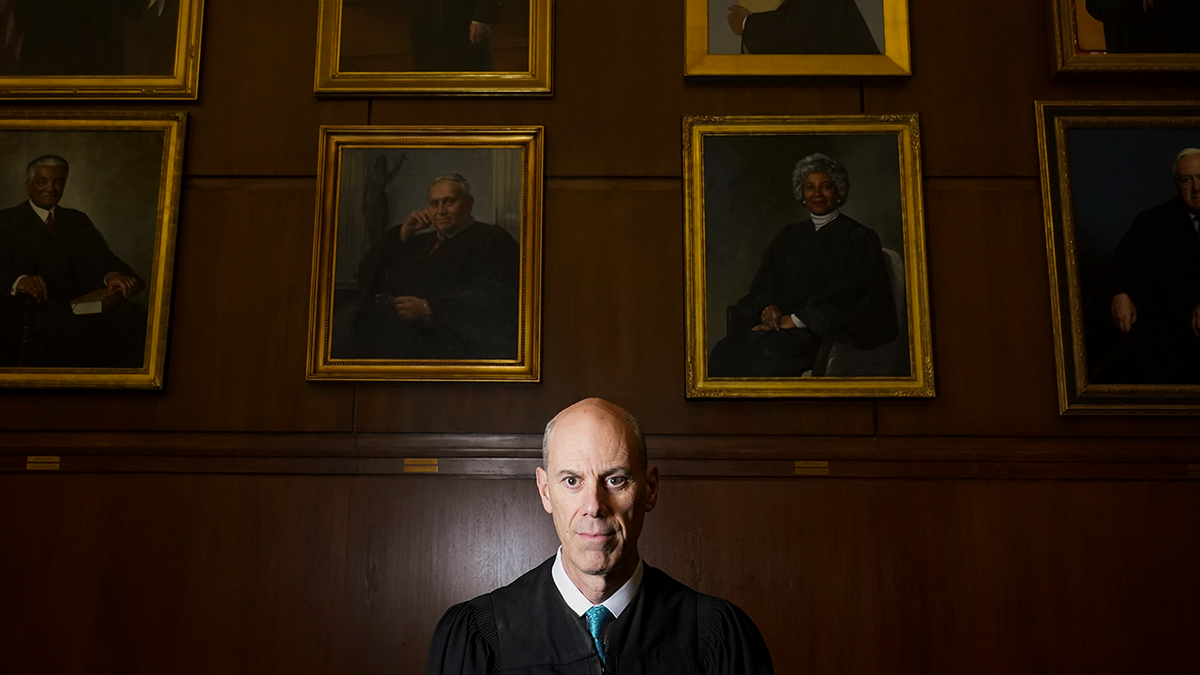
Judge James E. Boasberg stands for a portrait at E. Barrett Prettyman Federal Courthouse. (Carolyn Van Houten/The Washington Post via Getty Images))
The Justice Department is almost certain to appeal the order.
Monday’s ruling adds new clarity to a complex immigration case that began 10 months prior, and which sparked a flurry of appeals, contempt inquiries and open questions as to the status of the CECOT plaintiffs and the ability the U.S. has to order their return.
Boasberg said Monday that the U.S. appeared to be operating with the knowledge that it had some level of constructive custody over the migrants detained at CECOT, citing the terms of an agreement made between the U.S. and El Salvador to house the migrants for at least a one-year period.
He also cited multiple public remarks from Homeland Security Secretary Kristi Noem and other senior DHS officials, which appear to cast CECOT as an “extension” of U.S. detention facilities.
“These statements strongly undermine the Government’s contention that El Salvador retains complete discretion over what to do with individuals” removed from the U.S., he noted.
JUDGES V TRUMP: HERE ARE THE KEY COURT BATTLES HALTING THE WHITE HOUSE AGENDA
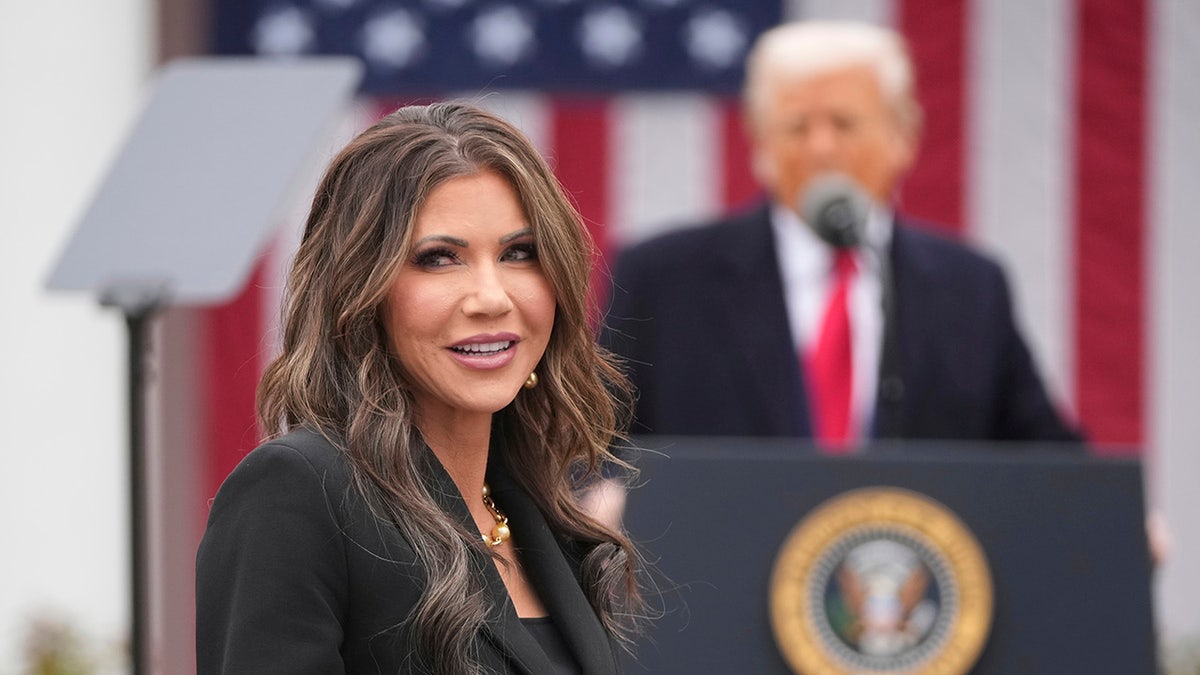
Homeland Security Secretary Kristi Noem is recognized as President Donald Trump speaks during an event in the Rose Garden at the White House. (AP/Mark Schiefelbein)
If “secretly spiriting individuals to another country were enough to neuter the Great Writ, then the Government could ‘snatch anyone off the street, turn him over to a foreign country, and then effectively foreclose any corrective course of action,'” Boasberg concluded.
The update comes after the court’s inquiry had been stalled for months, both by appeals court rulings, efforts to shield certain information from the court for national security purposes, and a separate, but related, contempt inquiry.
The CECOT migrants were again moved in July from the Salvadoran prison to Venezuela as part of a broader prisoner exchange that involved the return of at least 10 Americans detained in Venezuela. That step further complicated efforts to ascertain the status of the migrants, some of whom had fled Venezuela and were in hiding.
That made it difficult to contact the migrants from the CECOT class and determine how many of them still wished to proceed with their due process cases, as ACLU attorney Lee Gelernt, the lawyer representing the plaintiffs, told Boasberg in court last month.
The ACLU said this month that, of the 252 Venezuelan migrants deported to CECOT in March, 137 of them still wished to move forward with the due process cases.
US JUDGE VOWS TO RULE ‘SOON’ ON ABREGO GARCIA’S FATE AFTER MARATHON HEARING

Homeland Security Secretary Kristi Noem speaks during a tour of the Terrorist Confinement Center (CECOT) on March 26, 2025. (Alex Brandon-Pool/Getty Images)
Still, the new ruling is almost certain to face fierce opposition from Trump officials, who have assailed Boasberg and other judges who have blocked or paused the president’s flurry of executive orders as “rogue, activist” judges, whom they argue are overstepping their authority.
They argue that lower court judges should not have the power to prevent the president from executing what administration officials say is a lawful agenda – though the judges in question have disagreed that the president’s actions all follow the law.
Boasberg, the chief judge for the U.S. District Court, has appeared unfazed by the new level of scrutiny.
CLICK HERE TO GET THE FOX NEWS APP
He told the Justice Department in November that he “certainly intends to determine what happened” on the day the government either intentionally or unintentionally violated his emergency order intended to halt the Alien Enemies Act removals.
The government, he said, “can assist me to whatever degree it wishes.”