
NEWYou can now listen to Fox News articles!
A federal judge declined to block the Trump administration’s Medicaid funding deferral to Minnesota, finding the state’s challenge was premature and giving the White House a temporary legal win as it expands its anti-fraud push.
Judge Eric Tostrud, an appointee of President Donald Trump, concluded this week that the Centers for Medicare and Medicaid Services could, for now, withhold more than $259 million in Medicaid funds from Minnesota and require the state to provide piecemeal evidence that Medicaid reimbursements were legitimate before receiving them.
The order was a boon to the Trump administration’s new, aggressive anti-fraud campaign that was largely spurred by a recent multimillion-dollar welfare fraud scandal in Minnesota.
Tostrud said in a 42-page order that Minnesota’s lawsuit challenging the deferral was premature and that a preliminary injunction was unwarranted for numerous reasons.
VANCE ANTI-FRAUD TASK FORCE SUSPENDS 221 CALIFORNIA HOSPICE AND HEALTHCARE PROVIDERS SO FAR

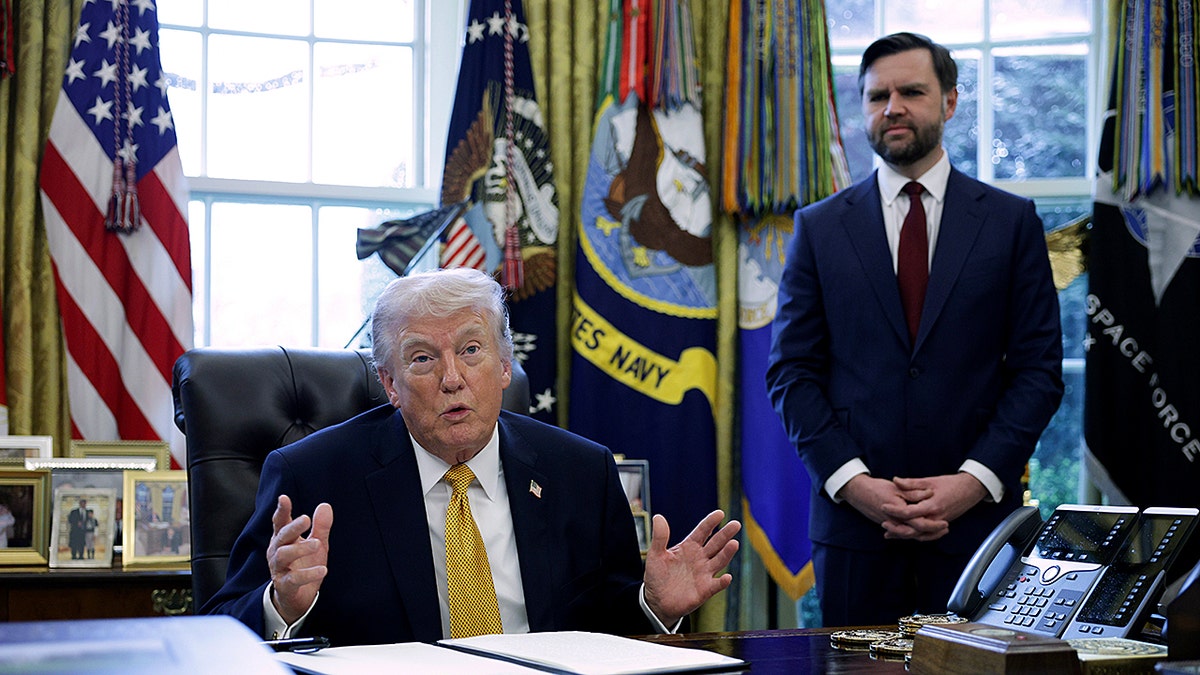
President Donald Trump speaks in the Oval Office with Vice President JD Vance behind him. (Photo by Alex Wong/Getty Images)
“Some of the legal theories Minnesota asserts are novel, and the law does not support them,” Tostrud said.
The White House announced an anti-fraud task force in March, saying in an executive order that “staggering fraud and waste in Minnesota alone is a case in point.” Trump tapped Vice President JD Vance as the fraud czar, and the task force has taken a multi-agency approach to its crackdown.
CMS, led by Administrator Mehmet Oz, was enlisted to be more proactive with Medicaid by temporarily withholding reimbursements to states over potential instances of fraud rather than proven fraud. In addition to Minnesota, CMS is also eyeing Medicaid deferrals in California, New York and Maine, meaning more litigation could arise and lead to federal judges across the country weighing in and a potential escalation to higher courts.
Minnesota’s notorious $250 million Feeding Our Future fraud scandal first broke onto the national radar in 2022 and drew renewed national attention in 2025 as convictions piled up and the state became a flashpoint in the broader fight over public-benefits fraud.
A state-commissioned review of Minnesota’s Medicaid program report became a major flashpoint this year in the Trump administration’s broader “war on fraud.” The report highlighted vulnerabilities in 14 “high-risk” Medicaid services during a four-year period and flagged that $1.7 billion could have been “potentially improper.”
NEW AUDIT EXPOSES FLAWED SYSTEM CRITICS SAY LET MINNESOTA FRAUD TO SLIP THROUGH CRACKS: ‘DIDN’T ACT FOR YEARS’
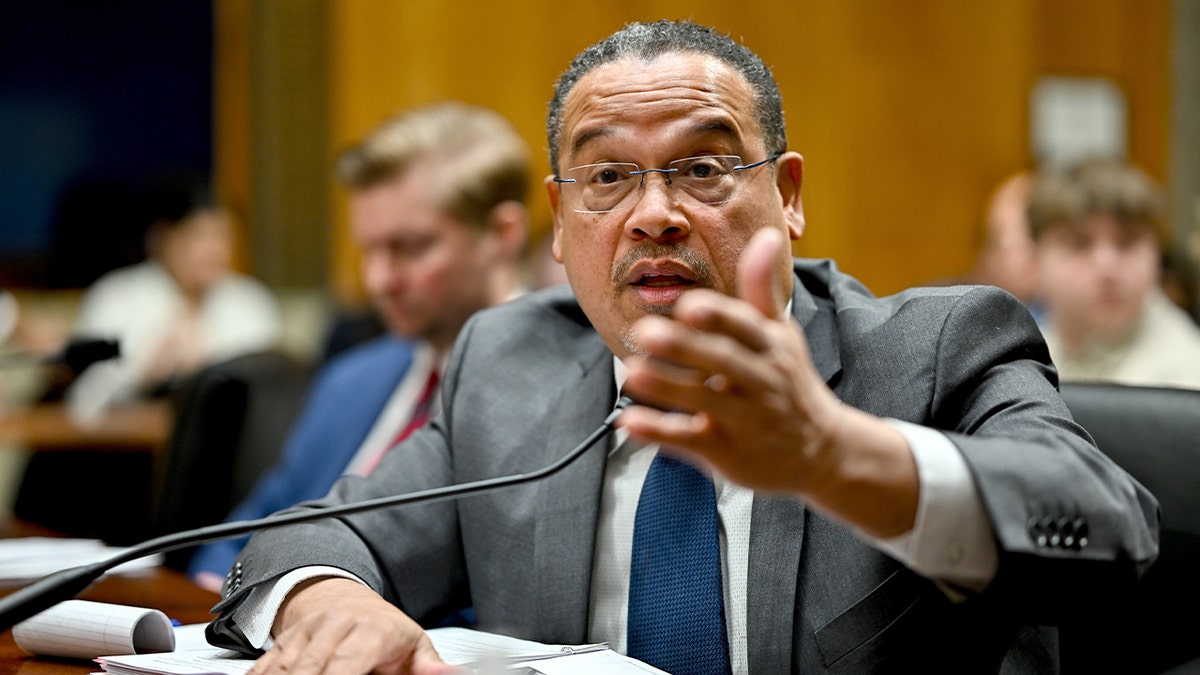
Minnesota Attorney General Keith Ellison testifies before the Senate Homeland Security and Governmental Affairs Committee on Feb. 12, 2026. (Graeme Sloan/Bloomberg via Getty Images)
In the state’s lawsuit against the Trump administration and CMS, Democratic Attorney General Keith Ellison alleged that “the federal government has … weaponized Medicaid against Minnesota as political punishment” in violation of the Administrative Procedures Act and due process under the Constitution.
“Deferral has never been used to categorically deny funds to a state across entire service areas, as is being done here,” Ellison’s complaint read.
Citing the 2019 Supreme Court case Department of Commerce v. New York, Tostrud said that even if the Trump administration’s motives were, in part, political, that would not necessarily deem the Medicaid deferral unlawful.

U.S. Immigration and Customs Enforcement arrested Somali illegal immigrant Abdul Dahir Ibrahim, convicted of fraud, and connected to several high-profile Minnesota politicians, including former Democratic vice-presidential nominee Gov. Tim Walz. (ICE)
CLICK HERE TO GET THE FOX NEWS APP
“A court may not set aside an agency’s policymaking decision solely because it might have been influenced by political considerations or prompted by an Administration’s priorities,” Tostrud wrote, quoting a concurring opinion in the case. “Agency policymaking is not a rarified technocratic process, unaffected by political considerations or the presence of Presidential power.”
Ellison’s office did not immediately respond to a request for comment.