
Updated
X
Bluesky
Copy link
Impact Link
Save
Saved
Read in app
subscribers. Become an Insider
and start reading now.
Have an account? .
- Netflix has grown into the world’s largest streaming service with more than 300 million subscribers worldwide.
- It’s come out on top in the streaming wars, and now plans to acquire Warner Bros. in a $72 billion deal.
- Here’s a look at Netflix’s rise and what’s next.
In the last two decades, Netflix has grown from a DVD company to the winner of the streaming wars — and now a major Hollywood acquirer.
Reed Hastings and Marc Randolph founded Netflix in 1997, launching its DVD rental business the following year. Netflix’s video streaming service debuted a decade later in 2007.
The rise of Netflix prompted competitors like Disney, Comcast, and more to launch their own rival services, kicking off the streaming wars. Netflix has remained dominant — and plans to grow larger still, striking a deal to acquire HBO Max and a slew of major film and TV franchises as part of a $72 billion acquisition of Warner Bros. Discovery.
Here’s how Netflix rose into a Hollywood behemoth.
1997: Netflix is founded by Reed Hastings and Marc Randolph.
Justin Sullivan/Getty Images
Netflix was founded after Reed Hastings was charged a $40 late fee for an overdue rental from Blockbuster.
Blockbuster closed in 2014, while Netflix remains atop the entertainment industry.
1998: Netflix launches a DVD-by-mail rental service and former Amazon CEO Jeff Bezos offers to buy the company later that year.
Charles Krupa/AP
In his book “That Will Never Work: The Birth of Netflix and the Amazing Life of an Idea,” Randolph wrote that he and Hastings met with Bezos in 1998, who offered them “probably something between $14 million and $16 million,” Randolph wrote. They turned down the offer.
1999: Netflix begins offering a subscription-based model, in which customers could choose movies to rent-by-mail for a monthly fee.
Reuters/Mike Blake
Netflix gained 239,000 subscribers in its first year, according to Inc.
2002: Netflix goes public. Randolph exits the company soon after.
Marc Randolph
“As you get older, if you’re lucky, you realize two things: what you like, but also what you’re good at,” Randolph told Forbes in 2019 on why he left Netflix. “The answer to both of them [for me] is early-stage companies. I like the chaos. I like the fact that you’re working on hundreds of things at once.”
2007: Netflix launches a video streaming service, free for its already-existing DVD-rental subscribers.
Ore Huiying/Getty Images for Netflix
Netflix ended 2006 with over 6 million subscribers for its DVD-rental service.
The company’s stock dropped 6% with the announcement. But Hastings, who was CEO at the time, said that he had “gotten used to” reservations.
2012: Netflix debuts “Lilyhammer,” its first original series.
Netflix
The show was originally broadcast in Norway, but Netflix acquired the rights. It laid the foundation for Netflix’s binge-release model and its surge in original programming, including expanding into international markets.
“This was the first time we streamed a show across multiple countries and languages … and it worked,” Netflix’s current co-CEO Ted Sarandos wrote in a blog post in February 2022.
2013: Netflix ramps up its original programming.
Paul Schiraldi/Netflix
“House of Cards” and “Orange Is the New Black” are quickly become smash hits for Netflix, gaining critical acclaim and Emmys recognition.
2015: Netflix releases its first original feature film, “Beasts of No Nation.”
Bleecker Street/Netflix
The Cary Joji Fukunaga film, which was shot in Ghana, was the first of its kind to be released only on Netflix.
2017: Netflix surpasses 100 million subscribers.
Photo by Britta Pedersen/picture alliance via Getty Images
Netflix hit 100 million subscribers 10 years after it launched its streaming service.
2018: Netflix wins its first feature-film Oscar: best documentary feature for “Icarus.”
Netflix
Later in 2018, Netflix releases “Roma,” which becomes the streamer’s first best-picture nominee the following year.
Netflix has yet to nab the Oscars’ top prize, though, despite elaborate campaign spending. Apple TV+ won best picture for “CODA,” becoming the first streaming platform to do so.
2020: Netflix names Ted Sarandos, its creative chief, as co-CEO with Hastings
Getty
Ted Sarandos and Reed Hastings have known each other since 1999. (You can read about how Sarandos nailed his original job interview with the company here.)
January, 2021: Netflix announces that it surpassed 200 million subscribers.
SOPA Images/Getty Images.
It took Netflix ten years to get its first 100 million subscribers — and under four years to double it.
September 2021: Netflix wins more Emmys than any network or streaming service for the first time.
Netflix
Netflix nabbed best-series wins for the first time with “The Crown” (drama) and “The Queen’s Gambit” (limited series).
November 2021: Netflix launches its first video games around the world.
Netflix
Netflix’s video games launch was free as part of a user’s subscription.
April 2022: Netflix reports that it lost subscribers for the first time in a decade in the first quarter of 2022.
Getty Images for The New Yorker
Aside from the economic strains of the coronavirus pandemic, Netflix blamed the subscriber loss partly on password sharing. It said that it estimated that an additional 100 million people use Netflix with a shared password.
It also acknowledged increased competition. New streaming services like Disney+, HBO Max, Paramount+, and more entered the space on top of already existing rivals like Hulu and Prime Video.
April 2022: Hastings confirms that an ad-supported tier is coming to Netflix.
Ernesto S. Ruscio/Getty Images for Netflix
Hastings confirmed during Netflix’s April 2022 earnings call that the company plans to roll out an ad-supported plan — something it has pushed back against in the past — as the streaming service faced slowing revenue growth and lost subscribers.
Other streamers have, like HBO Max and Paramount+, have embraced ads. Disney+, Netflix’s biggest rival, has also launched an ad-supported option.
July 2022: Netflix loses subscribers for the second quarter in a row, a first for the company.
Netflix
In Q2 2022, Netflix said it lost 970,000 subscribers, a sign of company’s struggles that further underscored why it was introducing an ad-based plan and cracking down on password sharing.
November 2022: Netflix officially launches its ad-supported plan.
Netflix
When the ad program launched, the streamer said it was nearly sold out of inventory.
December 2022: Netflix ended 2022 strong, breaking Q4 targets.
Photo by Charley Gallay/Getty Images for Netflix
The end of 2022 represented a bit of a bounce back for Netflix, as the entertainment company outpaced subscriber growth for the quarter by around 3.1 million, adding 7.66 new subscribers despite its own estimates of 4.5 million.
In total the streaming giant amassed 230.75 million subscribers by the end of 2022.
Netflix noted that after a decade into making original content, it was “past the most cash-intensive phase of this buildout.”
January 2023: Netflix cofounder Reed Hastings steps down as co-CEO and is replaced by Greg Peters, who was serving as COO.
Netflix
Reed Hastings spent 26 years leading Netflix, ushering it through an IPO and the growth of its streaming options.
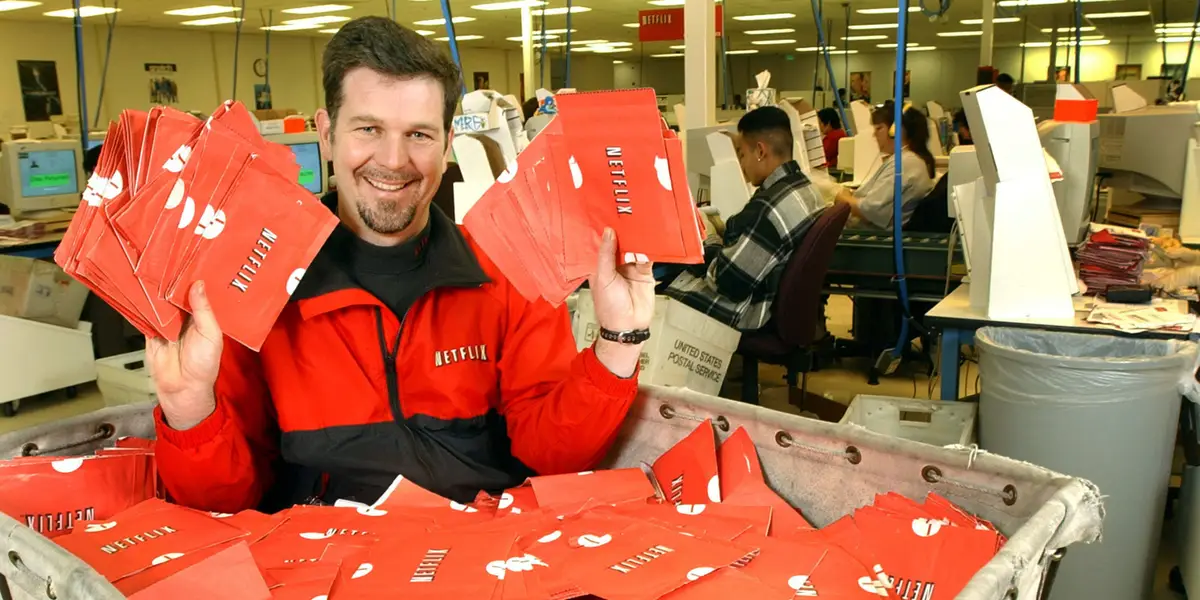
April 2023: Netflix announces its final red envelope DVDs will be shipped out in September 2023.
Photo by Justin Sullivan/Getty Images
Netflix announced it would end its DVD-rental services on September 29, 2023. It marked the end of a 25-year chapter for the business, which became known for its red envelopes.
January 2024: Subscriptions soar amid password crackdown as Netflix pushes into live sports.
Chesnot/Getty Images
Netflix began cracking down on password sharing in 2023, a move that – along with offering a cheaper, ad-supported subscription tier – helped it add new subscribers and deliver blowout earnings throughout 2024, quarter after quarter.
Netflix made a costly push into live sports content with a $5 billion deal for a weekly WWE show in the US, and to air other one-off pro wrestling events globally. The content will start rolling out in early 2025.
Netflix’s former firm chief Scott Stuber also left the company in January 2024. He was later replaced by Dan Lin, who has reportedly sought to implement a new strategy that shifts away from big-budget action films fronted by marquee stars.
November 2024: Netflix shares stellar growth stats for ad-supported subscriptions — and pushes further into live sports.
CFOTO/CFOTO/Future Publishing via Getty Images
In November 2024, Netflix’s ad business turned two years old. It announced it had 70 million ad-supported subscribers — up from 40 million the previous May — and said that more than half of new sign-ups were for ad-supported plans in countries where the option is available.
Netflix made another massive foray into live sports content in November, streaming a highly anticipated boxing match between Jake Paul and Mike Tyson, which drew a record-breaking 65 million concurrent viewers globally though the stream was beset by technical difficulties.
Netflix also streamed its first-ever NFL game on Christmas Day, following a previously announced pact with the NFL to carry holiday games through 2026. The spectacle featured Beyoncé performing at halftime as the Houston Texans faced off against the Baltimore Ravens.
January 2025: Netflix raises the price of its standard plan to $17.99 a month.
Mario Tama/Getty Images
Netflix announced a price hike in mid-January, raising its standard plan to $17.99 a month, up from $15.50. The premium plan with 4K video, which was previously $23 a month, rose to $25.
The company also lifted its ad-supported tier from $7 to $8 a month.
Netflix last raised its prices in October 2023. The move was aligned with similar increases at YouTube TV and Disney.
May 2025: Netflix updates its homepage design for the first time in a decade.
Netflix
In an effort to cut down decision fatigue, Netflix refreshed its homepage design for the first time in a decade.
The new homepage promoted live events, used AI search, and enabled viewers to find what they wanted more quickly, executives said in a blog post and presentation previewing the changes.
The change also included a vertical video feed with clips of Netflix shows that can be tapped to watch immediately.
August 2025: “K-Pop Demon Hunters” is a smash success — and gets a theatrical run.
Han Myung-Gu/WireImage
Netflix’s animated musical “K-Pop Demon Hunters” became its biggest movie ever.
The Netflix original, produced by Sony Animation, generated 236 million views in just 65 days. Analysts said that the movie provided a path for Netflix to compete with Disney in the family animation market.
While the streamer has been hesitant about theatrical releases, Netflix put “K-Pop Demon Hunters” in theaters for a sing-along experience.
October 2025: Netflix makes its official move into video podcasting with a Spotify partnership
Rebecca Sapp/Getty Images for The Recording Academy
For much of 2025, Netflix teased a push into video podcasting. The streamer once courted “Call Her Daddy” host Alex Cooper. Then, it struck a deal.
Netflix announced a partnership with Spotify in October, which would bring video versions of Spotify-owned The Ringer and Spotify Studios podcasts to the platform. These included “The Bill Simmons Podcast,” “The Rewatchables,” and “Conspiracy Theories.”
The podcasts will be available on Netflix in early 2026, per the deal, and will be removed from YouTube.
November 2025: The first Netflix House opens outside of Philadelphia.
kat kendon/Kat Kendon / NETFLIX
Netflix doesn’t have a theme park like Disney, but it does have a permanent installation at the King of Prussia mall.
The first-ever Netflix House opened in November outside Philadelphia. The location reimagined Netflix hits like “Wednesday” and “One Piece” into hands-on activities.
More locations are set to open in Texas and Las Vegas.
December 2025: Netflix agrees to buy Warner Bros. for $72 billion.
Didem Mente/Anadolu via Getty Images

In a deal widely expected to shake up Hollywood, Netflix agreed to buy the studio and streaming businesses of Warner Bros. Discovery in a $72 billion deal. It is Netflix’s biggest acquisition in history.
In the deal, Netflix is planning to buy HBO Max and the top-performing Warner Bros. studio, but not WBD’s TV networks like CNN, TNT, and TBS.
Netflix competed against Paramount Skydance and Comcast for the acquisition.
“People across WBD have navigated extraordinary change over the last three years, while building a company with real creative, journalistic, and commercial strength,” WBD CEO David Zaslav wrote in a memo to staff about the deal. “That deserves to be acknowledged plainly.”