
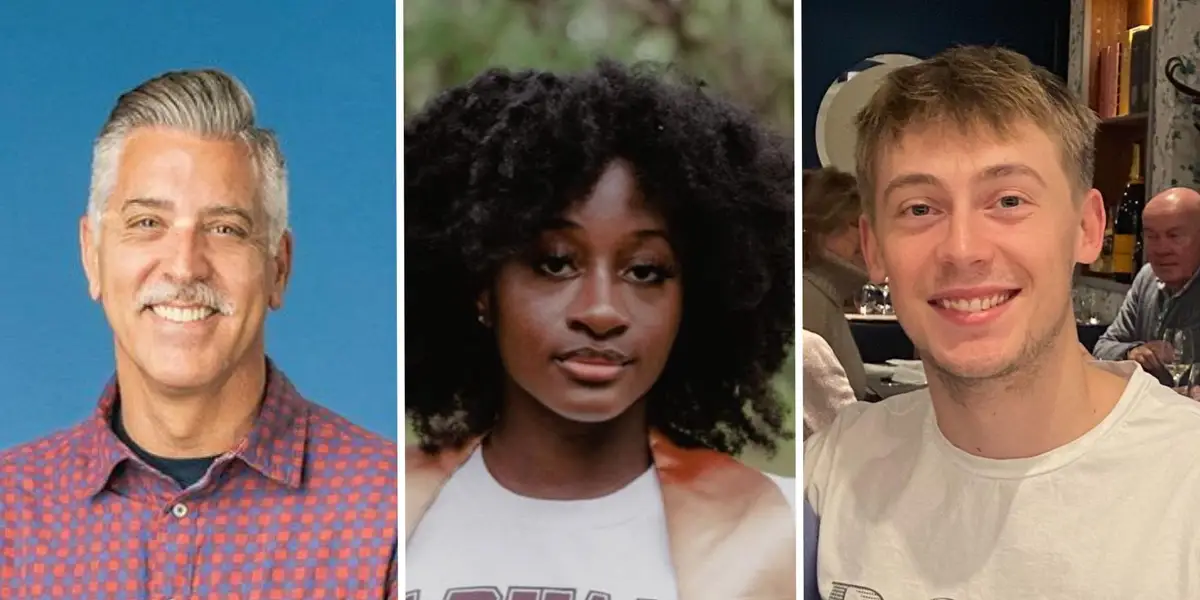
Mfonsio Andrew started posting on TikTok to get over her fear of public speaking.
The 21-year-old Harvard student grew up shy. When running for school government, her friends had to run her social media accounts. She lost.
In 2022, Andrew started posting on TikTok. She tries to be authentic, posting her honest thoughts without over-editing or filming multiple takes.
“If you don’t think you’re good at public speaking, post yourself talking,” Andrew said. “You’re just talking to someone. That’s what I thought about.”
Mfonsio Andrew
Andrew is one of seven social media users Business Insider spoke with who insist that posting online improves their lives. Some said social media offered them solace during unemployment; others said posting videos made them feel more confident.
That’s a rare stance to hear publicly. We’re in the era of school device bans and “Brick-ing” your phone. Digital detoxes are all the rage, and people are setting New Year’s resolutions to get offline.
But one cohort is swinging the other way: They think being online makes them healthier, not less. Here are their stories.
The TikTokers getting their confidence back
Chelsea Schmidt was stumped; she wanted to make posting on social media fun — not work.
Inspiration struck when she channeled her high school cheerleading days and started posting zany videos of herself dancing at the gym, editing them during nap time at the day care where she worked.
“This is what my inner child wants me to do,” the 38-year-old from Kansas City said. “They want me to sing and dance. They want me to be alive and to show other people that liveliness.”
Frank Puyat also wanted to gain confidence. The 18-year-old student at the University of Westminster in London calls himself a “quiet person” — and yet he’s set a resolution to post on TikTok every single day in 2026.
“I’m not the most loud person in the room,” Puyat said. “If I’m with my phone, I get to be that loud person that I want to be.”
It’s not just in their heads: Research shows that posting authentically online is associated with positive mental health outcomes. Sandra Matz, a professor at Columbia Business School, advised social media users not to “act out of character.” If you’re an introvert, be an introvert. There are positive outcomes associated with being real online — whether “real” means green juices or fast food.
I asked Emerson College assistant professor Cameron Bunker: Is it better to post a lot authentically or not to post at all? He chose the former.
“The negative effects of social media are more likely to happen if you’re a passive person who doesn’t post at all,” he said.
Chloe Diamond, a 22-year-old drama student at New York University, tries to post about things that nobody else will admit to: flirting fails, makeup mistakes, all the weird documentaries she watches. She sees the aspirational content — perfect lives with 6 a.m. pilates classes — and aims for the opposite.
That’s gotten her in some trouble. In one video, she shared how difficult it was to find a liberal boyfriend. Jesse Watters talked about it on Fox News.
Chloe Diamond
It’s also had its benefits. She’s made real-world friends with people who empathized with her videos about moving from the Midwest to New York City. She loves to be vulnerable online and respects it when others do, too.
“I like to talk about taboo things,” she said. “I think young women and young people should be empowered to talk about politics, they should be able to talk about their feelings, their struggles.”
There’s community in it. Campbell Morrison’s roommates also post online. “We’re all enjoying it,” the 22-year-old from Edinburgh said. “We get to bounce ideas off of each other.”
Posting online to land a job
Social media can be a key networking tool, and can maybe even get you in front of recruiters.
Bryan Finfrock plans to post on LinkedIn every day in 2026. His goal: find the right job.
The 45-year-old from Rockford, Michigan, was laid off from his product marketing role in 2024. He then learned that he had a cyst in an inoperable area of his spine. He began looking for lower-ranking roles, aiming to avoid the travel that a vice president job may entail. It’s proved challenging.
In November, Finfrock devised his plan. He wanted to be in front of as many eyes as possible, so the right person would find him and help him out. He’d run it like a marketing campaign — with themed days like “technical Tuesday” and “wildcard Wednesday” — so potential employers could see his skills in action.
“Being unemployed for a year, it feels good to talk to people again,” he said. “I needed to do something different.”
Finfrock said that he planned to stop posting when he landed a job — unless his posts start getting popular, of course.
Bryan Finfrock
Kim Rittberg, a New York-based social media strategist for professionals, remembers realizing that she was “accomplished but anonymous.” She had no strong digital footprint, so nobody knew who she was. She resolved to change that — and help others get more online, too.
“Many people have in their mind, ‘Oh, people are going to judge me.’ They think the worst-case scenario,” she said. “People actually do want to help you.”
LinkedIn is the primary venue for this content, with its feed full of so-called “thought leadership.” But there are other venues, too, some of which may have a higher impact. Steve Zeringue, a 50-year-old from California, posts on TikTok.
Zeringue has worked in several design roles, from graphic design to creative direction, but has been unemployed for the last six months. For 2026, his word of the year is “courage.” He’s been quiet his entire life; it was time to make some noise, he decided.
Steve Zeringue
“I was tired of not getting anywhere,” Zeringue said. “The darkness and the crying were getting the best of me.”
The content’s success might not even matter. “I don’t care if it gets likes or views or whatever,” he said. “I’m just having fun.”