
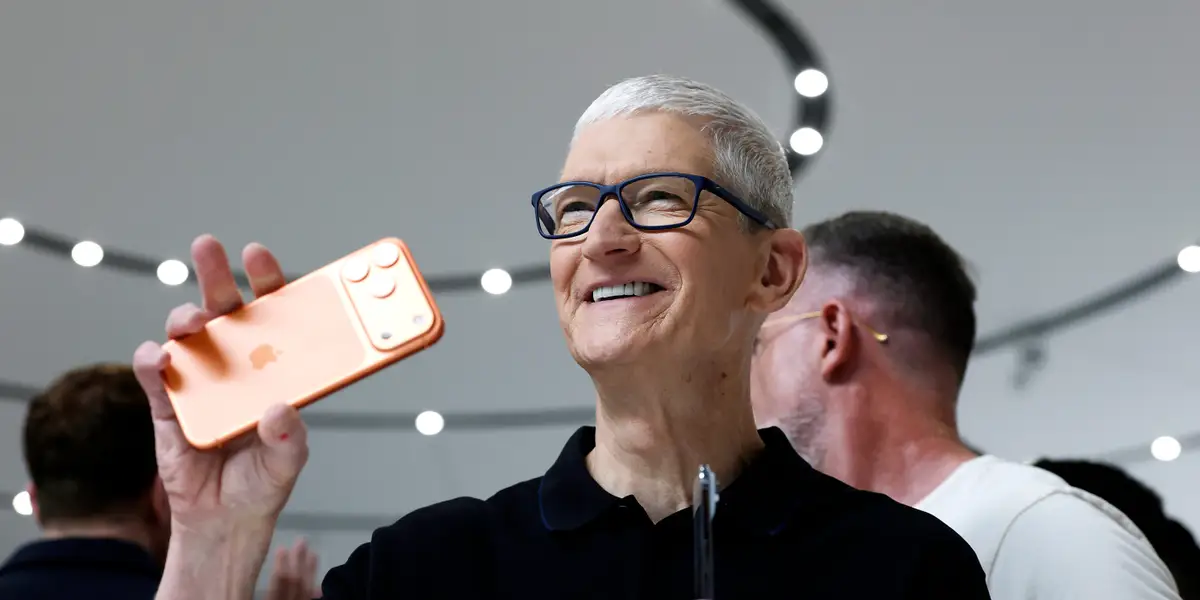
Apple’s outgoing CEO, Tim Cook, proved his predecessor, Steve Jobs, wrong: some people love a large iPhone.
Jobs, the cofounder and driving force behind the iPhone, once knocked smartphones larger than 4 inches. “You can’t get your hand around it,” he said in a 2010 press conference. “No one’s going to buy that.”
When Cook took the reins in 2011, he began expanding the iPhone’s size. In 2012, the release of the iPhone 5 increased the phone’s screen size from 3.5 inches to 4 inches. Later base models reached up to 5.8 inches before landing at around 6.3 inches in the latest iteration, the iPhone 17.
Justin Sullivan/Getty Images
Cook also introduced larger-format iPhones, starting with the Plus series in 2014, which had a display size of 5.5 inches that year.
Cook deftly leaned into larger models as the world turned to video streaming and on-the-go viewing. Netflix, for example, shifted its business around 2011 to focus more on streaming, and YouTube was growing rapidly around that time.
In 2025, Apple introduced its largest iPhone model yet, the iPhone 17 Pro Max, which topped out at 6.9 inches.
The shift to larger sizes has been working out for Apple. Cook said in January that iPhone demand was “staggering” and “unprecedented” in the holiday quarter. Apple posted $85 billion in iPhone revenue for the period.
Early data also showed that demand for the 17 Pro Max was stronger in the first two weeks of availability than other models in the 17 lineup, according to market research firm Counterpoint Research.
Apple’s larger-format phones are an example of how the tech giant prioritizes putting its own spin on technology rather than being first-to-market with an idea.
“We could have done a larger iPhone years ago,” Cook told PBS News’ Charlie Rose in 2014. “It’s never been about just making a larger phone. It’s been about making a better phone in every single way.”
Thanks, Tim.