
What's Hot

    Unisys Non-GAAP EPS of -$0.08 misses by $0.04, income of $473.5M beats by $26.15M (NYSE:UIS) | Invesloan.com

    July 29, 2026

    Caitlin Clark sends WNBA All-Star rankings hovering as 3-point contest viewers falls with out her | Invesloan.com

    July 29, 2026

    Microsoft CFO’s Internal Memo Tells Employees That Its Biggest AI Bets Are Paying Off | Invesloan.com

    July 29, 2026
    Facebook Twitter Instagram
    Finance Pro
    Facebook Twitter Instagram
    invesloan.cominvesloan.com
    Subscribe for Alerts
    • Home
    • News
    • Politics
    • Money
    • Personal Finance
    • Business
    • Economy
    • Investing
    • Markets
      • Stocks
      • Futures & Commodities
      • Crypto
      • Forex
    • Technology
    invesloan.cominvesloan.com
    Home » 3 Takeaways From Mamdani’s City-Run Grocery Stores — and 30% Discount | Invesloan.com
    Money

    3 Takeaways From Mamdani’s City-Run Grocery Stores — and 30% Discount | Invesloan.com

    July 29, 2026Updated:July 29, 2026
    Share
    Facebook Twitter LinkedIn Pinterest Email

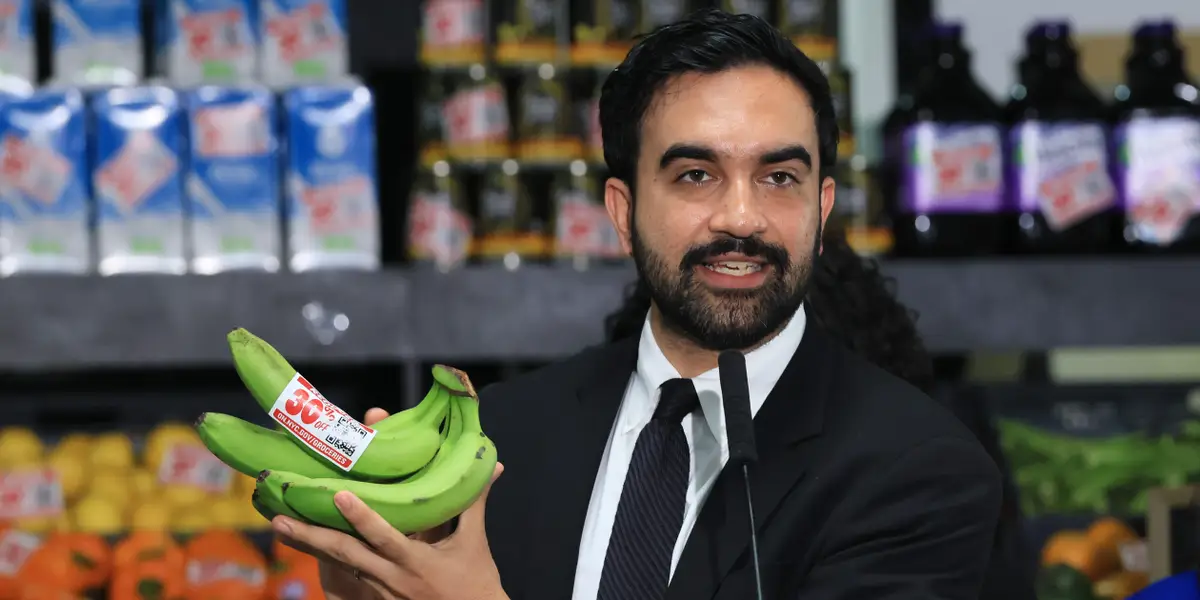
    Zohran Mamdani’s chain of city-run grocery stores — one of his most notable campaign promises — will offer kitchen staples at a steep discount. With crushing overhead costs, some local businesses may struggle to compete.

    The mayor said the stores will offer a 30% discount on the “most common and most critical groceries for families,” like fresh produce, meat, and dairy. New York City has allocated $70 million in the capital budget to launch the stores, which will be subsidized by municipal funding once open.

    From prices to historical precedent, here are Business Insider’s biggest takeaways from the plan.

    Shoppers could stand to save

    Mamdani’s city-run stores — set to open by 2029 — will be located in each of the five boroughs, with the Bronx given first priority, with a planned opening at the end of 2027. The administration said its store locations will be based on “where need is highest,” and that it is using economic data to identify priority neighborhoods.

    Grocery prices in US cities have jumped by 25% in the past five years, slightly outpacing overall inflation, and a 2024 Sienna Poll found that nearly 80% of New Yorkers regularly worried about affording meals.

    The 30% discount Mamdani announced, which will apply regardless of household income, will include core goods such as meat, seafood, fresh produce, dairy, and pantry staples. The Mayor’s Office projected New Yorkers who are able to take advantage of the lower prices would save an average of 15% on their grocery bills, or about $90 a month.

    The administration said that prices for core grocery items will be locked in monthly and updated periodically to reflect market conditions. And, similar to retailers like Trader Joe’s, the stores will launch their own private label, “NYC Groceries,” across a variety of categories.

    “The savings will last for the entire month,” he said. “That means no weekly fluctuations nor sticker shock at the checkout line; not for our seniors living on fixed incomes nor for the parents who rely on a regular supply of apple slices to keep toddler tantrums at bay.”

    Mamdani’s camp also hopes that, alongside offering New Yorkers cheaper groceries, the city-run stores will provide more local job opportunities. The city will ask operators to participate in a Labor Peace Agreement to provide workers with benefits and “family sustaining wages.”

    City-run stores have been tried before

    Mamdani’s plan will partner city-run supermarkets with private grocery store operators. The city will set requirements for design, standards, and pricing, but leave these third parties to run the stores on a daily basis. The administration is using a similar public-private partnership approach for affordable housing developments.

    Still, city-run stores aren’t a fresh concept. NYC already has six markets that are overseen by the Economic Development Corporation, a quasi-public nonprofit that manages city-owned property. Because the city can offer grocers cheaper rent, the food in those stores is typically cheaper than at private retailers.

    There are examples of this across America. St. Paul, a small Kansas town with just over 600 residents, has maintained a town-run store for more than a decade. City-owned stores in Kansas City and Baldwin, Florida, however, both closed due to financial challenges.

    While not run by local governments, many military bases also have commissaries selling tax-free groceries and household items at a discount — thanks to federal oversight.

    Local businesses are feeling skeptical

    NYC is more than a year away from the opening of its first city-run store, but some local businesses are already feeling uneasy.

    Private grocery stores typically have a razor-thin profit margin — between 1% and 3% — due to high overhead costs for food, rent, staff, equipment, and inflationary pressure.

    Smaller businesses like bodegas, fruit stands, and convenience stores often struggle to net a profit, too. More than a dozen street food vendors told Business Insider this spring that the steep cost of food, along with a dwindling customer base, makes it challenging to earn a living. Some critics of Mamdani worry that city-run grocery stores will create unsustainable competition with these small businesses.


    Share. Facebook Twitter Pinterest LinkedIn Tumblr Email

    Keep Reading

    Microsoft CFO’s Internal Memo Tells Employees That Its Biggest AI Bets Are Paying Off | Invesloan.com

    Movies That Made $2 Billion on the Box Office | Invesloan.com

    Disney Drops GitHub Copilot, Adds OpenAI’s Codex in AI Tool Shake-up | Invesloan.com

    ‘the Diary of a CEO’ Star Steven Bartlett Lost 4 Key Staffers Recently | Invesloan.com

    Traveling on Weight-Loss Medication: What I Wish I’d Known | Invesloan.com

    Air Force Two Photos: Inside the Vice President’s Plane | Invesloan.com

    Xbox Takes a Leap Into Advertising, Could Shake up Gaming Market | Invesloan.com

    AI’s Latest Casualty? the Health of the People Building It. | Invesloan.com

    How One Professor Hit ‘Lean FI’ by Moving Out of the States | Invesloan.com

    LATEST NEWS

    Unisys Non-GAAP EPS of -$0.08 misses by $0.04, income of $473.5M beats by $26.15M (NYSE:UIS) | Invesloan.com

    July 29, 2026

    Caitlin Clark sends WNBA All-Star rankings hovering as 3-point contest viewers falls with out her | Invesloan.com

    July 29, 2026

    Microsoft CFO’s Internal Memo Tells Employees That Its Biggest AI Bets Are Paying Off | Invesloan.com

    July 29, 2026

    I’m managing a former colleague who simply can’t sustain along with her workload. How do I deal with this with out being a jerk? | Invesloan.com

    July 29, 2026
    POPULAR

    China’s first passenger jet completes maiden commercial flight

    May 28, 2023

    Numbers taking US accountancy exams drop to lowest level in 17 years

    May 29, 2023

    Toyota chair faces removal vote over governance issues

    May 29, 2023
    Advertisement
    Load WordPress Sites in as fast as 37ms!
    Facebook Twitter Pinterest WhatsApp Instagram
    © 2007-2023 Invesloan.com All Rights Reserved.
    • Privacy
    • Terms
    • Press Release
    • Advertise
    • Contact

    Type above and press Enter to search. Press Esc to cancel.

    invesloan.com
    Manage Cookie Consent
    To provide the best experiences, we use technologies like cookies to store and/or access device information. Consenting to these technologies will allow us to process data such as browsing behavior or unique IDs on this site. Not consenting or withdrawing consent, may adversely affect certain features and functions.
    Functional Always active
    The technical storage or access is strictly necessary for the legitimate purpose of enabling the use of a specific service explicitly requested by the subscriber or user, or for the sole purpose of carrying out the transmission of a communication over an electronic communications network.
    Preferences
    The technical storage or access is necessary for the legitimate purpose of storing preferences that are not requested by the subscriber or user.
    Statistics
    The technical storage or access that is used exclusively for statistical purposes. The technical storage or access that is used exclusively for anonymous statistical purposes. Without a subpoena, voluntary compliance on the part of your Internet Service Provider, or additional records from a third party, information stored or retrieved for this purpose alone cannot usually be used to identify you.
    Marketing
    The technical storage or access is required to create user profiles to send advertising, or to track the user on a website or across several websites for similar marketing purposes.
    • Manage options
    • Manage services
    • Manage {vendor_count} vendors
    • Read more about these purposes
    View preferences
    • {title}
    • {title}
    • {title}