
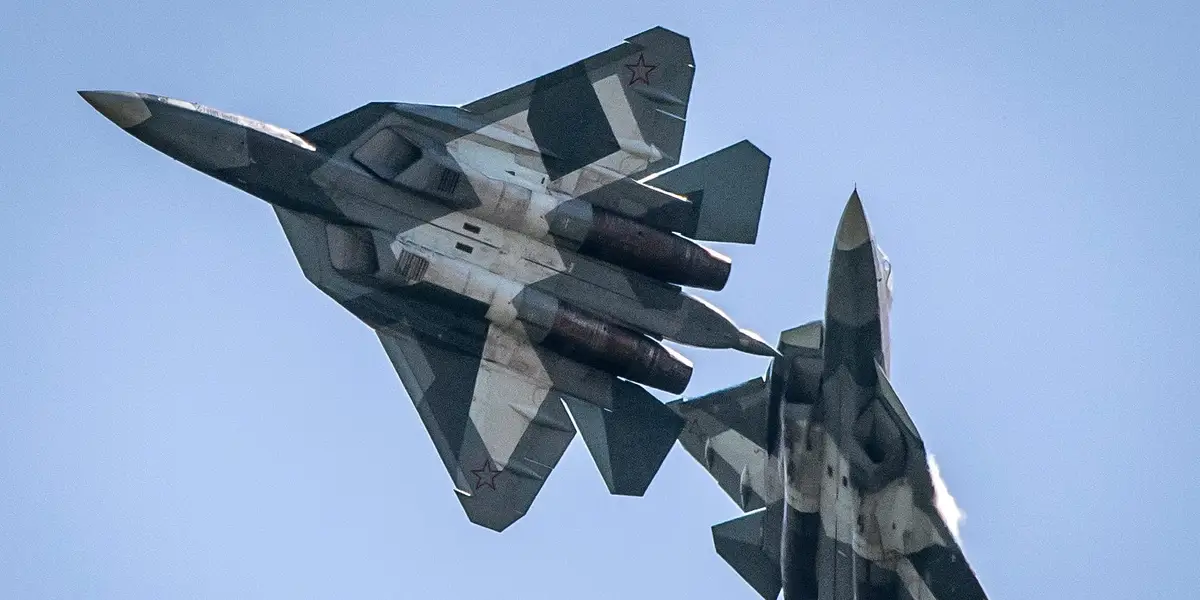
Ukraine said over the weekend that its strikes on Russian oil facilities have reduced production so much that Russia is now having to import fuel for its warplanes.
On Saturday, Ukraine’s GUR, the country’s military intelligence agency, said that “systematic and precise strikes by Ukraine’s Defense Forces against Russia’s oil-refining network have led to a significant reduction in jet fuel production in the Russian Federation.”
It said that Russia’s increasing air attacks against Ukraine, “combined with the need to sustain civilian air transport, have resulted in a shortage of domestic resources.”
“To meet the needs of military and civilian aviation, Russia, which for decades has positioned itself as an energy superpower, has officially introduced a temporary ban on the export of its own aviation fuel and is being forced to seek ways to import foreign Jet A-1 aviation fuel,” the GUR said.
That fuel is compatible with a range of Russian military aircraft used to launch missiles and bombs, as well as jet-powered drones. The GUR added that Russia is now fueling its Il-76MD-90A military transport with fuel outside manufacturer recommendations.
The GUR said that Russia had purchased at least 70,000 tonnes of aviation fuel from South Korea and Egypt that was delivered on three shadow fleet tankers. The fleet is a network of vessels that Russia uses to circumvent Western sanctions through hidden ownership, among other methods.
The GUR Saturday said that Russian efforts to “circumvent sanctions will inevitably receive an appropriate response.”
Ukraine is conducting a major long-range strike campaign targeting oil and gas facilities inside Russia in a bid to damage the country’s economy, which depends heavily on the energy sector, and frustrate its ability to continue its invasion of Ukraine. The strikes have hit targets hundreds of miles into Russia.
Ukraine refers to these strikes against Russia’s economy as “long-range sanctions.” Ukrainian President Volodymyr Zelenskyy promised this month that “there will be more Ukrainian deep strikes, which should demonstrate to Russia and the Russians that peace is necessary.”
Gallo Images/Orbital Horizon/Copernicus Sentinel Data 2026
Ukraine has significantly increased the pace of these strikes this year and claimed a host of wins against targets this month, including strikes on refineries, processing facilities, and terminals. The country has said that some sites have halted operations as a result.
Zelenskyy said in June that nearly 40% of Russia’s primary oil refining capacity was offline as of the previous month. And he said this month that it remains a priority for Ukraine.
Russia’s economy is heavily dependent on oil and gas. Western sanctions have affected the industry, but Russia also received a reprieve when the war in Iran limited other energy sources by closing the Strait of Hormuz, a route Russia does not rely on. Kyiv is trying to restore some of that pressure.
Ukraine has primarily used homemade cruise missiles and drones to hit targets inside Russia. Though Western partners provided long-range weapons, restrictions on their use inside Russia forced Ukraine’s booming defense industry to develop domestic solutions.
Ukraine has unveiled new weaponry with longer ranges in recent months to deepen its campaign, including drones with ranges exceeding 1,800 miles.
Mykhailo Fedorov, Ukraine’s former defense minister, said this month that Ukraine could be capable of hitting Russian territory with domestically made ballistic missiles within the next three to six months. These weapons typically have longer ranges and move much faster than cruise missiles.
Ukraine is fighting against barrages of Russian strikes on its territory that are stretching its air defenses thin. A key target Kyiv seeks to pursue is the missile launchers inside Russia.
Russia has been intensifying its strikes on Ukraine. Zelenskyy said on Sunday that in the last week, Russia launched almost 2,000 attack drones, more than 1,600 glide bombs, and 31 missiles, including North Korean ballistic missiles, at Ukraine.
Ukraine’s long-range strike campaign, which is focused solely on legitimate military targets rather than cities and civilian infrastructure like Russian strikes, has yet to push Moscow toward negotiations for ending hostilities, but Kyiv hopes that the fuel shortages will raise the cost of the war and constrain some attacks.