
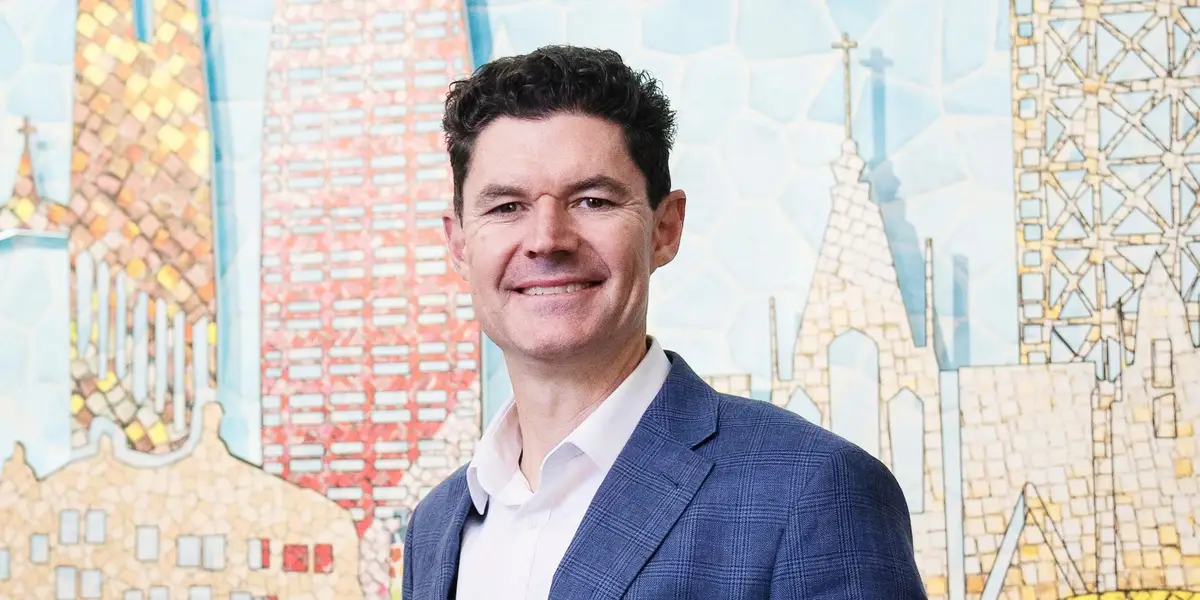
This is an as-told-to essay based on a conversation with Michael Boyle, the 55-year-old managing director of HP Greater Asia, based in Singapore. The following has been edited for length and clarity.
I’ve been at HP for more than a decade, but I’m a musician first.
I’ve been in rock bands for most of my life in every country I’ve moved to, and formed bands across different HP offices. I’ve moved across Singapore, Barcelona, and Sydney for different roles in the company. I’m now the managing director for Greater Asia.
I joke that I wanted to be an international rock star, which didn’t quite happen, but I got to play music internationally, which is still fun.
My days are long, starting early at 6 a.m., and often ending as late as 11 p.m. Music, workouts, and curbs on phone time get me through busy days.
I’m generally an early riser, getting up at around 6 a.m.
I’m Australian, so coffee — a flat white specifically — is a very important morning ritual for me.
Typically, I’ll get in a workout after that. It’ll either be running, which I find the fastest and easiest, or a swim.
The first thing I don’t do when I wake up is look at my phone; I avoid it for the first 10 minutes of the day to help me wake up naturally and practice gratitude.
In terms of general phone use throughout the workday, I try to use it in 10-minute bursts to get through news and that sort of thing. I’m not someone who will spend hours flicking around on the phone. I see it as a tool to get work done, jot things down, and as another interface for AI.
I do a burst of work for an hour at home
I like to get a sense of what’s ahead in the day before I head into the office. I do this so I can free up my time for when I’m in the office, because I want to be fully present and part of the team.
I head to the office around 8 a.m.
HP
Around 8 a.m., I head into the office. If I’m feeling it, I run to work. I convert documents into podcasts and listen to them while running.
As a busy executive, I often have days when I’m not at my desk, so I use AI to summarize documents, stay ahead on my emails, and manage my daily agenda. AI is helping me remove clutter, so I have time to think.
Recently, I was working on an initiative in the company, for which I needed to give a pitch. I narrated my presentation and pitch to ChatGPT first, and it gave me feedback on where I was going off track, where I was staying on track, what the key punchline was, and suggestions for keeping the group engaged.
It trained me and gave me real-time feedback. Whereas in the past, I would’ve done that in a vacuum. I’d be in a hotel room, talking to a wall and thinking, “I hope this goes OK.”
There are so many ways this tool can help us become better leaders, make time to think, and, hopefully, be more effective.
I leave the office at 6 p.m.
Daily exercise is non-negotiable for me; I find it’s the best way to stay fresh and happy. I’m a 10,000-step person, often running back home from the office to get my steps in.
When I get home from the office, I don’t look at my phone or anything for a while. That’s blocked out for family.
As a family, we’re very big on no device use at the dinner table. I’m happy to say that my twin daughters can go out to dinner and leave their phones at home, which is pretty rare for 21-year-olds. We’ve taught them a few good things.
At about 9 p.m. I have to fire up again for late meetings
The company is based in the US, so I often have meetings late into the night because of the time difference.
If I need to stay up late at night for international meetings, the best way is to pick up the guitar — it wakes me up again. It’s my hack for when I don’t want to drink coffee.
I just have to make sure I don’t keep playing during my meetings.
At around 11 p.m., my batteries run out
I’m not very productive after that, so that’s the end of my day.
At home, I’ll play guitar and drums for at least an hour or two every weekend. That’s when I allow myself to unplug and put my brain into neutral.