

Millions of families are dishing out five figures this year to care for their loved ones.
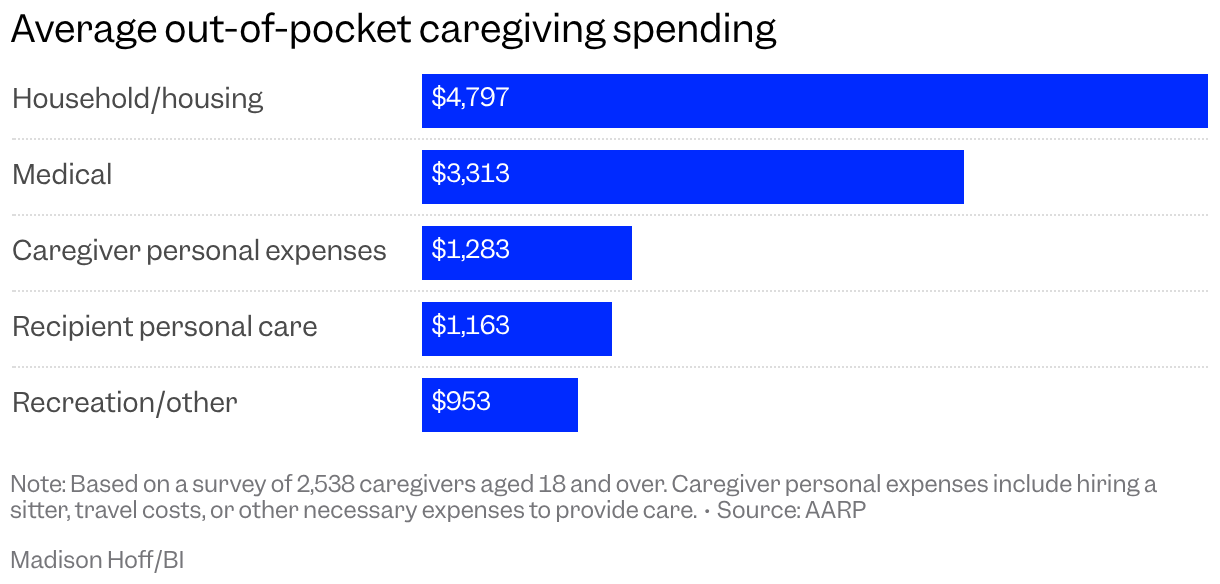
AARP found that caregivers spent $11,508 out of pocket this year on average, up nearly 60% from $7,242 five years ago. The new results were based on a study conducted in June and July featuring over 2,500 adults who provide care to an adult relative or friend.
“The increase in costs may indicate that caregivers are purchasing more or different types of support, covering a greater share or broader range of care-related expenses, or managing more intensive or complex care needs,” the report said. “The difference may also partly reflect the resumption of services following the pandemic, enhancement to the 2026 questionnaire and differences in the caregiver population between the two different studies.”
Household expenses like food and housing accounted for 42% of caregiving expenses, followed by 29% for medical expenses. AARP said 37% of medical expenses are from “copays, coinsurance, insurance premiums and direct payments to providers,” followed by 19% for nursing homes.
Tamara Johnson, who is in her 50s, had worked a well-paying corporate leadership job but quit to care for her husband after a major stroke. He went from earning almost $200,000 a year to bringing in $50,000 in medical disability retirement. His care costs quickly became a massive share of their combined income.
“It’s been taking two steps forward and three steps back,” Johnson said. “We’re still on that healing journey.”
AARP asked working caregivers what work-related actions they’ve had to take: work more hours, work an additional job, take unpaid time off, take paid time off, work fewer hours, and work different hours. Thirty-four percent of workers experienced three to six of those impacts, and another 31% experienced one or two. AARP data suggests that people who got second jobs or increased hours at their current jobs had the highest out-of-pocket costs and needed to find a solution.
Caring for someone with dementia can be even more costly. Caregivers providing assistance to a relative or friend living with dementia spend $5,600 more out of pocket, on average, than caregivers for loved ones without dementia. Additionally, caregivers with a relative or friend in a nursing home spent, on average, half of their annual household income on caregiving expenses.
Wendy Rowland, who is in her 50s, relocated from Tennessee to Mississippi after selling her and her husband’s home to help pay for his long-term care. Her husband was diagnosed with early-onset Lewy body dementia, and his facility costs $6,750 a month. Because he hasn’t reached the age when he could claim Social Security, he receives $2,700 a month in disability insurance, which falls way short of his monthly care costs.
“I’ve navigated this mostly on my own. It’s more than a lot of people can take, and it was almost more than I could take,” Rowland said. “It was a really dark time when everything first started, but I knew I had to keep it together at least a little to take care of everything.”