
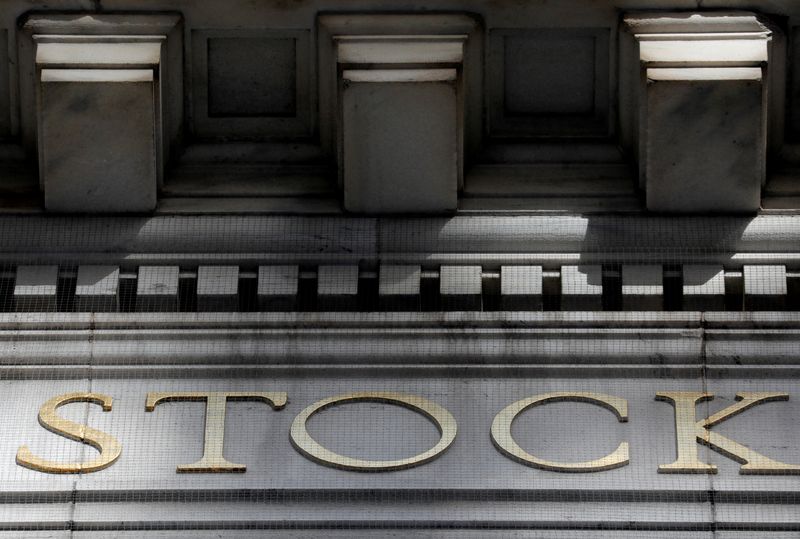
© Reuters. FILE PHOTO: Morning daylight falls on the facade of the New York Stock Exchange (NYSE) constructing in Manhattan in New York City, New York, U.S., January 28, 2021. REUTERS/Mike Segar/File Photo
By Shankar Ramakrishnan
(Reuters) – Last week, synthetic intelligence server maker Super Micro Computer (NASDAQ:) achieved one thing not seen since 2021: It paid 0% rate of interest on a $1.7 billion capital elevate. Its secret: it issued a bond that may convert to shares.
The providing exhibits how the marketplace for such convertible bonds is getting a second wind, as buyers modify to the concept that the Federal Reserve will preserve charges greater than they anticipated this 12 months and a benign development setting drives up shares.
In simply the final two weeks, eight U.S. corporations, together with Global Payments (NYSE:), NextEra Energy (NYSE:), Lyft (NASDAQ:) and Sunrun (NASDAQ:), have raised almost $7 billion by means of convertible bonds, making it the busiest interval for the hybrid securities in over two years.
To make convertibles extra engaging to corporations, banks are promoting insurance coverage and different companies to cut back the chance that they provide away shares at a reduction to the market value. While the companies add to the prices of issuance, the financial savings on curiosity are greater. Companies can save on common 3% to 4% in curiosity prices, in line with an investor and an analyst stated.
“There are significant coupon savings that a company can get in a convertible bond versus a regular bond,” stated Santosh Sreenivasan, head of the equity-linked and personal capital markets enterprise within the Americas at JPMorgan, the highest underwriter of such bonds
BofA Global analysts count on $90 billion to $100 billion of world convertible bond issuance this 12 months, a 20% improve from a 12 months earlier. Some $60 billion to $65 billion is predicted within the United States.
David Clott, portfolio supervisor at Wellesley Asset Management, stated he expects volumes to get a lift from corporations trying to refinance a wall of maturities within the subsequent few years.
LOWERING DILUTION
Like an everyday bond, convertibles pay a coupon and their yields change with rates of interest. But their worth additionally will depend on the corporate’s inventory value, as they will convert to shares.
The danger of diluting current shareholders by means of convertible bonds had saved many corporations away, however bankers are providing different merchandise to cut back that affect.
Of the offers executed within the final two weeks, many included an possibility referred to as internet share settlement, which permits the corporate to settle bonds changing to inventory primarily in money – and just some inventory.
In all of the offers, corporations additionally purchased a capped name, a spinoff used to extend the share value at which the bonds are transformed to inventory.
Global Payments’ new $1.75 billion bond, as an example, was set to transform into shares at a 20% premium to the present share value. But the capped name raised the conversion premium to 75%. Global Payments spent $222.3 million on shopping for the capped name.
Super Micro additionally elevated the conversion premium on its deal from 37.5% to 100% by shopping for the spinoff.
Companies sometimes pay about 10% of their issuance proceeds to purchase the capped name, in line with JPM’s Sreenivasan.
COUNTERING HEDGES
Typically, buyers in convertible bonds are likely to concurrently place bets that the inventory of the corporate would fall, a method referred to as hedging. In a brief guess, they borrow inventory and promote it, trying to purchase it again later at a cheaper price.
The brief bets can put strain on the inventory. To counter that within the current offers, many issuers used proceeds to purchase again their very own inventory from bond patrons getting into into such brief bets.
Global Payments, for instance, purchased again $185 million of inventory concurrently with the convertible bond.
These methods to get rid of dilution danger have been round for years however extra corporations are exhibiting dedication to make use of them now, JPMorgan’s Sreenivasan stated.
“Companies want to clearly signal to their shareholders that while they have selected a product that has some dilutive effect, they have managed that risk appropriately,” he stated.