

A recurring scene appears in many blockchain discussions. Developers describe the moment they try to move value across Bitcoin, Ethereum, and Solana, only to pause as they switch tools, wait for confirmations, or manage several interfaces at once. This small moment repeats across the industry and shows how divided liquidity has become between major networks.
LiquidChain says it enters this setting with a proposed Layer-3 model designed to place a shared structure above these chains and also a presale for its native token. The idea introduces a simple path that brings liquidity from the largest ecosystems into one coordinated layer instead of leaving assets locked in separate pools.
How LiquidChain Builds One View of Multi-Chain Liquidity
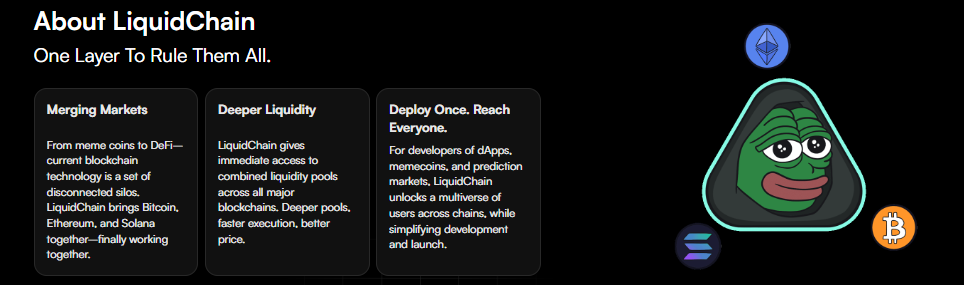
LiquidChain builds its design on a Layer-3 structure described in its whitepaper. This structure places a shared layer above existing chains instead of replacing them. It creates one access point for liquidity that Bitcoin, Ethereum, and Solana usually hold in separate pools. Applications gain a smoother path to move value without switching tools or waiting for slower bridge processes.
This setup supports consistent routing across networks. Developers can build payment tools, trading platforms, or on-chain services that rely on steady liquidity from several ecosystems at once. The framework keeps the focus on clarity. Assets stay on their native chains, and LiquidChain manages liquidity views through its unified layer. This helps reduce confusion for builders who work across multiple environments.
The network includes a fee model and an incentive mechanism that support activity inside the shared layer, the team says. These elements aim to provide predictable operating conditions, so multi-chain tools can function without unexpected shifts or costs.
Delivering the Unholy Trinity from below.
BTC, ETH and SOL together in the ultimate Layer 3, Liquid Chain.
https://t.co/vqvBcdSQYC pic.twitter.com/4Jok0anlhO
— LiquidChain (@getliquidchain) November 19, 2025
Why LIQUID’s Distribution Plan Supports Long-Term Stability
LiquidChain uses a structured allocation model that assigns 30% to development, 25% to the Treasury, 20% to marketing, 15% to rewards, and 10% to listings. Each part receives a defined share that supports a specific role in the ecosystem. This keeps the overall structure organized and easy to understand.
The development portion helps fund upgrades and technical progress, while the Treasury allocation provides reserves for future stages. Marketing receives enough supply to support visibility during the crypto presale without creating unnecessary pressure on the token. Rewards and listing allocations complete the model by supporting engagement and preparing the asset for wider access.
This balanced layout creates stability across the network. Each category receives the resources it needs without taking from another. This reduces sudden shifts and supports steady growth as the ecosystem expands.
The tokenomics model also aligns with the project’s goal of forming a shared liquidity layer across major blockchains. A system that manages multi-chain activity needs reliable upkeep, and the distribution reflects that requirement. This helps LiquidChain maintain a clear direction as it builds its liquidity framework.
Why LIQUID Holds a Distinct Position in Multi-Chain Planning
LiquidChain enters the market with a plan that simplifies cross-chain value movement. The shared liquidity layer introduces an organized environment where Bitcoin, Ethereum, and Solana no longer operate in isolated pools. This gives the project a clear position as multi-chain development remains an important topic across blockchain ecosystems.
The next stages may include new integrations, fee updates, or incentive adjustments. Continued expansion of the Layer-3 environment could appeal to developers who want consistent access to liquidity without handling several systems. As the roadmap advances, LiquidChain strengthens its role in shaping how value moves across networks.
The LiquidChain crypto presale continues to appear in market discussions due to its focus on unified liquidity. It’s particularly talked about among projects centered on infrastructure.
The presale helps LiquidChain build its early community as the Layer-3 structure prepares for broader rollout. This keeps the project in active circulation across multi-chain development discussions.
Staking plays a central role in participation. The rewards support long-term engagement and help secure the network during its early stages. The yields may adjust as more stakers join, but they form part of the incentive model planned from the start.
Learn more:
Website: https://liquidchain.com/
Social: https://x.com/getliquidchain
The post LiquidChain Aims to Bridge Liquidity Between Bitcoin, Ethereum, and Solana Networks appeared first on Cryptonews.