
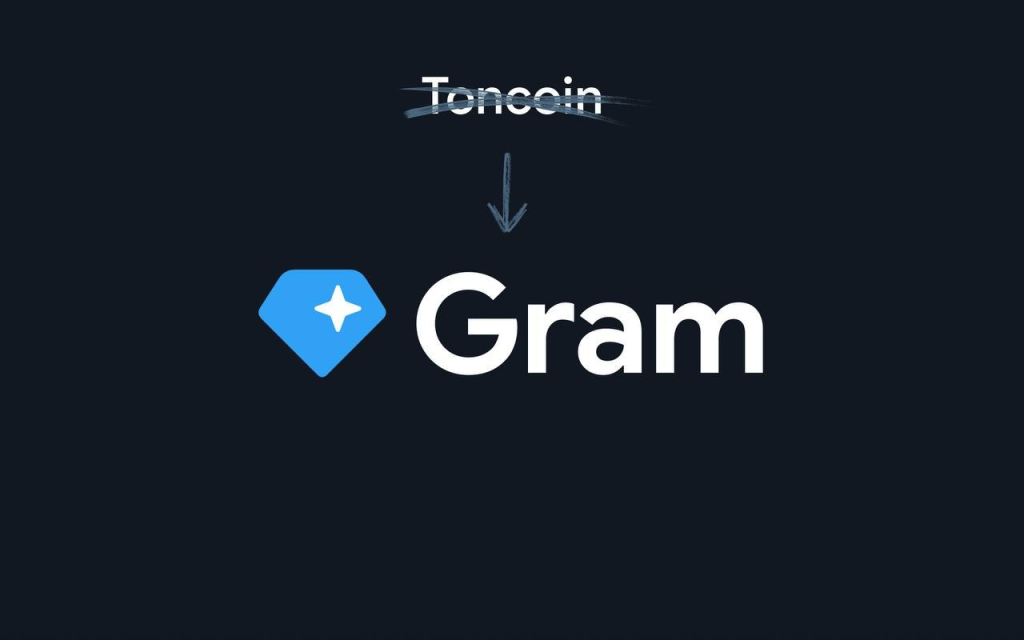
The TON Foundation is rebranding its native token from Toncoin to Gram, reviving the name attached to Telegram’s original 2018 blockchain project and signaling a deliberate push to convert the messaging platform’s 900 million monthly active users into on-chain participants.
The change is cosmetic, no token swap, no technical migration, no new asset issuance, but the strategic logic is anything but superficial.
The rebrand arrives as Telegram founder Pavel Durov frames the rename as step four of seven in his publicly stated ‘Make TON Great Again’ roadmap, with steps five through seven still undisclosed.
The compounding dynamic here is regulatory history. Gram was the name at the center of a landmark SEC enforcement action that forced Telegram to return $1.2 billion to investors in 2020.
Reviving that name is a calculated bet that the current TON ecosystem has enough structural distance from that legal episode to reclaim the brand without inheriting its liability.
Discover: The Best Crypto to Diversify Your Portfolio
Gram’s History: $1.7B ICO, SEC Intervention, and the Rebrand From Toncoin That Brings It Full Circle
The transmission mechanism from name change to user acquisition is straightforward: reduce the cognitive gap between Telegram’s brand identity and its native crypto asset.
Toncoin meant nothing to a first-time Telegram user. Gram, short, familiar, tied to Telegram’s original vision – does.
The historical weight behind that word is significant. Telegram raised approximately $1.7 billion through private token sales tied to Gram in 2018, positioning it as the currency layer for the Telegram Open Network.
The SEC intervened in 2019, alleging the offering constituted an unregistered securities sale. Telegram settled in 2020, agreeing to return roughly $1.2 billion to investors and pay an $18.5 million civil penalty, then stepped away from the project entirely.
The network survived through open-source development and community stewardship, eventually relaunching as The Open Network under the TON Foundation, with Toncoin as its community-run asset.
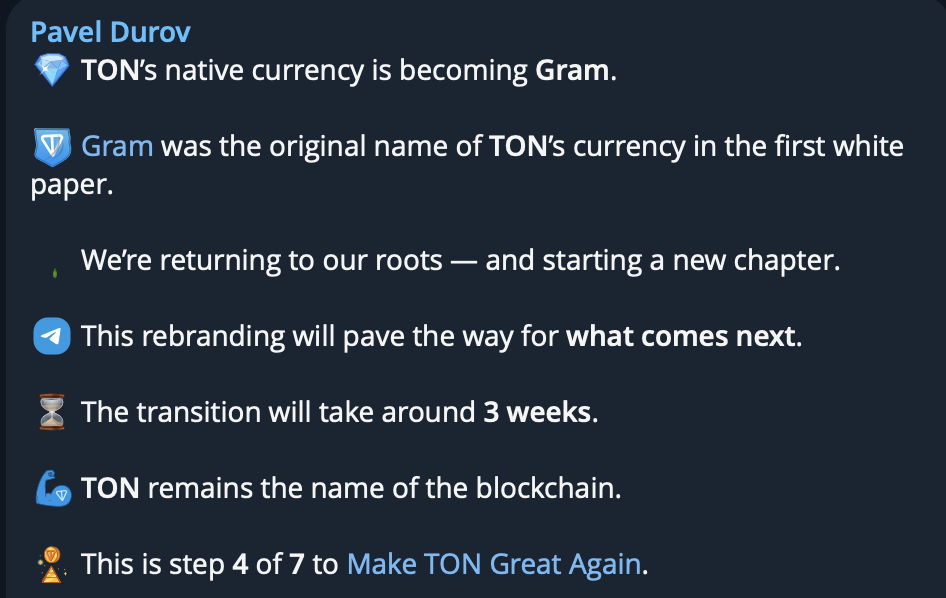
Now, with Telegram intending to become the primary ecosystem administrator and largest validator, a governance shift explicitly flagged in the MTONGA roadmap, the ecosystem is reasserting its original identity while structurally differentiating itself from the entity that faced SEC enforcement.
The rebrand rolls out over approximately three weeks across wallets, infrastructure providers, and ecosystem applications. User balances, staking positions, and network operations remain unchanged throughout.
900 Million Users as Addressable Market: What the Gram Rebrand Actually Unlocks
Telegram’s monthly active user base is one of the largest untapped crypto distribution channels.
The structural opportunity is not speculative; it is conditional on conversion rates. If the TON ecosystem converts even 1% of Telegram’s active base into regular Gram wallet users, that is 9 million participants, a figure that rivals the active user counts of several top-ten blockchain networks.
The friction point has always been brand coherence. Telegram users encounter TON Space wallet, mini-apps, and bot-based payment tools that reference a token called Toncoin with the ticker TON, a label that carries no intuitive connection to the Telegram product they already use daily.
Gram closes that gap. The analogy to WeChat Pay’s embedded finance model is instructive: WeChat did not ask users to understand digital payments architecture; it made transacting feel native to the messaging interface.
Gram positions The Open Network to pursue an equivalent integration depth inside Telegram’s super-app environment, covering payments, gaming, stablecoins, and mini-app monetization.
Market participants responded immediately. Toncoin surged 19% following the announcement, reaching approximately $2.21 in early trading before retracing toward $2.00.
Discover: The Best Token Presales
The post Toncoin (TON) Revives ‘Gram’ Token Name in Bold Bid to Own Telegram’s 900M Users appeared first on Cryptonews.