

This as-told-to essay is based on a conversation with Dean Chou, a 53-year-old US citizen who moved back to Taiwan to be closer to his aging parents. It’s been edited for length and clarity.
I was born in Taiwan, and moved to Los Angeles in 1999 for college.
After graduation, I got hired as a product coordinator for a lighting fixture company. I worked between the American office and the factories in China, and that’s how I learned about procurement.

Provided by Dean Chou.
Around 2009, when the economy crashed, I was laid off. My next job was selling frozen seafood, and I continued to build the sourcing business I had started a few years earlier. I was helping American companies find factories and products in Asia.
Within two years, I got my green card. After that, I quit so I could focus on my own business. In 2018, I became a US citizen. I still do sourcing work today, along with running a roofing business in Los Angeles.
Building a life in the US
America worked out perfectly for me.
In 2010, my wife and I bought a three-bedroom house for about $450,000. It was built back in the ’50s and located on a cul-de-sac, with a huge yard and a detached garage. It was a pretty good starting home.
In October 2019, we discovered that my wife had lung cancer, and she passed away in April 2021.
After she passed, I continued living in the house with our dogs. I’d planned to hold onto it until I retired because we had restored it together. But eventually, I realized I needed to look forward, and letting go of the house became part of that grieving process.
Want more Business Insider in your news feed?
Add BI in Google so our reporting is easier to find when you’re searching for what matters.
As I started thinking about what came next, my parents were a big part of the decision.

Provided by Dean Chou.
They’re both 78 now, and they’re still capable and happy, but I’ve missed out on over 25 years with them. I always felt guilty about the distance. I’m an only child; if they ever needed help, there was no one else.
Before, I was married, and moving back wasn’t something I was seriously considering. But by 2025, I felt it was time. More than anything, I wanted to be closer to my parents and friends. I can still travel back to LA anytime I want.
The cost of living in Los Angeles was also getting expensive, and because I could manage my businesses remotely, moving back to Taipei made sense.
In April 2025, I sold the house in California for $1.05 million. It was really emotional when I had to hand my keys to the new owner, but all the past was past, and now it was done.
Deciding to go home
I left Los Angeles in October, with my dogs and five pieces of luggage. I rented a car to take me from the airport to my parents’ apartment.
They met me downstairs when I arrived, and I remember thinking, “Oh, I’m finally home.”
I stayed with my parents before getting my own place at the end of November. I now live in a 780-square-foot apartment about a 15-minute walk from Taipei 101. My rent is 40,000 Taiwan dollars, or about $1,200.

Provided by Dean Chou.
My living costs are usually around $2,500. Food is much cheaper than in LA, and I don’t have a car.
I’m also still managing my LA-based company remotely with a business partner. Because Taiwan is 15 to 16 hours ahead of Los Angeles, I go to bed around 10 p.m. and wake up around 3 or 4 in the morning to go over my messages, texts, and emails. Technology really helps.
But moving back hasn’t been perfect. The living spaces are much smaller. Even though I speak the language, sometimes people use terms or refer to things in ways I’m no longer familiar with.
I still think about moving back to the US sometimes. If you’ve lived in LA, worked there, and have friends there, it’s a little hard to leave.
Provided by Dean Chou.
But I’m glad I’m right here with my parents now. They are still capable and don’t need my help physically yet, but I’m ready.
When I was living in LA, we talked once or twice a week, mostly on Fridays or Saturdays. They also followed me on Instagram, so they could keep up with my life from afar.
Whenever I came back to Taiwan, my schedule was usually pretty full. My parents would tell me I needed to spend more time with them.
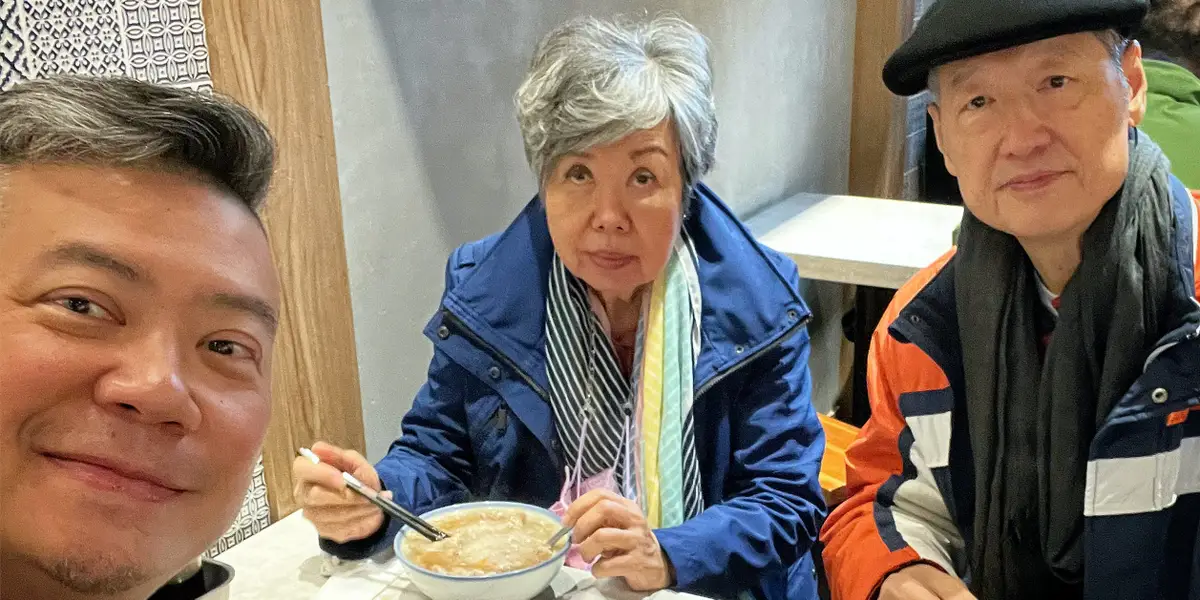
Now, we can see each other whenever we want. If they want me to come home, I’ll come home. We’ll meet for lunch or dinner and talk about everything. Sometimes we go to markets or trade shows together.
We get to share those normal, everyday moments that distance once made difficult.