

When Nataliya Konovalova’s sons were babies, she set up tax-advantaged 529 savings plans for them. On their birthdays, she’d tell relatives: no gifts, just contributions.
As the boys got older — they are now eight and 10 — she began to change her mind about the value of a college education. Konovalova read stories about degree-holders working at McDonald’s, and prestigious fellowships that take students straight out of high school.
AI was the final straw.
Konovalova had long discussions with her husband, who works in tech, about how AI is tightening the entry-level job market. Ultimately, the couple halved their contributions to the boys’ 529 plans. “I honestly don’t think they will go to a traditional four-year college,” she said.
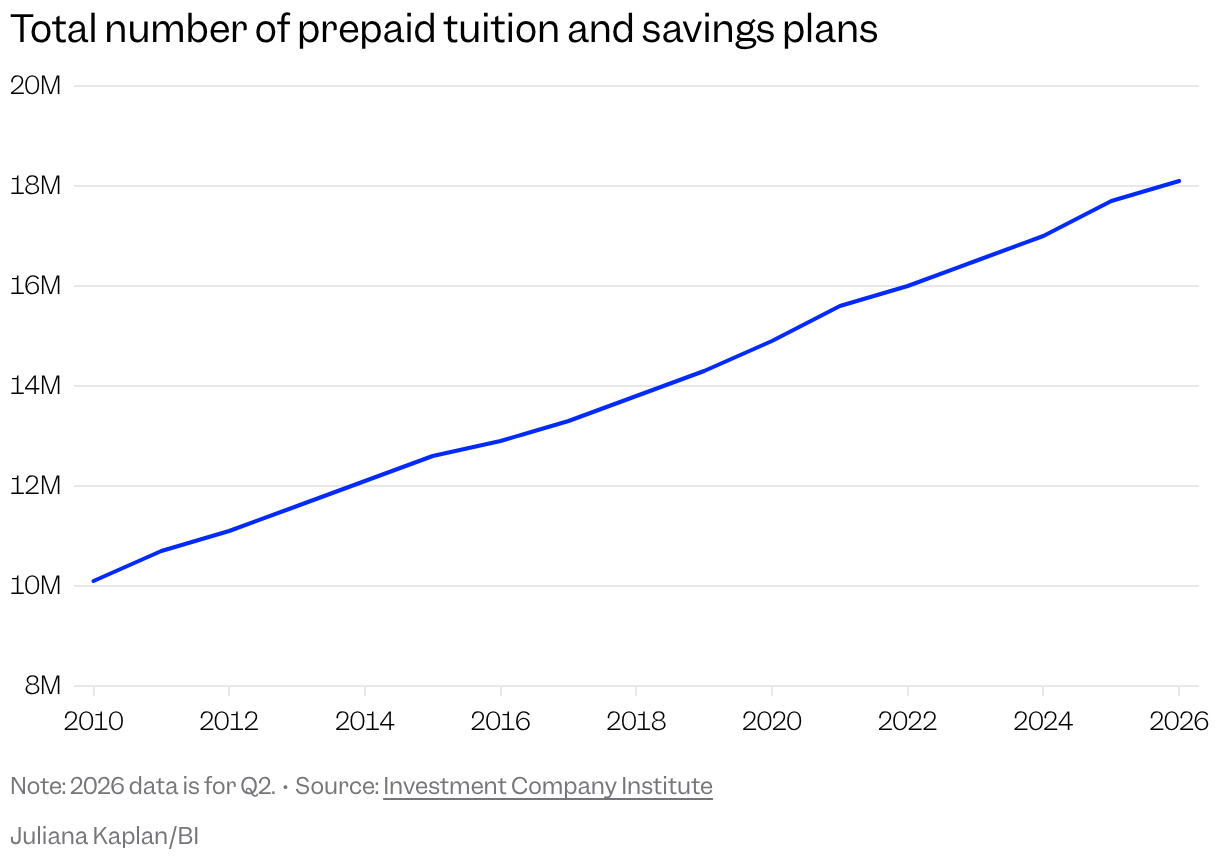
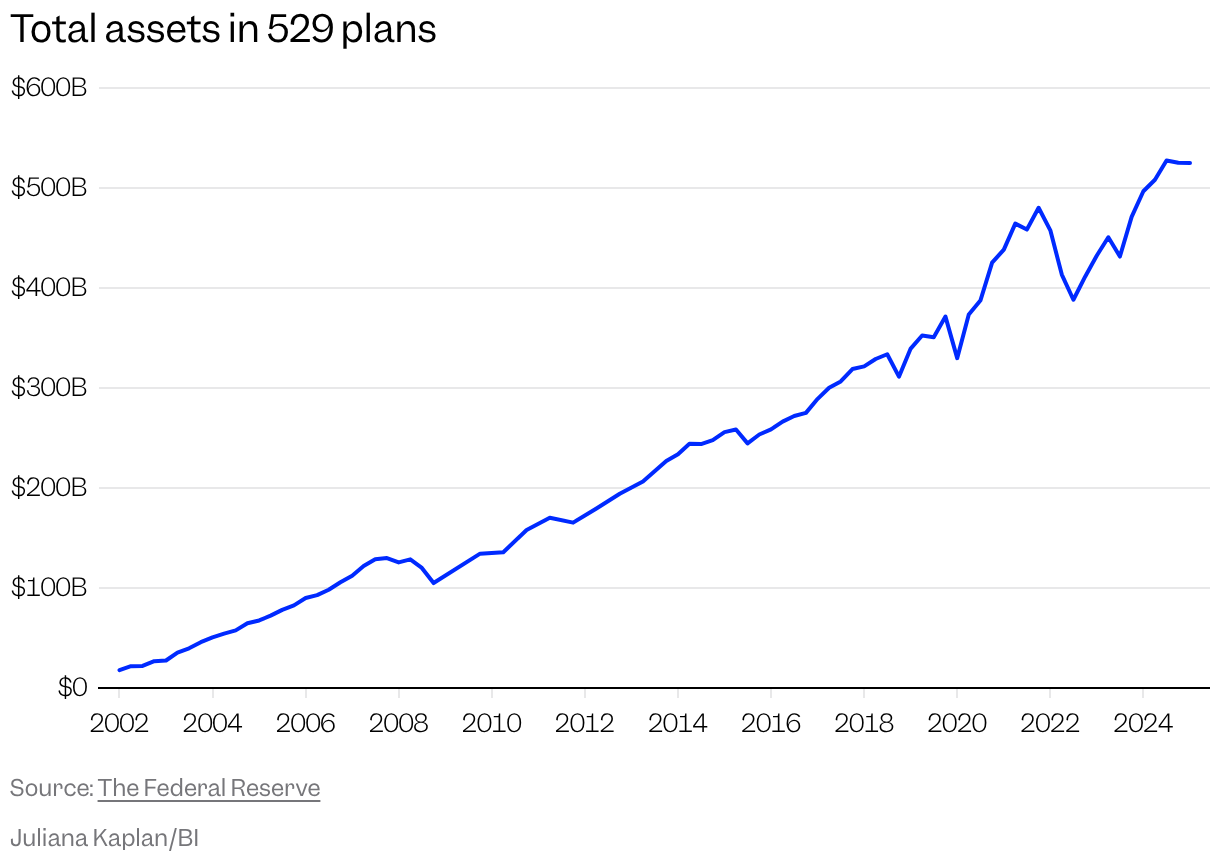
For decades, these tax-advantaged plans have been the bread and butter of education savings. Parents can spend investment gains tax-free, provided the money goes toward qualified education expenses like tuition, textbooks, laptops, room and board, and more. The number of 529 plans across the US has grown 80% since 2010, with the average balance more than doubling since then.
But AI is putting higher education to the test. Students use it to cheat and currently face an entry-level hiring crisis after graduation, which many blame on AI. Tech execs say chatbots are better than human teachers, and Silicon Valley-types are pitching AI-ified college alternatives.
As AI makes the value of a college degree harder to predict, some parents are changing how they save for their children’s futures. Business Insider spoke with six families who are reducing their 529 contributions, moving money into more flexible accounts, or continuing to save while questioning whether traditional college will provide the best return on their investment.
Of the 921 K-11 parents polled by Intuit Credit Karma/Harris, more than a quarter said they’re rethinking how much they need to save for education, and 15% have already reduced their savings.
Even AI’s biggest names seem unsure. A mom of two asked Microsoft AI CEO Mustafa Suleyman whether she should save for college in 2025. “Probably not,” he laughed off, before correcting the record. “I don’t know. It’s really hard to judge.”
The parents waving goodbye to 529s
David Graham thinks college might still be worthwhile by the time his 12-year-old son finishes high school — but not by the time his 8-year-old twin girls graduate.
The 52-year-old retired physician from Billings, Montana, set up multiple savings accounts for his kids. Two years ago, he chose to stop funding their 529s entirely.
It wasn’t an easy decision. Graham thinks that colleges will struggle financially thanks to declining birth rates. He’s watched “learn to code” turn from salient advice to an ironic jab. He likes the hybrid Alpha School model, which leans heavily on AI instruction, and believes that AI tutors will drive down the cost of education.
At this point, Graham estimates that his son has $50,000 in his 529, and his twin girls have $15,000 each. While he bets that his kids aren’t college-bound, he has the money to fund their degrees if they choose otherwise — and is willing to sacrifice the tax benefits. “If he wants to go to school, I’ll just write a check,” he said.
Michael Reynolds, a certified financial planner from Indianapolis, said that about 30% of the parents he worked with were redirecting some funds away from 529s as they doubt the future value of college. “More and more conversations are happening around: Do we put all our eggs in this basket?” he said.
Omar Khan is one doubter. Instead of a 529, the millennial father of two is investing for his children via taxable brokerage accounts, knowing he’ll pay tax on the gains. He believes the value proposition for brand-name colleges may fade.
Khan wants the flexibility to use that money for whatever his kids’ futures look like. Should they go into a technical field, buy a house, or bootstrap a company, they’ll be set, he said.
To save or not to save
Matthew Crowson isn’t abandoning his 529 — but he’s hoping it’ll loosen up.
The 39-year-old physician is saving for his two sons, aged 3 and 5. He also has a front-row seat to higher education’s AI transformation: Crowson is on the faculty at Harvard Medical School.
Crowson said some of his best students don’t need to show up for class at all; they can learn on their own using AI tools and then come to him with questions. He expected students to start questioning the high cost of tuition, especially compared to the low cost of a chatbot.
Should the college-pocalypse come, the government will need to change the 529 rules. Crowson is anticipating this: He hopes the government will expand the definition of “school” by the time his kids grow up (apprenticeships and continuing education are already qualified 529 expenses). Better yet, he’s hoping for a “get-out-of-jail-free card” that lets parents draw down all their funds tax-free, no matter where they spend it. “That’s a very cautiously optimistic take,” he said.
The rules have bent before. In 2018, the government allowed parents to use some 529 funds for private high schools. Six years later, the government allowed parents to roll over some money from a 529 into a Roth IRA tax-free. Parents can now use the funds tax-free on post-graduate courses and certificates, too. “Even if you’re not saving exactly for college, there are still other ways to be using that money,” said Eric Reale, a New York-based financial advisor.
Some AI-enmeshed parents still see the value of a 529 plan. Matthew Seeger, who oversees AI strategy for a software company in Chicago, has been saving thoroughly for his three- and five-year-old kids. He wants to spare them the financial burden that college can be. Even so, he’s getting worried about AI’s longer-term impacts, especially on jobs.
But a whole other group of parents are certain AI abundance is coming — and that college is getting the chop. Yet many of their kids loathe the tech. While 9 in 10 kids have used AI, according to a Common Sense Media report, only 26% think the technology will have a mostly positive effect on their lives.
While Business Insider spoke with Graham, the Montana dad who had stopped 529 contributions entirely, his 12-year-old son arrived home. Graham asked: Do you use AI? “No,” his son responded quickly, before amending his answer to “every once in a while” and running upstairs.
“They actually hate AI,” Graham said of his kids. “And I don’t let them use the H-word.”