
What's Hot

    CLARITY Act Fate Hinges on Senate Debate Vote | Invesloan.com

    September 1, 2026

    AI capital expenditure forecast to exceed the price of constructing railways in each the U.S. and the U.K. — with the web added on prime | Invesloan.com

    September 1, 2026

    All 16 New Russian Starlink-Rival Satellites Short of Target Orbit | Invesloan.com

    September 1, 2026
    Facebook Twitter Instagram
    Finance Pro
    Facebook Twitter Instagram
    invesloan.cominvesloan.com
    Subscribe for Alerts
    • Home
    • News
    • Politics
    • Money
    • Personal Finance
    • Business
    • Economy
    • Investing
    • Markets
      • Stocks
      • Futures & Commodities
      • Crypto
      • Forex
    • Technology
    invesloan.cominvesloan.com
    Home » All 16 New Russian Starlink-Rival Satellites Short of Target Orbit | Invesloan.com
    Money

    All 16 New Russian Starlink-Rival Satellites Short of Target Orbit | Invesloan.com

    September 1, 2026Updated:September 1, 2026
    Share
    Facebook Twitter LinkedIn Pinterest Email

    An entire batch of Russian low Earth orbit satellites, intended to help create Moscow’s version of Starlink, has failed to reach or remain at their anticipated altitudes just over a month after launch.

    The 16 Rassvet-3 satellites, launched on July 19, were originally supposed to orbit the Earth at an altitude of roughly 500 miles, according to the company developing the constellation, Bureau 1440.

    But publicly available US Space Force data shows that, as of Tuesday, the Rassvet-3 satellites are instead orbiting at altitudes of between 190 miles and 250 miles.

    Atmospheric drag at that altitude significantly shortens a satellite’s operational lifespan. Without intervention, those conditions gradually pull satellites lower to Earth until they reenter the atmosphere and burn up or break apart.

    Losing these 16 satellites — Bureau 1440’s second batch of the Rassvet-3 — would be a significant setback for Moscow’s ambition to create its own alternative to Starlink, a priority for the Kremlin after SpaceX cut off satellite internet service to Russian forces on February 1.

    Rassvet-3 is meant to help fill that gap, but Bureau 1440 has launched only 32 satellites so far, including this latest batch.

    Issues with the second satellite batch were first highlighted by journalist Anatoly Zak, who runs the website RussianSpaceWeb and identified two Rassvet-3 satellites in early August that were already headed for re-entry into Earth’s atmosphere.

    It’s unclear what prevented the satellites from reaching higher altitudes. Positional data indicates that many of them engaged in maneuvers to climb upward, though none of these appear to have come close to helping the satellites reach their operational orbit yet.

    “The apparent failure of all 16 satellites from the second launch to reach their intended operational altitudes suggests Russia may have been unprepared to accelerate constellation deployment at this pace and will likely face additional delays,” wrote analysts from the Institute for the Study of War, a US-based think tank, on Monday.

    Want more Business Insider in your news feed?

    Add BI in Google so our reporting is easier to find when you’re searching for what matters.

    Press services for Bureau 1440 and Roscosmos, Russia’s space agency, did not immediately respond to comment requests sent outside regular business hours by Business Insider.

    Setback to an already slow launch pace

    Bureau 1440 has said that it is planning “dozens of launches and hundreds of satellites” to form its total constellation.

    Its first batch of 16, launched on March 23, saw 12 satellites reach and maintain altitudes of about 340 miles. That’s still shy of the original 500-mile altitude that Russia initially set, and could indicate that Bureau 1440 shifted the target orbit closer to Earth.

    Ukrainian estimates say the Kremlin will need roughly 200 to 250 operational satellites to maintain a stable internet network that Russian forces can use to communicate or operate combat drones.

    SpaceX, by comparison, runs over 11,000 operational Starlink satellites.

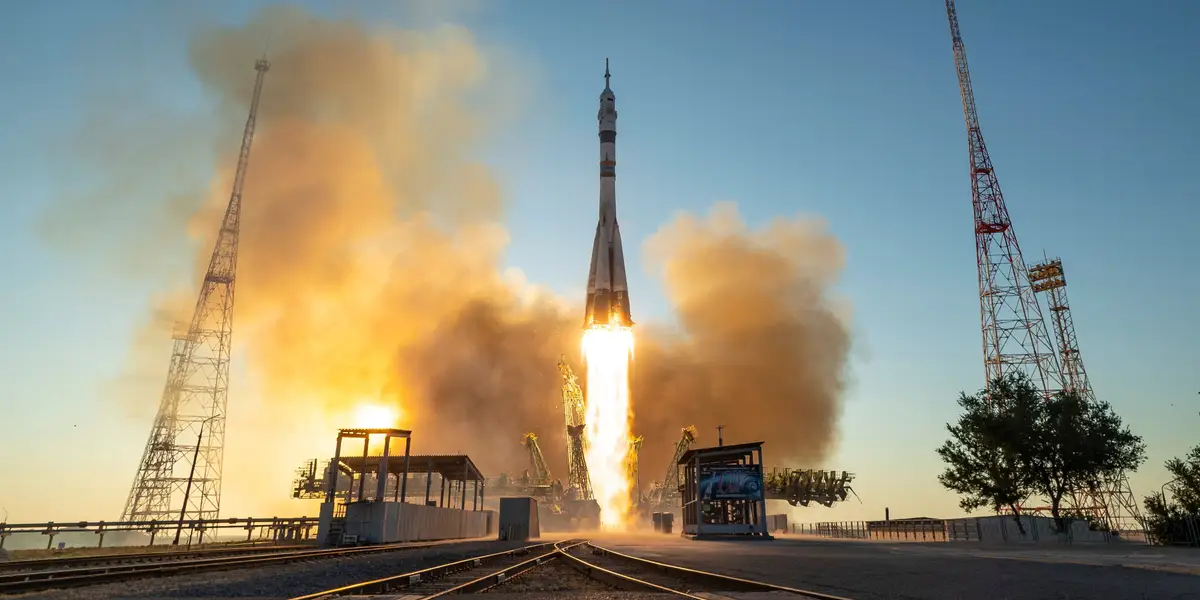
    A major bottleneck for the Rassvet-3 constellation is how they’re launched. Russian spacecraft rely on the Soyuz-2.1b rocket, which has been used for 104 launches in the last two decades.

    With 16 satellites per launch, keeping to that pace would mean Russia could launch roughly 80 Rassvet-3 satellites each year, taking more than two years to reach a constellation of at least 200.

    And that assumes all the launched satellites remain operational in the long term.

    With only 12 of the last 32 Rassvet-3 satellites reaching their apparent long-term orbits, the program has achieved a 37.5% success rate so far. SpaceX, by comparison, reported just 43 early mission failures or terminations among its first 1,383 production Starlink satellites, or a failure rate of about 3%.

    Ukraine has also been attempting to undermine Russia’s efforts. In mid-August, it said one of its FP-5 Flamingo long-range missiles struck a space center in Western Russia that produces the Soyuz rocket.

    Satellite internet has become one of the most crucial communications tools of the war in Ukraine, with troops from both sides using the service to stay in contact with each other, direct drones, and update commanders.

    Most prominently, Russia was previously found to be using Starlink terminals to relay signals to its attack drones, allowing them to bypass typical jamming measures and receive instructions at extended range.


    Share. Facebook Twitter Pinterest LinkedIn Tumblr Email

    Keep Reading

    Olympian Eileen Gu Says One Simple Mantra Keeps Her From Getting Complacent | Invesloan.com

    Traveling Full-Time Helped Her Stop Letting Anxiety Dictate Her Life | Invesloan.com

    Meta Bricks Cameras on Thousands of AI Glasses Over Tampering | Invesloan.com

    Sam Altman Says AI Water Use Fears Are Overblown however Hard to Dispel | Invesloan.com

    Apple Maps Renames Lake Ontario to Lake America, Joining Google | Invesloan.com

    Trump Floats Film and TV Production Incentive, Giving Hollywood Hope | Invesloan.com

    Meta Is Switching From Google Chat to Slack for AI Agents | Invesloan.com

    Americans Increasingly View Themselves As Working Class | Invesloan.com

    At 50, My Adult Kids Live at Home; Had to Change Our Plans | Invesloan.com

    LATEST NEWS

    CLARITY Act Fate Hinges on Senate Debate Vote | Invesloan.com

    September 1, 2026

    AI capital expenditure forecast to exceed the price of constructing railways in each the U.S. and the U.K. — with the web added on prime | Invesloan.com

    September 1, 2026

    All 16 New Russian Starlink-Rival Satellites Short of Target Orbit | Invesloan.com

    September 1, 2026

    Haitian scholar in Ohio dies after dropping TPS in what household believes was suicide | Invesloan.com

    September 1, 2026
    POPULAR

    China’s first passenger jet completes maiden commercial flight

    May 28, 2023

    Numbers taking US accountancy exams drop to lowest level in 17 years

    May 29, 2023

    Toyota chair faces removal vote over governance issues

    May 29, 2023
    Advertisement
    Load WordPress Sites in as fast as 37ms!
    Facebook Twitter Pinterest WhatsApp Instagram
    © 2007-2023 Invesloan.com All Rights Reserved.
    • Privacy
    • Terms
    • Press Release
    • Advertise
    • Contact

    Type above and press Enter to search. Press Esc to cancel.

    invesloan.com
    Manage Cookie Consent
    To provide the best experiences, we use technologies like cookies to store and/or access device information. Consenting to these technologies will allow us to process data such as browsing behavior or unique IDs on this site. Not consenting or withdrawing consent, may adversely affect certain features and functions.
    Functional Always active
    The technical storage or access is strictly necessary for the legitimate purpose of enabling the use of a specific service explicitly requested by the subscriber or user, or for the sole purpose of carrying out the transmission of a communication over an electronic communications network.
    Preferences
    The technical storage or access is necessary for the legitimate purpose of storing preferences that are not requested by the subscriber or user.
    Statistics
    The technical storage or access that is used exclusively for statistical purposes. The technical storage or access that is used exclusively for anonymous statistical purposes. Without a subpoena, voluntary compliance on the part of your Internet Service Provider, or additional records from a third party, information stored or retrieved for this purpose alone cannot usually be used to identify you.
    Marketing
    The technical storage or access is required to create user profiles to send advertising, or to track the user on a website or across several websites for similar marketing purposes.
    • Manage options
    • Manage services
    • Manage {vendor_count} vendors
    • Read more about these purposes
    View preferences
    • {title}
    • {title}
    • {title}