
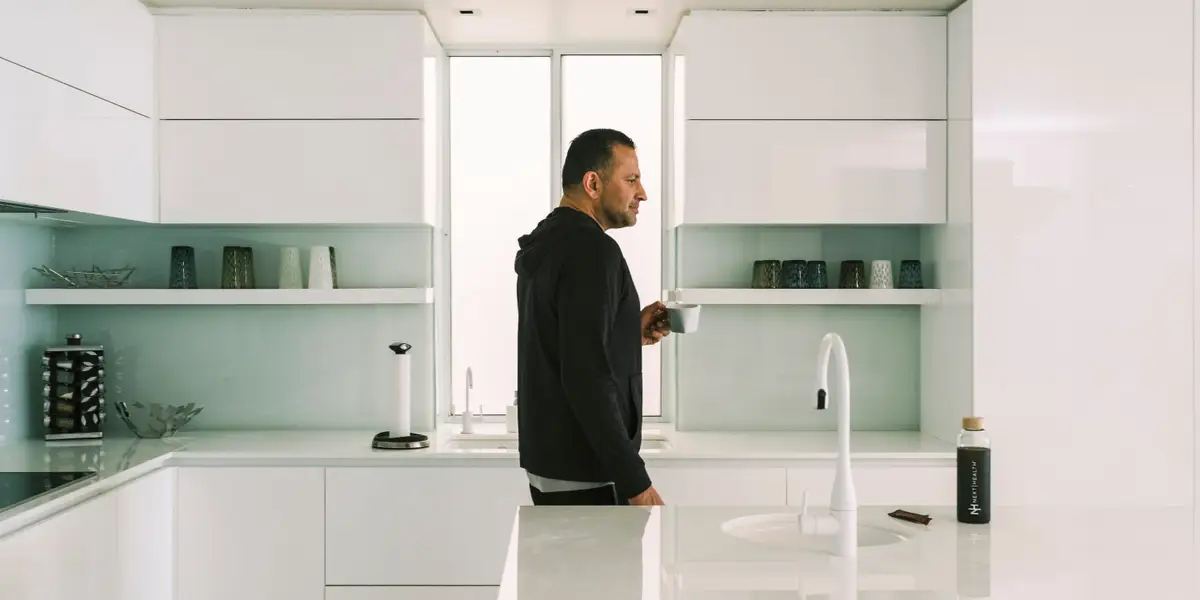
This as-told-to essay is based on a conversation with Dr. Darshan Shah, the 53-year-old founder and CEO of longevity clinic Next Health, who’s based in Malibu, California. It’s been edited for length and clarity.
I’ve been a physician for 30 years. For the first three quarters of my career, I did all sorts of surgeries, from trauma and emergency surgery, to general and reconstructive cancer surgery.
I loved surgery, and I still miss being in the operating room, but I was totally burnt out. I was not happy. I did not want to go to work, and I thought, who wants to live this way?
I switched into longevity medicine about 10 years ago. I made the transition because I was 50 pounds overweight, had high blood pressure, diabetes, metabolic syndrome, and an autoimmune disease.
I learned the science of nutrition, exercise, sleep, and functional medicine, brought all of that to my life, and got off all my medications and diagnoses of chronic diseases.
The experience made me realize that reversing chronic diseases is the kind of medicine that I want to practice. I started health optimization and longevity clinics to help people improve their lifestyle, optimize their hormones, and get them to think about how to prevent and reverse chronic disease.
I always say the most important thing is to have a really good daily routine. It doesn’t need to be any medications, injections, or anything fancy. I saw the biggest movement in my own personal health journey when I did the small things consistently.
Madeline Tolle
I wake up at 5 a.m.
I start off my routine first thing in the morning because the whole world is asleep, and it’s the only time I really have for myself.
The critical thing is what I don’t do when I wake up. I don’t wake up with my phone anywhere near me. I charge my cell phone by the coffee machine when I sleep, which is at the opposite end of the house.
That’s a critical piece of my routine, because the phone deteriorates our mornings and stresses us out the minute we wake up. I don’t look at my phone until 15 minutes after I’ve woken up.
I go outside
I’m lucky to have a little puppy now, but even before I had a puppy, I would go outside. I think it’s extremely important to go outside first thing in the morning. If the sun isn’t up yet, I go back outside when it’s up because sunlight exposure is so important.
The physical act of taking your body outside is something that has been ingrained in our biology since caveman days. Going outside sets your circadian rhythm, decreases your stress levels, and improves your heart rate variability.
I do a quick workout
My morning routine is my sacred time. It goes until about 6:15 a.m.
The physical piece of my morning routine involves a quick 10- to 15-minute workout that includes stretching and lifting weights. Even if I don’t get to the gym for the rest of the day, at least I got my workout in first thing.
Madeline Tolle for BI
It’s so important to get quick wins. You can even start off with two minutes or five minutes a day. It doesn’t matter. Once you get that quick win, it will build upon itself.
After I do the workout, I grab a cup of coffee and take all my supplements. I put creatine in my coffee and drink a vitamin mix called IM8. I also take a couple of other supplements, including True Nitrogen, Urolithin A by Timeline, and a probiotic.
I read for 20 minutes
The second part of my routine is learning something new. I read for 20 minutes. I’m usually reading two different books — one about health and wellness physically, and one about health and wellness mentally.
I’ll read five or eight pages of each book, and it helps me have something to think about for the rest of the day.
Madeline Tolle for BI
I journal every day
I’ve been journaling for 28 years now. I’m on a streak of 10 years without missing a single entry.
My journaling routine involves me writing about my day yesterday, what I’m most grateful for yesterday, and what I’m most excited for today.
My children wake up at 6:15 a.m.
By the time I’m done my morning routine, my two kids are usually awake, and then I focus all my energy on them before I drop them off at the bus stop by 6:50 a.m.
I skip breakfast
I skip breakfast because it allows me to control my total amount of calories throughout the day. I’m not ever hungry during breakfast and if I eat it, I won’t get as good of a workout because I’ll feel bloated.
I workout 3 days a week
After I drop off my kids, I’ll go to the gym and workout for about 45 minutes. Sometimes I’ll do a cold plunge before the workout or right after I wake up, but it’s so painful. I’ll find every excuse in the world to skip it.
I do some sprint interval training on the days that I’m working out, which is five 30-second sprints, with a four-minute break. A lot of research shows sprint interval training is the best way to improve your VO2 max, which is your body’s capacity to utilize oxygen. I also always lift weights, using every muscle group.
Madeline Tolle for BI
I start work at about 8:30 a.m.
I live in Malibu, and the closest Next Health is about a 45-minute drive away. So I try to go to a location maybe once a week. Otherwise, I have a co-working facility in Malibu, and I just work out of there because it’s five minutes away from my home.
My work involves lots of things. I’m on a Zoom call here and there; I have meetings; I do talks; I record podcasts; I speak to patients. There’s a nice mix of things I love to do.
There are three things that are key to every work day.
No 1: I try to spend as much of my work day on my walking desk as possible. Normally, I’ll get about 20,000 steps in a day.
No. 2: I always make sure I eat an early lunch, which is always a big piece of fish or meat, with a salad. Sometimes I’ll throw it in a wrap or sometimes I’ll supplement it with an additional protein shake.
I eat 40 to 50 grams of protein in my lunch every single day. I also get a lot of vegetables in. I come from a family of diabetics, and snacking is probably the reason my entire family was diabetic, so I avoid snacking.
No. 3: If I’m sitting, I try to make sure I’m never sitting for more than 45 minutes in a row. If I’m in a sitting position, I’ll set a timer. When I get up, I’ll do a little bit of exercise, like jump rope or air squats. I have dumbbells in my office and just two to five minutes of that keeps the blood flowing and keeps you moving.
Madeline Tolle for BI
I meditate for 20 to 30 minutes mid-day
After lunch, I usually have a meeting, and then I’ll put a 20 to 30 minute break in my schedule to meditate.
I’ll go to a quiet place and turn everything off, turn the lights down, and get into a quick meditation. Lately I’ve been using my Oura ring. It has this unguided meditation session where it just plays some background music.
After lunch, I’m a little tired, and so meditating really helps me decompress, get a little rest in, and recharge for the rest of the day.
I did trauma surgery for six years and it was stress bombs every single day. Now I feel like I have a good handle on my stress because I got desensitized a little bit. That being said, there are stressful situations, and I just learned to pause, look inward, and give myself two minutes to recalibrate.
I finish work by 4 p.m.
Usually, I’m done with work by 4 p.m., and I’ll pick up my kids from the bus stop and go home. I’ll usually like help the kids with some homework, and hang out with the family and talk.
We aim for a 5 p.m. dinner
We try to have the earliest possible dinner. After we eat, we go for a walk, which starts my wind down routine.
My wind-down routine
After the walk, around 7:30 p.m., I’ll get rid of my cell phone and put it on the charger.
Madeline Tolle for BI
Then we change all of our lights to yellow. It’s beautiful and it’s super relaxing.
Then we start the bedtime routine. My kids are 11 and 7 years old, and they go to bed by 8 p.m. Then maybe I do some reading, or three or four days a week, I’ll do a 30-minute sauna session. I get into bed by around 9:30 p.m.