
What's Hot

    The authorities can take 15% of Social Security advantages to repay scholar loans. These proposals search to cease it. | Invesloan.com

    October 2, 2026

    Florida Gators, Georgia Bulldogs caught in social media standoff over origins of ‘Bloody Tuesday’ observe | Invesloan.com

    October 2, 2026

    Elite US Navy Boat Crews May Be Returning to Duty With Brain Injuries | Invesloan.com

    October 2, 2026
    Facebook Twitter Instagram
    Finance Pro
    Facebook Twitter Instagram
    invesloan.cominvesloan.com
    Subscribe for Alerts
    • Home
    • News
    • Politics
    • Money
    • Personal Finance
    • Business
    • Economy
    • Investing
    • Markets
      • Stocks
      • Futures & Commodities
      • Crypto
      • Forex
    • Technology
    invesloan.cominvesloan.com
    Home » Elite US Navy Boat Crews May Be Returning to Duty With Brain Injuries | Invesloan.com
    Money

    Elite US Navy Boat Crews May Be Returning to Duty With Brain Injuries | Invesloan.com

    October 2, 2026Updated:October 2, 2026
    Share
    Facebook Twitter LinkedIn Pinterest Email

    A Pentagon watchdog warns in a new report that some of the US Navy’s elite special warfare boat crews may be returning to dangerous missions and activities with undiagnosed brain injuries due to breakdowns in reporting, screening, and follow-ups.

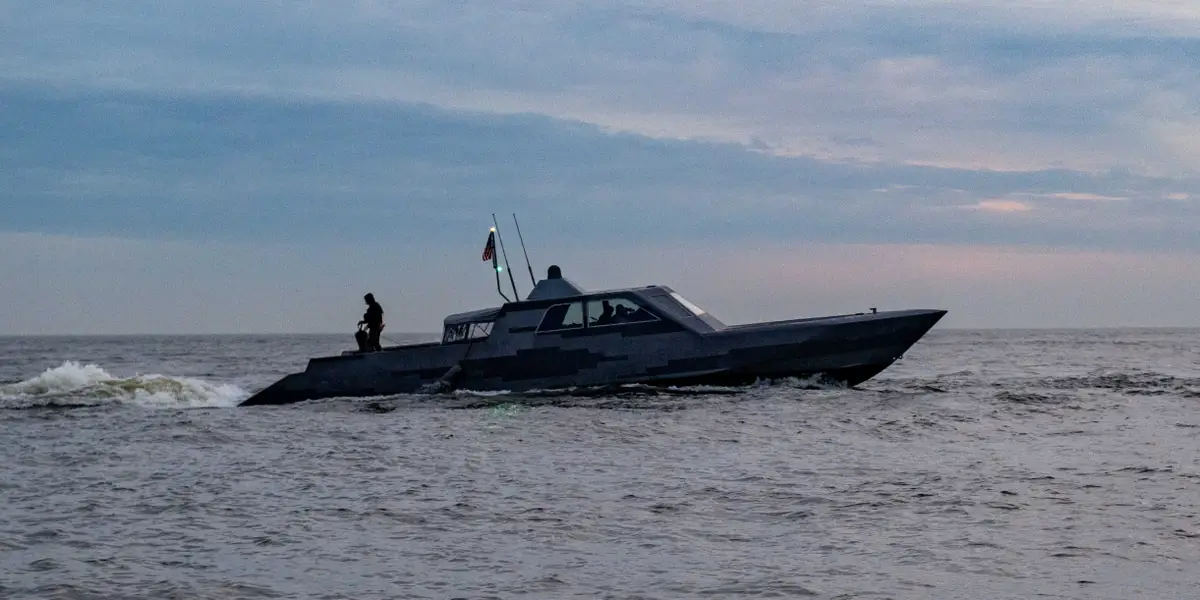
    Special Warfare Combatant-craft Crewmen, SWCCs, are an elite special operations force. Aboard fast boats, they support and execute combat missions, such as transporting other special operators, interdicting vessels, and conducting reconnaissance at sea.

    “SWCCs repeatedly endure severe wave-slamming forces,” the Department of Defense’s Office of the Inspector General wrote in a report released this week.

    “Without an objective, standardized testing mechanism to identify injuries early, symptoms may be masked as routine fatigue,” the report said. “Sending service members back to high-risk maritime and riverine environments with undiagnosed [mild traumatic brain injury] can result in degraded operational decision-making.”

    It added that when “operational and training tempos take precedence over medical follow-ups, SWCCs miss critical appointments,” making it more difficult to effectively evaluate their conditions.

    Traumatic brain injuries are defined as significant health issues caused by external forces like explosions or wave-impact events that can, over time, cause confusion, disorientation, slowed thinking, memory loss, or loss or decreased levels of consciousness.

    The IG report said SWCCs haven’t been regularly filling out TBI exposure forms; a medical officer told investigators that crews often don’t fill them out because the paperwork takes hours, affecting rest, recovery, and preparation for future missions. The report said command didn’t enforce compliance.

    Crew members who have suffered these kinds of injuries said they often don’t report their symptoms — or attend follow-up appointments — because of their high-tempo schedules and concerns that recovery time could put more work on other service members.

    The military’s primary concussion screening tool, the Military Acute Concussion Evaluation, Version 2, or MACE-2, didn’t appear documented in cases investigators reviewed. Among medical records tied to reported TBI exposures between 2020 and 2026, the investigators found no completed MACE-2 assessments.

    Want more Business Insider in your news feed?

    Add BI in Google so our reporting is easier to find when you’re searching for what matters.


    US Navy special warfare combat crewmen sit on a combatant craft and prepare to depart into the ocean.

    Follow-ups are also rare, raising concerns that personnel could return to duty while still harboring injuries. 

    US Air Force photo by Senior Airman Johnny Diaz


    The IG report said that the problem is that corpsmen have to first make a subjective decision about whether the symptoms they are seeing are caused by a concussion or are the byproduct of seasickness, dehydration, or sleep deprivation, and there’s no set standard for that.

    In instances where screening is administered, crews told investigators that they can “mask TBI and concussion symptoms by memorizing portions of the MACE-2, potentially reducing the accuracy of the assessment.” While medical personnel can alter the test questions to make them much less predictable, this practice isn’t required or regularly implemented.

    Investigators also found almost no evidence that the operators received regular follow-up care.

    “Without follow-up care after sustaining a TBI, a SWCC could return to work too soon,” the report explained. The findings conclude that crews may have returned to duty while still suffering from undiagnosed or untreated TBIs, which could increase the risk of long-term ailments and negatively impact readiness.

    The IG report cites one crew member who told the office “that during high operational tempos, a fear exists of being removed from their operational duty on the boat, which would shift the workload to another detachment.” These special boat teams work on a 24-month deployment cycle, including six months of unit-level training.

    “With limited manning and four troops in different stages of the cycle, SWCCs feel they cannot consistently report their symptoms without impacting deployment exercises,” the report said.

    These experiences were corroborated by medical personnel, who said rest and recovery are difficult for teams and members often don’t attend follow-up appointments because of their demanding schedules.

    The office recommended the establishment of a standardized, objective TBI checklist, which is being developed with an estimated completion date of December 2027.

    Similarly, the office said that roadblocks preventing crew members from receiving treatment should be addressed, including the creation of “a mechanism to enforce accountability for special warfare combat crewmen to complete required follow-up treatment and mitigate potential gaps in unit readiness.” These are expected to include reinforced mandatory follow-up appointments and an escalation protocol and be complete by March 2027.

    Naval Special Warfare Command concurred with the watchdog’s recommendations and said it is revising its concussion management approach accordingly, including developing a standardized screening tool for wave-impact and other non-blast concussive events.


    Share. Facebook Twitter Pinterest LinkedIn Tumblr Email

    Keep Reading

    Travel Mistakes I Made During My First Trip to Vienna | Invesloan.com

    Amazon Comes Out Swinging Against Data Center Moratoriums | Invesloan.com

    Sydney Local: Inexpensive Places I Take My Kids That Aren’t the Beach | Invesloan.com

    Why Trump Is Mailing $500 Checks to Nearly 1M Americans: Policy Gurus | Invesloan.com

    Tesla Q3 Sales Smash Wall Street Expectations | Invesloan.com

    Where Every US Governor Stands on AI and Data Centers | Invesloan.com

    I’m a former flight attendant. Here are 9 issues I want passengers would cease doing on airplanes. | Invesloan.com

    Flydubai Captain Smit Machchhar Describes How He Helped Save Flight 1073 | Invesloan.com

    CUDA Engineers Adapt As AI Reshapes Nvidia Chip Expertise | Invesloan.com

    LATEST NEWS

    The authorities can take 15% of Social Security advantages to repay scholar loans. These proposals search to cease it. | Invesloan.com

    October 2, 2026

    Florida Gators, Georgia Bulldogs caught in social media standoff over origins of ‘Bloody Tuesday’ observe | Invesloan.com

    October 2, 2026

    Elite US Navy Boat Crews May Be Returning to Duty With Brain Injuries | Invesloan.com

    October 2, 2026

    XRP Price, $300M ETF Demand, and 45% Q3 Supply Overhang | Invesloan.com

    October 2, 2026
    POPULAR

    China’s first passenger jet completes maiden commercial flight

    May 28, 2023

    Numbers taking US accountancy exams drop to lowest level in 17 years

    May 29, 2023

    Toyota chair faces removal vote over governance issues

    May 29, 2023
    Advertisement
    Load WordPress Sites in as fast as 37ms!
    Facebook Twitter Pinterest WhatsApp Instagram
    © 2007-2023 Invesloan.com All Rights Reserved.
    • Privacy
    • Terms
    • Press Release
    • Advertise
    • Contact

    Type above and press Enter to search. Press Esc to cancel.

    invesloan.com
    Manage Cookie Consent
    To provide the best experiences, we use technologies like cookies to store and/or access device information. Consenting to these technologies will allow us to process data such as browsing behavior or unique IDs on this site. Not consenting or withdrawing consent, may adversely affect certain features and functions.
    Functional Always active
    The technical storage or access is strictly necessary for the legitimate purpose of enabling the use of a specific service explicitly requested by the subscriber or user, or for the sole purpose of carrying out the transmission of a communication over an electronic communications network.
    Preferences
    The technical storage or access is necessary for the legitimate purpose of storing preferences that are not requested by the subscriber or user.
    Statistics
    The technical storage or access that is used exclusively for statistical purposes. The technical storage or access that is used exclusively for anonymous statistical purposes. Without a subpoena, voluntary compliance on the part of your Internet Service Provider, or additional records from a third party, information stored or retrieved for this purpose alone cannot usually be used to identify you.
    Marketing
    The technical storage or access is required to create user profiles to send advertising, or to track the user on a website or across several websites for similar marketing purposes.
    • Manage options
    • Manage services
    • Manage {vendor_count} vendors
    • Read more about these purposes
    View preferences
    • {title}
    • {title}
    • {title}