
Millions of “Harry Potter” fans had a simultaneous case of déjà vu this week.
On Wednesday, HBO released the first teaser trailer for “Harry Potter and the Philosopher’s Stone,” a new television adaptation of J.K. Rowling’s best-selling book. The eight-episode season, which recasts all of Harry’s friends, professors, and wand-wielding enemies, will debut this Christmas.
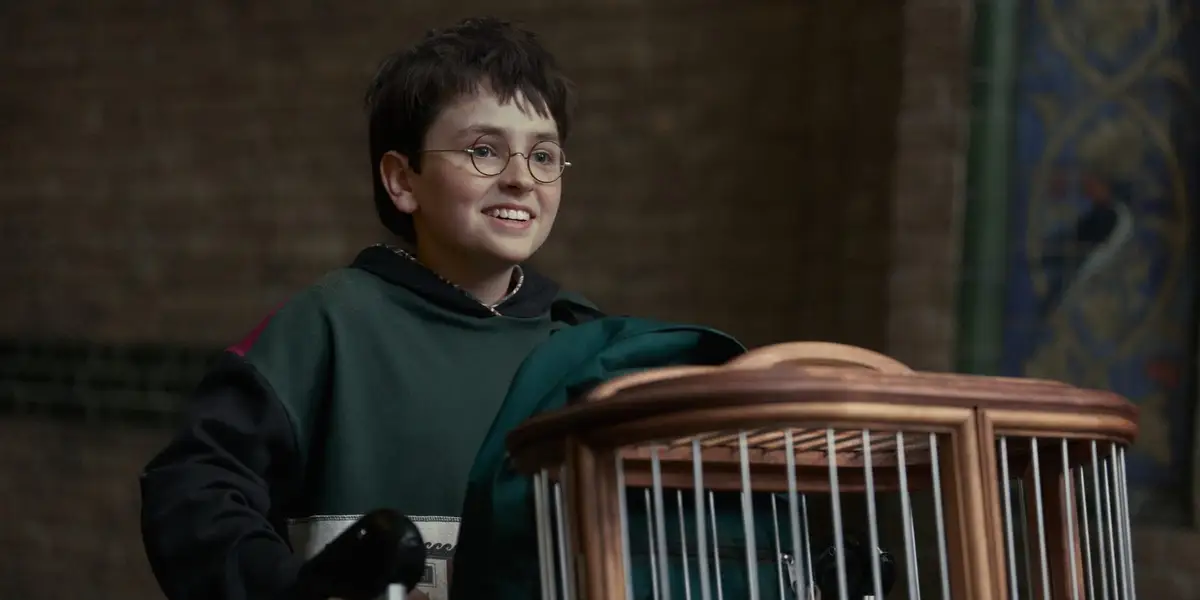
However, based on what we’ve seen so far, calling the adaptation “new” feels generous. From the very first shot of the trailer, it’s clear that HBO is taking no creative risks. Dominic McLaughlin’s Harry Potter is shoved into a closet under the stairs in his aunt and uncle’s home, just as he is in the original movie trailer from 25 years ago. The glimpse inside 4 Privet Drive is eerily familiar. Harry’s glasses, his hair, his outfits, and his snowy owl look the almost exactly the same as Daniel Radcliffe’s when he originated the role. The trailer is nearly two full minutes of recycled sets and snippets of dialogue.
So why does this reboot even exist?
The short answer is obvious: to make money. For Warner Bros. Discovery, the umbrella company behind HBO, the “Harry Potter” universe is arguably its biggest, most beloved, and most valuable property. In 2024, The Wall Street Journal reported that Warner executives had long been frustrated that similar, ever-expandable franchises like Star Wars, Marvel, and DC Comics churned out hit after hit for competing streamers. They wanted to milk their own cash cow.
The key difference is that “Harry Potter” author J.K. Rowling has retained control over the brand, even after signing the film rights over to Warner in 1999. Over the past quarter-century, Rowling has reportedly vetoed spin-off ideas and limited the studio’s ability to expand the Wizarding World beyond her own written works. When she greenlit the “Fantastic Beasts and Where to Find Them” prequel, Rowling’s request to write the screenplay was granted, marking her screenwriting debut.
That spin-off film series attempted to deepen “Potter” lore and introduce novel, eye-popping kinds of magic. But it faltered when the movies began to contradict established rules of spellwork, rely too heavily on familiar characters, and rip off memorable scenes from the original story.
While Jude Law did his best to embody a younger, more stylish Albus Dumbledore, it wasn’t enough to salvage the series, which was unceremoniously scrapped after the third installment flopped at the box office in 2022. Many critics argued that “Harry Potter” had lost its magic.
In one sense, a pure reboot makes sense as a course correction. Returning to the beloved settings, characters, and details from the original books — Hogwarts! Hagrid! Hedwig! — seems like a foolproof way to lure new viewers and nostalgia-bait old readers.
Peter Mountain/WireImage
It also makes sense why Rowling would be keen to keep the brand aesthetics consistent. The Wizarding World of Harry Potter theme parks are designed to mimic the original movies, from the immersive Diagon Alley set to interactive wand props for $65 a pop. According to Forbes, the second-largest chunk of Rowling’s fortune comes from her cut of ticket sales, merchandise, and food and beverage revenue. (Rowling said she “worked closely” with the writers on the reboot series.)
But financial incentives for a multibillion-dollar company and a billionaire author aside, the new “Harry Potter” trailer offers nothing fresh for fans to get excited about. If you grew up watching the iconic movie series, what’s the draw to watch a shot for shot remake as a TV series?
A reboot that regurgitates the original’s visual identity, down to the length and bushiness of Hagrid’s beard, is redundant at best and creatively bankrupt at worst.
Even Chris Columbus, who directed the first two “Harry Potter” movies and steered the series’ aesthetic, had a similar reaction when a first-look photo of Nick Frost as Hagrid was released last summer.
“Part of me was like: What’s the point?” Columbus said on “The Rest Is Entertainment” podcast, per People. “I thought the costumes and everything was going to be different, but it’s more of the same. It’s all going to be the same.”
There’s still hope that the new actors will bring different takes on their characters via their performances. But so far, there’s very little to go on. With each actor dressed and styled so familiarly, the trailer has an uncanny-valley effect: These are people we’ve seen before, but not quite. One of my closest friends, who literally has a “Harry Potter” tattoo, said that watching the trailer felt like she fed a prompt into an AI video generator: “Turn ‘Harry Potter’ into an HBO show.”
My friend’s reaction was echoed by plenty of fans online. “I was fully unprepared for just how off-putting and uncomfortable this would be to watch,” reads one tweet with over 32,000 likes. Another quipped, “Making Chris Columbus look like Scorsese.”
Even worse, HBO cast its all-too-familiar spell on this version, giving it the desaturated and dark aesthetic of prestige TV that’s not only hard to see on some screens, but doesn’t match the story’s tone. (This isn’t “True Detective.” Turn the lights on!)
Without the glow and glimmer of Lumos, along with any flicker of novelty, it’s hard to imagine this version of “Potter” working its magic on viewers.