


It wouldn’t be a Musk production without some ambitious deadlines.
SpaceX filed for its blockbuster IPO on Wednesday, and it’s already proving to be one of the most unconventional public-offering documents in recent memory, with its grandiose, sci-fi language and a CEO pay package partly tied to life on Mars.
Then there are the aggressive deadlines Elon Musk is famous for.
The filing reveals some due dates around the more critical lines of SpaceX’s business, including Starship, Starlink satellites, and space data centers.
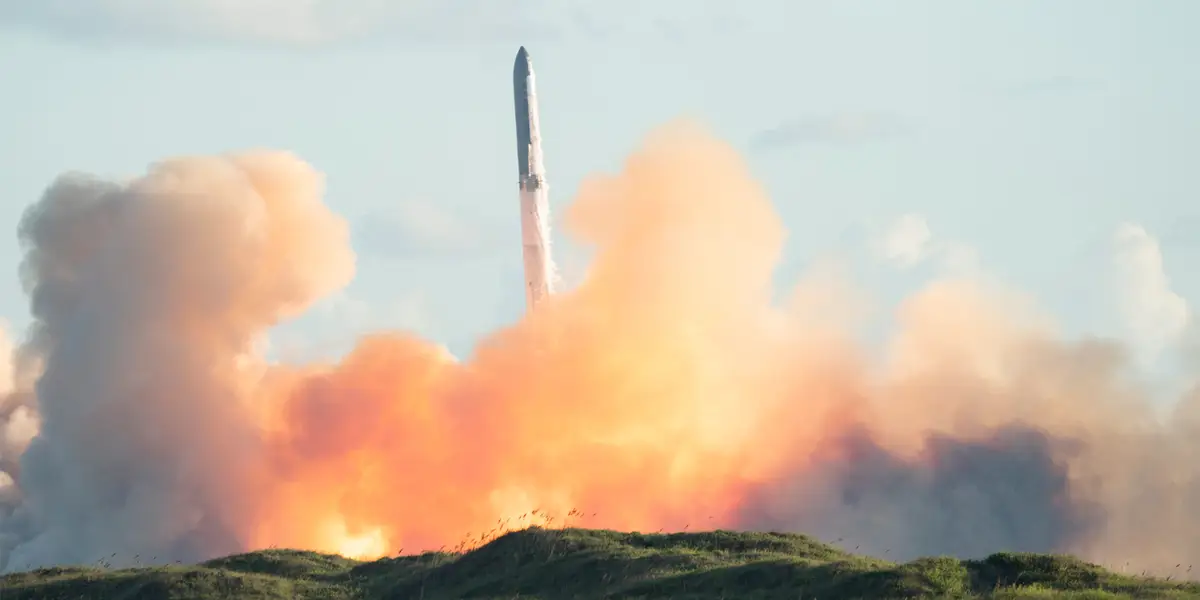
SpaceX’s grand ambitions of orbital AI data centers and deep-space missions depend on the success of Starship, a reusable rocket and launch platform.
Starlink, on the other hand, remains SpaceX’s main financial engine, bringing in the most revenue for the company at the moment as it pours billions into AI compute.
The IPO filing also details a few key deal and debt deadlines that show how Musk plans to support his massive AI buildout through his rocket company.
As with any Musk Inc. company, aggressive timelines are not guaranteed.
“Punctuality is not my strong suit, but I always come through in the end,” he said in 2020.
Here are some important dates the filing showed.
Starship’s first payload: Second half of 2026
Starship is SpaceX’s reusable rocket and spacecraft. The company said in its filing that it’ll be the platform capable of launching its next-generation Starlink satellites and making orbital data centers economically viable.
Currently, Starship remains in the test flight stage, with the next launch scheduled for Thursday.
The company said that it expects “Starship to commence payload delivery to orbit in the second half of 2026.”
Starlink V3 deployment: Second half of 2026
SpaceX’s next-generation broadband satellites, V3, are expected to provide one terabit per second of downlink capacity per satellite, the company said in its filing. Downlink refers to “the maximum rate at which data can be transmitted from a satellite to users over a network or communication link in a given period of time,” according to the filing.
The company said it expects to begin deploying V3 satellites on Starship in the second half of 2026. The filing said that one Starship launch can carry 60 V3 satellites into low Earth orbit.
SpaceX acquisition of Cursor: End of October 2026
Musk’s rocket company announced in April that it secured the right to buy Cursor, an AI coding startup, for $60 billion. SpaceX could also walk away and pay Cursor a fee of about $10 billion.
The filing showed more concrete deadlines for when SpaceX would have to decide to acquire Cursor.
SpaceX would have a 30-day window to purchase Cursor, starting after whichever of the following two events comes first: seven days after SpaceX begins trading on public markets or after September 30, 2026.
Starlink Mobile V2 launch: 2027
Starlink Mobile aims to provide internet connectivity for smartphones.
The company said in the filing that it expects to deploy V2 satellites on Starship in 2027.
Bringing broadband connectivity to people’s phones with V2 satellites still hinges on several other factors, including securing rights to wireless airwaves, obtaining regulatory approval, and ensuring Starship is ready for launch.
EchoStar deal closing: November 2027
EchoStar, a US-based telecommunications firm, and SpaceX announced last year that they would enter into a commercial agreement that provides Musk’s company access to EchoStar’s wireless airwaves. The deal would give SpaceX’s Starlink satellites the ability to provide broadband connectivity to people’s smartphones.
The Federal Communications Commission approved the deal in May.
The company said in the filing that it expects to close the deal on November 30, 2027.
SpaceX’s bridge loan due: September 2027
The SpaceX filing showed that the company borrowed $20 billion to pay off loans tied to X and xAI. SpaceX merged with xAI earlier this year.
The loan matures in September 2027, with the option to extend the deadline to March 2028.
Space data centers launched: ‘as early as 2028’
One of SpaceX’s more ambitious goals is to launch orbital data centers powered by the sun.
The company said in the filing that it could start deployment “as early as 2028.”
To scale space AI compute into a viable business, however, hinges on the success of Starship.
“AI compute satellites at scale need full Starship reusability to be economically compelling,” the filing said.