
Lisa La Valle and her husband dreamt of moving abroad once their children finished school.
After they separated, La Valle found herself at a crossroads: either stay in New Jersey, where she’d spent most of her adult life, or leave the US to build a new life alone in Europe.
“I looked ahead at the rest of my life and thought, ‘I’ll be damned if I spend the next 30 years in New Jersey,'” she told Business Insider.
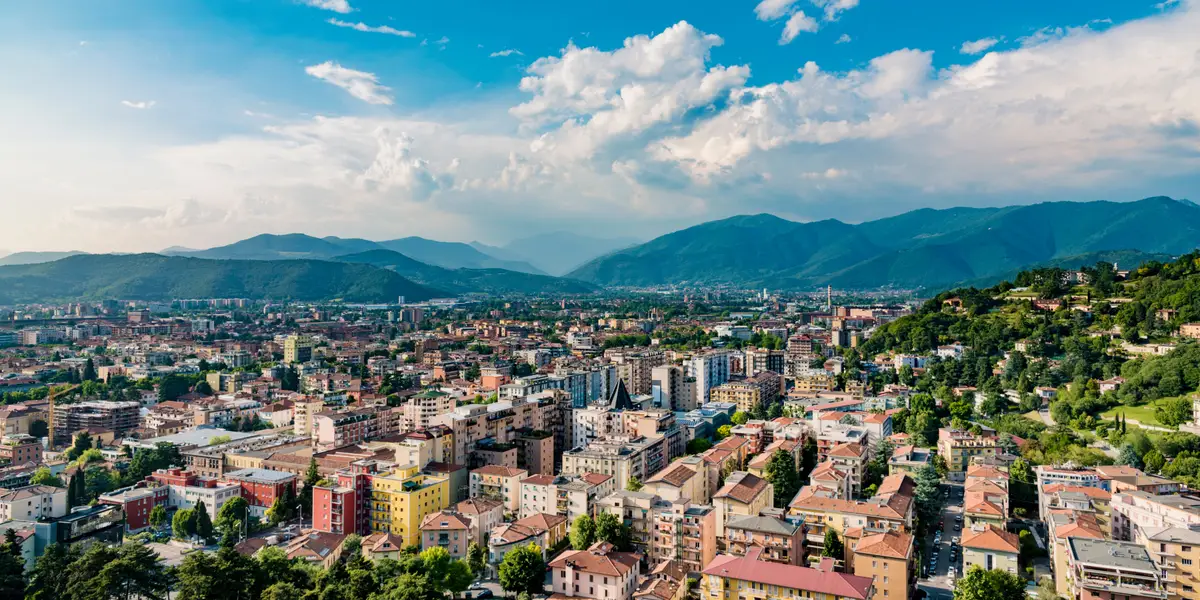
In 2018, at 57, La Valle bought a one-way ticket to Paris. Seven years later, at 64, she lives in Brescia, a city in northern Italy’s Lombardy region, near the foothills of the Alps.
La Valle has had her share of ups and downs during her time in Europe. Still, she said she doesn’t regret moving to Europe, and overall, it’s been a good decision.
“I’m all for following your dreams, but brace yourself — it’s not always easy moving to a new country,” she said.
Here are La Valle’s pros and cons of moving abroad.
She’s more relaxed and less stressed
The cost of living in the US continues to rise, making it particularly challenging for aging Americans.
Many have seen their expenses climb while their incomes stay flat. That pressure intensifies in retirement, when savings often fall short, and Social Security doesn’t fill the gap. It’s one reason some retirees, like La Valle, are choosing to move abroad, where they believe life is more affordable and less stressful.
“I didn’t want to worry about affording healthcare or staying in the rat race to keep up with the high cost of living,” she said of why she left the States.
Courtesy of Lisa La Valle
La Valle is now retired in Italy. While she’s been receiving Social Security for the past two years, she also works part-time as an English teacher at a local school. She works about 20 hours a week and earns about $1,500 a month.
“I don’t make a lot, but the lower cost of living makes life much easier,” she said. “I don’t feel like I have to struggle financially, like I would have had to in the US.”
Making friends can be difficult
“Forming friendships in a new country can be a challenging experience,” La Valle said. “Although I’m willing to befriend anyone, I know not everyone is, and being an expat can be an extraordinarily isolating and lonely experience for some people.”
La Valle found it especially difficult to make friends in Paris, a city whose culture and social norms felt vastly different from those in the US. Even after four years, she admitted it never really felt like home.
“In many ways, Paris felt like a private club, and I was not invited,” she added.
Finding a place to live can be a hassle
In the US, people often lean on real-estate agents and websites like Zillow or Realtor.com to find housing. In Europe, where there’s no national MLS — a shared database of listings provided by agents and brokers — the process can be much more complicated.
While real-estate websites like LeBonCoin, popular in France, and Idealista, popular throughout southern European countries like Spain and Italy, exist, La Valle said that many locals rely on word of mouth to find housing.
Courtesy of Lisa La Valle
“The easiest way to find an apartment is through a friend,” she said. “Relationships are the connective tissue in Europe. Know somebody you can trust, you can make an introduction, and then do business.”
Still, it can be a hassle. La Valle said that finding available apartments in Paris felt like “winning the lottery.”
Housing is relatively more affordable
Finding housing may be a challenge in Europe, but La Valle said the affordable rent she found in Italy is worth it.
Westend61/Getty Images/Westend61
In Brescia, she’s renting an apartment near the city center. She has a big living room with terracotta tiles, a kitchen, a full bathroom, a wide hallway with floor-to-ceiling windows, a large bedroom, and a terrace.
“It feels like a hotel, but I pay only €550 ($636.60) a month in rent,” she said.
It takes time to adjust to the metric system
Living in Italy, La Valle said the language barrier can sometimes make her anxious.
“I can cross an ocean no problem, but then I go to make a hair appointment, and I’m practically shaking and sweating,” she said. “When you’re on the phone with someone, and they’re speaking fast, you’re like, ‘I’m going to get it wrong.'”
Another barrier is measurements. Europe uses the metric system, while the US has its own customary measurements. La Valle said switching between the two can make even basic errands like grocery shopping, surprisingly difficult.
“The conversion of milligrams and grams to cups when you want to bake something, or even dealing with the weather — they’re in Celsius, and we’re in Fahrenheit — everyday things that you take for granted can be a nightmare.”
The food is healthier
La Valle said she’s found the food in Europe to be fresher and healthier than in the US.
“You’re always getting fresh food or a fairly pure version, even if it comes in a box or a can,” she said.
Alexander Spatari/Getty Images
Food scientist Abbey Thiel told Fortune that Europe doesn’t necessarily have superior food overall, but its meat and poultry tend to be of higher quality due to its wider variety, and labels make consumers more aware of where the meat originated from.