
Billionaire tech bros like Sam Altman and Elon Musk like to think they operate on the futuristic fringe.
On at least one subject that is trendy in tech circles, however, they are way late: basic income.
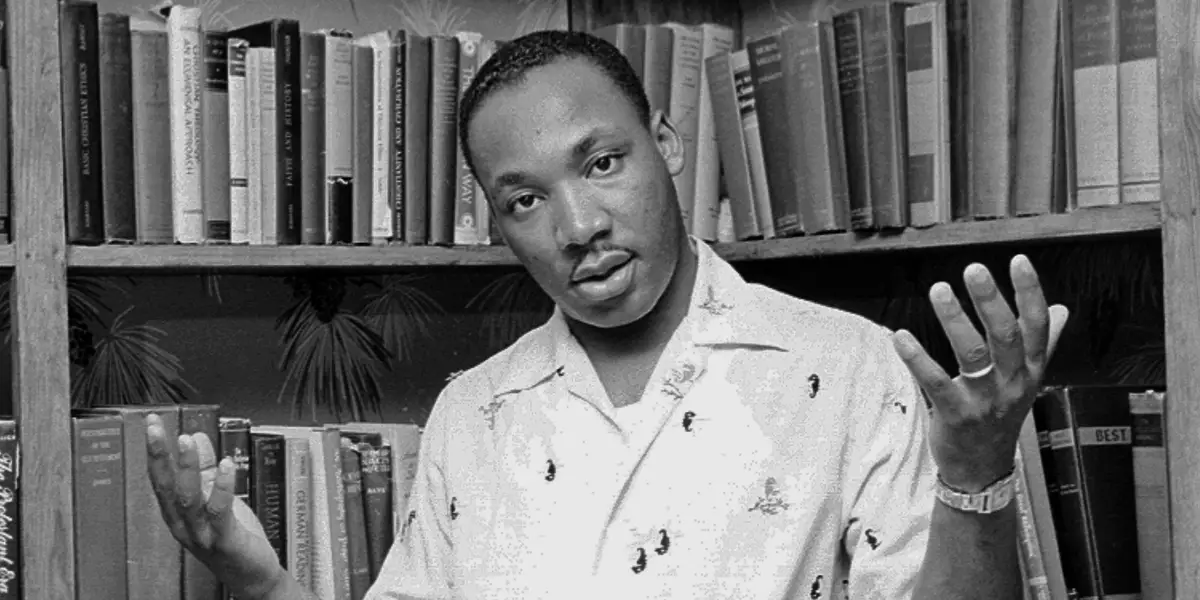
Nearly six decades ago, Martin Luther King Jr. advocated for a form of basic income not unlike what AI leaders today suggest could be the salve to mitigate AI’s impact on the workforce.
King wrote in his 1967 book, “Where Do We Go From Here?” that a guaranteed annual income could ultimately create “widespread economic security.”
“Personal conflicts between husband, wife, and children will diminish when the unjust measurement of human worth on a scale of dollars is eliminated,” he wrote.
A universal basic income is a recurring cash payment provided to all citizens of a population regardless of socioeconomic standing. A guaranteed basic income, on the other hand, refers to recurring cash payments made to specific citizens, such as those belonging to a certain socioeconomic group, for a set period of time.
The idea of a basic income has gained traction in recent years. Many US cities and counties have launched pilot programs, and some have made those programs permanent.
King’s book came three years after former President Lyndon B. Johnson signed the Civil Rights Act of 1964, making it illegal to discriminate based on race, color, sex, religion, or national origin. It was a time of widespread social unrest.
In the book, King sought to address ways for the community to move forward together, including addressing issues like poverty through a guaranteed annual income.
MLK Jr. wrote that a guaranteed income could help address social issues
Vernon Merritt III/Getty Images
In his book, King wrote that proposing such an idea in the early 1900s “would have been greeted with ridicule and denunciation as destructive of initiative and responsibility.”
In fact, little has changed a century later. Some opponents of basic income programs still argue that the cash will dissuade workers from working. Numerous studies, however, have shown that recipients don’t work less and often use the cash to find better work by taking classes and upskilling.
“At that time, economic status was considered the measure of the individual’s abilities and talents. And in the thinking of that day, the absence of worldly goods indicated a want of industrious habits and moral fiber,” King wrote. “We’ve come a long way in our understanding of human motivation and of the blind operation of our economic system.”
King wrote that shifts in the economy and discrimination can push people toward “constant or frequent unemployment against their will.”
As a result, he wrote that Americans must either create employment opportunities or create income so people can become active consumers. Unemployed citizens could take on jobs focused on boosting social good, King wrote.
A guaranteed income program, he wrote, could help address social ills and improve mental health.
“If our nation can spend thirty-five billion dollars a year to fight an unjust, evil war in Vietnam, and twenty billion dollars to put a man on the moon, it can spend billions of dollars to put God’s children on their own two feet right here on earth,” King wrote.
Where the idea of a basic income stands today
In the nearly 60 years since “Where Do We Go From Here?” was published, basic income programs have remained a divisive topic.
Technologists like Musk, Altman, and Bill Gates believe some form of basic income will be necessary when AI is so smart it can do most anyone’s jobs, including theirs.
A handful of politicians have also advocated for basic income programs. A group of lawmakers last year proposed a nationwide guaranteed basic income pilot program spanning three years and 10,000 Americans. The monthly payments would cover the cost of a 2-bedroom apartment.
“Increasing automation and advancing AI have the potential to expand human flourishing. However, the concentration of control of those technologies into the hands of a few billionaires may mean the eventual loss of the livelihoods of millions of Americans,” the lawmakers said in the press release.
Drew Angerer/Getty Images
Entrepreneur Andrew Yang also pushed for a universal basic income during his 2020 presidential campaign.
There remains, however, stiff resistance to the idea. Yang, despite promising $1,000 monthly checks to all adult Americans, dropped out early in the 2020 Democratic primaries after a poor showing.
Some conservative politicians have pushed back against basic income programs, arguing that they discourage work, are expensive to fund, and amount to socialism.
“Is money a birthright now? Do we just get born and get money from the government?” Republican Rep. John Gillette told Business Insider. “Because I think the Founding Fathers would say that is very contrary to our capitalist system and encouraging people to work.”
Despite such political backlash, cities and counties all over the country have experimented with pilot programs.
They often provide groups of low-income Americans with no-strings-attached monthly checks over a period of a year or more, and then report their findings.
In one recent example, the New York City Council launched a new guaranteed basic income program for young residents navigating homelessness in December.
It’s the kind of effort King would likely have supported.
“The dignity of the individual will flourish when the decisions concerning his life are in his own hands, when he has the assurance that his income is stable and certain, and when he knows that he has the means to seek self-improvement,” King wrote in his book.