
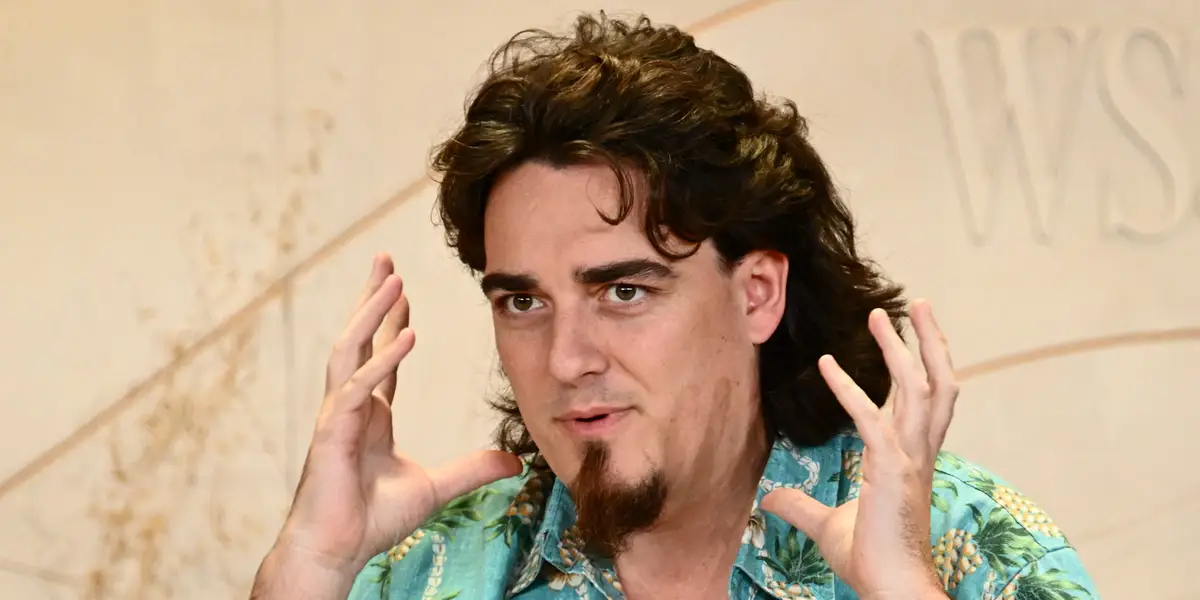
Erebor Bank, Palmer Luckey’s finance startup backed by some of the biggest names in tech, got one step closer to launching after it cleared another key federal hurdle this week.
The Federal Deposit Insurance Corp. approved Erebor on December 16 with conditions: The bank is subject to a strict capitalization requirement and must have investors ready to provide more funding if called upon.
The bank still requires final approval from the Office of the Comptroller of the Currency. It received preliminary approval from the OCC in October.
Todd Baker, a senior fellow at Columbia University and a consultant to fintech companies who isn’t involved with Erebor, said in an email that he would expect Erebor to get approval to open in early 2026.
Baker said in an email that one of the FDIC’s requirements — that the bank invoke a capital-call agreement that would require unnamed parties to chip in more cash if certain triggers occur — is “highly unusual” but “entirely appropriate given the expectation that the bank will be taking on significant risks associated with its tech and crypto-focused business plan.”
A lawyer listed in regulatory documents as an Erebor spokesperson didn’t reply to a comment request.
With funding from Joe Lonsdale and Peter Thiel, Erebor’s valuation was reported to be about $2 billion earlier this year. Regulatory documents showed that the bank has brought on talent from both Luckey’s tech circles as well as bank and bank-regulatory circles; earlier this month, a cryptocurrency event featured remarks by Erebor’s Suzanne Dannheim, a former Goldman Sachs employee.
Erebor’s founding team set out an ambitious timeline in its pitch to investors. The bank stressed founder Palmer Luckey’s “political network” — he has contributed large sums to President Donald Trump and other Republican organizations — as a key asset.
With this recent round of regulatory approval, it may come close to meeting its proposed timeline.
The FDIC approval process kicked off on July 28, which means it received a green light in roughly 5 months. The median application processed last year took over eight months.
Several other new bank applications emphasizing digital services are pending with the OCC and other regulators.
Michele Alt, a bank-licensing consultant, said Erebor’s quick turnaround at the FDIC is cause for celebration.
“The prior average was indicative of an unnecessarily slow-moving process and highly risk averse bureaucracy,” she said in an email to Business Insider. “I’m delighted to see more efficient processing of bank charter applications.”