
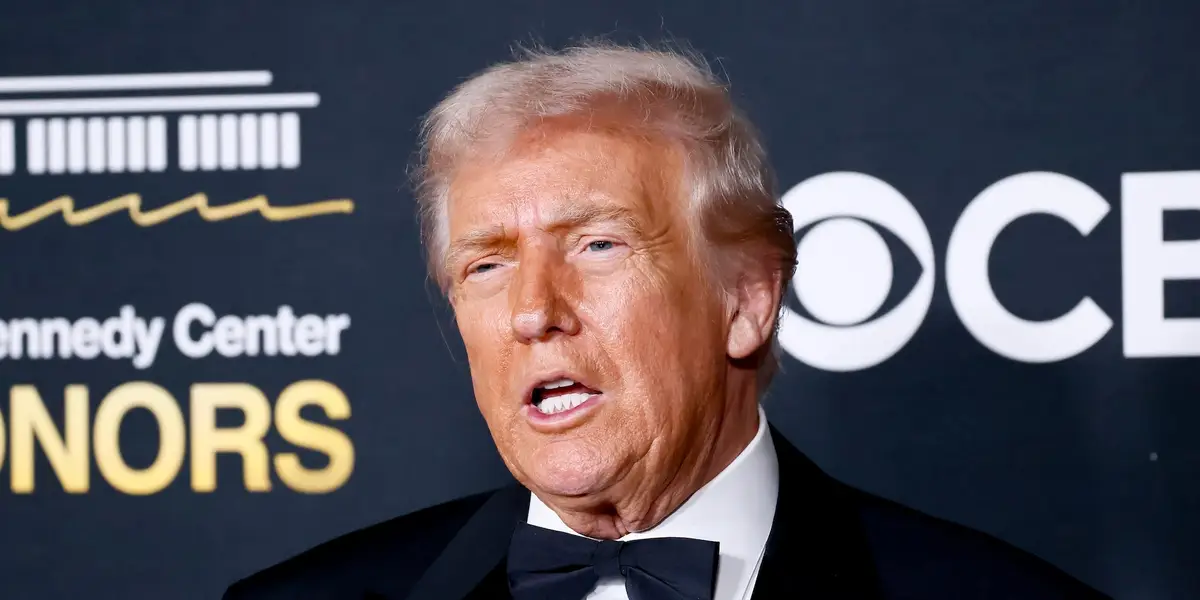
President Donald Trump signed an executive order on Thursday that limits states’ ability to regulate AI individually.
In the 2025 legislative session, more than 1,000 AI-related bills were proposed across all 50 states. The executive order signed by Trump aims at establishing a federal framework for regulating AI, rather than requiring tech companies to comply with various state laws.
“It’s a massive industry. We’re leading China. We’re leading everybody by a tremendous amount,” Trump said during the signing. “But one of the things that it has is you have to have a central source of approval. When they need approvals on things, they have to come to one source. They can’t go to California, New York, and various other places.”
Trump said on Monday, prior to the signing, that the order aimed to ensure there’s only one “One Rulebook” for AI in the US, stating that the technology would be “destroyed in its infancy” if companies had to comply with different regulations across all 50 states.
“We are beating ALL COUNTRIES at this point in the race, but that won’t last long if we are going to have 50 States, many of them bad actors, involved in RULES and the APPROVAL PROCESS,” Trump wrote on Truth Social. “You can’t expect a company to get 50 Approvals every time they want to do something. THAT WILL NEVER WORK!”
While the full text of the order had not yet been released at the time of publication, a draft executive order seen by Business Insider last month would have directed the Department of Justice to sue states for having “onerous” AI laws.
One thing is clear: Trump is likely to provoke backlash from members of his own party if he follows through with this, as many Republicans have been eager to protect states’ rights when it comes to AI.
The fault lines on this issue became clear over the summer, when Republicans tried to enact a 10-year moratorium on state-level AI regulations via the “Big Beautiful Bill.”
That provision was ultimately watered down over time before being stripped from the bill in a 99-1 vote in the Senate during the final hours before passage.
Trump recently called for Republicans to include a version of that provision in a must-pass annual defense bill, but that didn’t come to pass. On Sunday, lawmakers released the text of that bill, and it did not include the provision.
In the meantime, the Trump administration has sought other ways to prevent states from enacting AI laws. An “AI Action Plan” released by the White House in July calls for withholding federal funding from states with “burdensome” AI laws.