
The AI frenzy has renewed the autonomous driving frenzy.
As such, there has been a lot of noise and debate surrounding how companies can deploy self-driving vehicles in mass quantities.
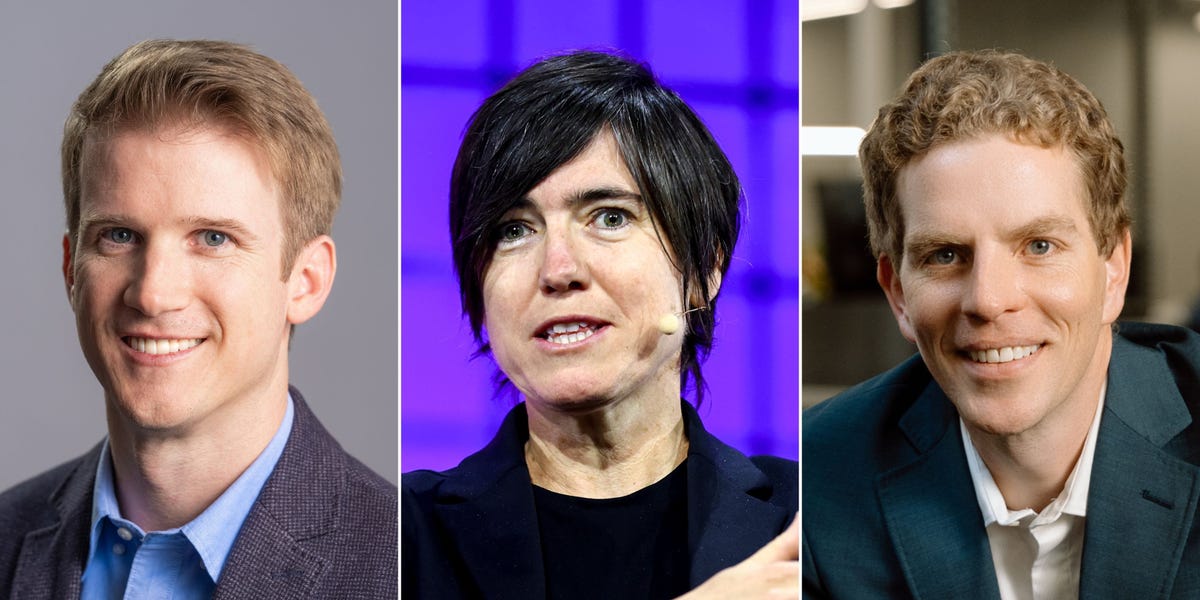
I asked three CEOs who have — or are on the cusp of — deploying driverless technology on the roads to chime in: Don Burnette, CEO and founder of Kodiak; Dave Ferguson, cofounder and co-CEO of Nuro; and Raquel Urtasun, founder and CEO of Waabi.
Collectively, these CEOs have spent close to five decades studying and working on autonomy.
Burnette’s Kodiak is an autonomous trucking company that currently has eight driverless trucks deployed in the Permian Basin, transporting loads of sand used for hydraulic fracking. Urtasun’s Waabi is another driverless trucking venture that plans to put fully autonomous trucks on the roads by the end of this year through a partnership with Volvo.
Ferguson’s Nuro will soon compete with Waymo once it deploys robotaxis with Uber in 2026.
In my conversations with them, I found that the CEOs challenged some of the oft-repeated ideas we have about autonomy, which have become something like accepted wisdom.
Here’s what I learned.
Technology is no longer the bottleneck
All three CEOs agree: Autonomous driving is proven technology. For them, whether it works or not is no longer subject to debate.
“Everyone focuses on the technology. I would say 99% of the focus is on technology,” Burnette, the Kodiak CEO, said. “But we’re really past the point where the technology is the question mark. Now, the question is path to profitability, gross margin positive, scale, those types of things.”
That’s not to say there isn’t room for improvement.
Ferguson, the Nuro co-CEO, said some technical challenges remain for scaling. He points to expanding driverless cars to all weather conditions, in particular, snow.
Related stories

Business Insider tells the innovative stories you want to know
Business Insider tells the innovative stories you want to know
“That’s something most of us in this space have held off on because there’s a huge opportunity and a lot of impact that we can have before needing to tackle snow,” he said. “However, we have confidence that we will be able to do it.”
Miles driven do not prove readiness
A common metric often shared by the self-driving industry is the number of autonomous miles driven. It’s usually presented as an indicator that the AI driver is advanced.
For Urtasun, it only shows a company’s age.
“It has nothing to do with the advancements of the technology,” she said. “The only thing that means is that you’ve been doing this for a long time.”
She points to the trucking industry: If the number of miles driven is used to make the case that driverless trucks are safer than humans, then the number of miles driven for any company in this space will never be sufficient.
The fatality rate for large truck drivers is 1.3 fatal crashes for every 100 million miles, according to the Insurance Institute for Highway Safety.
There have been no reported fatalities involving autonomous trucks; however, there have been a few recorded collisions. Either way, Urtasun said the sample pool of autonomously driven miles for trucks is too small to make a comparable safety case based on the number of miles driven.
“If you look at the number of miles a player in the self-driving trucking industry has driven the most, it’s single-digit millions,” Urtasun said. “That’s not the way to prove anything.”
The jump between supervised self-driving and fully self-driving is wide
There are a few companies that have highly capable, advanced assisted-driving technologies with the ambition of achieving full autonomy. Elon Musk’s Tesla is one of them. UK-based Wayve is another.
Ferguson doesn’t think it’s impossible for companies that started with ADAS to achieve what the Society of Automotive Engineers classifies as Level 4 autonomy, that is, fully autonomous driving without a driver behind the wheel. But he said the gap is wide.
“Even if the underlying AI, you feel, is quite similar between an L2 system and an L4 system, hardening that system and getting to the point where you’re comfortable having it drive around communities, where there are kids running out from the road, without any safeguard of having a human behind the wheel — that is a monumental leap,” Ferguson said.
He recalled the early days at Google’s self-driving project, which Ferguson joined in 2011. That’s about six years before Waymo began putting cars on the roads without a safety driver or human behind the wheel.
Ferguson said Google was conducting “disengaged-free rides” — or rides without an intervention by a safety driver — even before he joined the team. It took around half a decade afterward to get the first driverless mile.
“At Nuro, we’ve been doing fully driverless operations on public roads for over five years,” he said. “And there’s still work to be done to scale.”
The lidar-camera debate is a ‘distraction’
What sensors autonomous vehicles should have — lidar, radar, and cameras — has been the subject of spirited debate.
Part of it (or really most of it) has to do with Musk tripling down on a cameras-only autonomous solution. The Tesla CEO has called lidar an expensive “crutch.”
A spokesperson for Tesla did not respond to a request for comment.
Every company led by the three CEOs I spoke to uses lidar. But none of them frame their choice as a belief system in the way Musk does; advocating for a cameras-only approach because he believes cars should drive themselves the same way humans do, that is, with eyes.
For them, it boils down to cost and safety.
“It’s very much an ROI question,” Ferguson said.
“Even if you can have a system that can drive as well as a human with just today’s cameras — if it’s $500 extra to add a lidar and it’s going to increase the safety of that system significantly, why would you not do that?” he said.
As a researcher, Urtasun said she once believed in the cameras-only approach to autonomy. When she founded Waabi, she abandoned that position and adapted lidar because she saw a valid safety case for the sensors.
Burnette called the debate a “huge distraction.” The Kodiak CEO said the conversation takes away focus from the “real questions,” like “How do you make this economically viable? How do you do this cheaply enough? How do you build customer demand?”
“Ultimately, in the future, the sensor suite will change and evolve over time. Absolutely, it will,” he said. “So I think the question today is kind of irrelevant.”