
NEWYou can now listen to Fox News articles!
Twenty House Republicans joined Democrats to pass a bill reversing President Donald Trump’s executive order blocking most federal unions on Thursday.
The bill was led by Rep. Jared Golden, D-Maine, who got a vote on his measure by filing a discharge petition. It’s designed to force a vote on legislation over the wishes of leadership provided it gets support from a majority of House lawmakers.
The bill, called the Protect America’s Workforce Act, is aimed at repealing a March 2025 executive order by Trump.
The final vote passed 231 to 195, with all the “no” votes coming from Republicans.
6 HOUSE DEMOCRATS EXPLAIN BREAKING WITH PARTY TO END SHUTDOWN
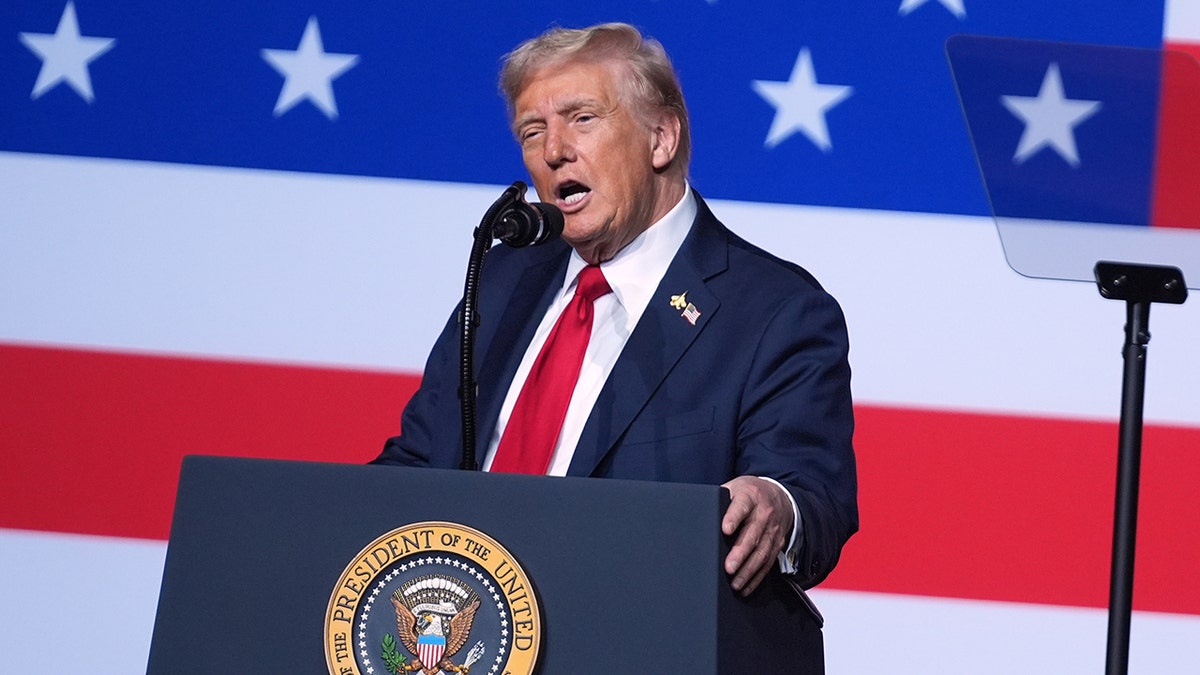
President Donald Trump speaks to a gathering of top U.S. military commanders at Marine Corps Base Quantico, Va., Sept. 30, 2025. (Evan Vucci/AP Photo)
Trump’s order blocked collective bargaining with unions at an array of federal agencies, including parts of the departments of Defense, State, Veterans Affairs, Justice and Energy.
It also affected workers at the departments of Homeland Security (DHS), Treasury, Health and Human Services (HHS), Interior and Agriculture.
During debate on the bill Thursday afternoon, House Oversight Committee Chairman James Comer, R-Ky., said undoing Trump’s executive order was akin to encouraging “more work-from-home policies for our federal employees,” which he said Americans voted against when they elected Trump and Republicans to lead in Washington.
“It is important to remember that public sector unions are fundamentally different from their private sector counterparts,” Comer also argued. “In fact, none other than Franklin Delano Roosevelt, a major champion of private sector unions, believed that public sector unions made no sense.”
“In the private sector, unions represent workers and sit across the bargaining table from representatives of business owners. However, federal unions are not negotiating with a profit-seeking corporation. They are negotiating with the public’s elected representatives.”
Rep. Brandon Gill, R-Texas, said, “Union bosses love this bill for one reason, and that’s because it protects their telework perks, it shields them from accountability, and gives them effective veto power over a duly elected president with a mandate to clean up a bloated federal bureaucracy.”
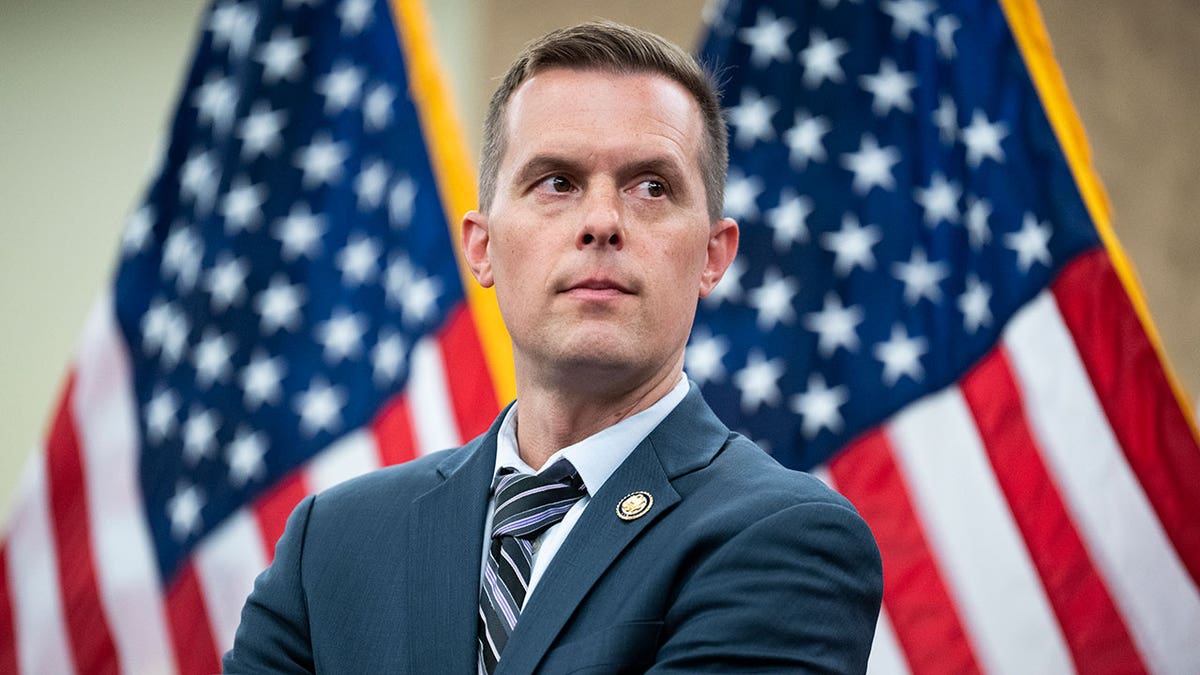
Rep. Jared Golden, D-Maine, attends a news conference in the Capitol Visitor Center in Washington, July 17, 2025. (Tom Williams/CQ-Roll Call, Inc via Getty Images)
House Minority Leader Hakeem Jeffries, D-N.Y., argued, “Collective bargaining is essentially the freedom to negotiate the best possible work environment.”
“I’m thankful for this bipartisan effort to restore collective bargaining rights for more than 1 million public servants that are part of our federal government,” Jeffries said.
Rep. Rob Bresnahan, R-Pa., who said his district was home to thousands of federal workers, argued that restoring collective bargaining rights for those workers is “a lifeline that ensures fair wages, safe workplaces, and the basic dignity that every worker deserves,” including corrections officers and people who work with veterans and seniors.
Rep. Mike Lawler, R-N.Y., also appeared on the House floor to debate in favor of the bill, arguing, “These are career public servants, many of them veterans who show up every single day to serve our country. Every American deserves a voice in the workplace, and that includes the people who keep our government running and open.”
Discharge petitions are rarely successful in the House but have been used more frequently this year as Republicans grapple with a razor-thin majority.
58 HOUSE DEMS VOTE AGAINST RESOLUTION HONORING ‘LIFE AND LEGACY’ OF CHARLIE KIRK
In Golden’s case, five House Republicans had signed onto the petition along with 213 Democrats — Reps. Brian Fitzpatrick, R-Pa., Bresnahan, Don Bacon, R-Neb., Lawler and Nick LaLota, R-N.Y.
CLICK HERE TO DOWNLOAD THE FOX NEWS APP
A vote to advance the bill won support from 13 Republicans on Wednesday night, setting it up for the Thursday vote.
That number grew early on Thursday afternoon during another procedural vote to set up final passage, with 22 Republicans voting to push the bill to its final step.
To be successful, however, the measure would still have to be taken up successfully in the Senate and get signed into law by Trump.

