
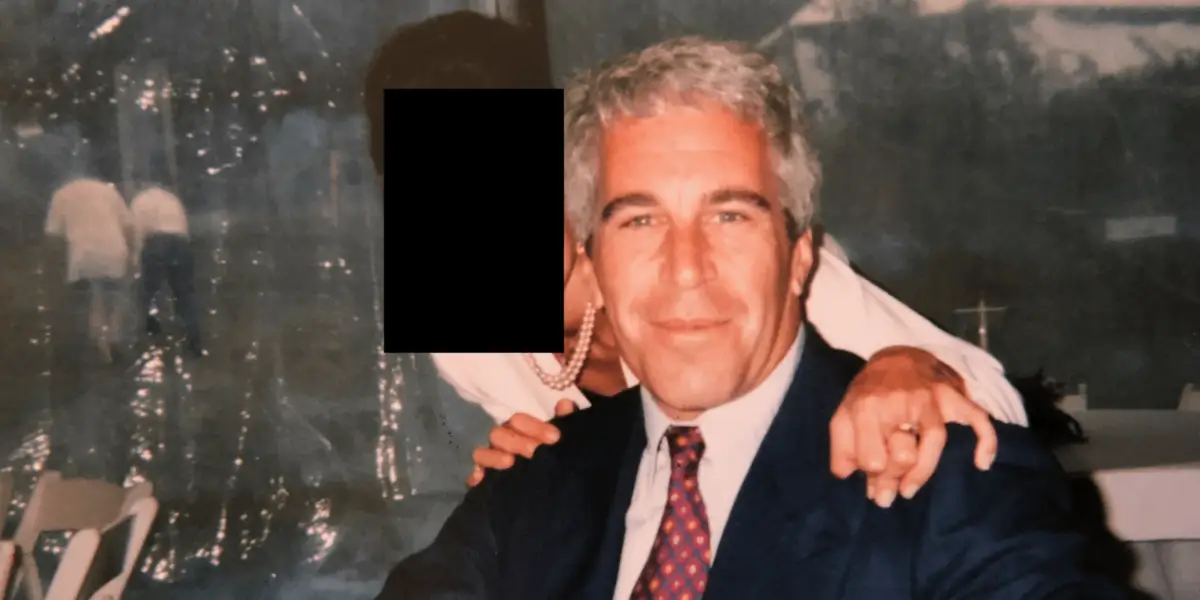
In Jeffrey Epstein’s last will and testament, he named two of his longtime associates — personal attorney Darren Indyke and accountant Richard Kahn — as co-executors of his $630 million estate.
He didn’t give them salaries for the job.
Since Epstein’s death in 2019 while awaiting trial on sex-trafficking charges, Indyke and Kahn have sold off his islands, mansions, and ranch; paid settlements to women who have accused him of sexual abuse; and dealt with other legal and financial headaches that the wealthy and well-connected pedophile left behind.
Neither has taken a salary from Epstein’s estate for that work, they told members of the House Oversight Committee in depositions earlier this month.
In their depositions, videos of which were made public Tuesday, each of them cited the lack of payment to explain why they believed Epstein bequeathed them millions.
“I am not getting paid from the estate,” Indyke said in his March 19 deposition.
Epstein bequeathed Indyke $50 million and Kahn $25 million. They are Epstein’s largest bequests behind Karyna Shuliak, Epstein’s fiancée at the time of his death, who would receive at least $100 million. Shuliak did not respond to Business Insider’s requests for comment last month about the bequests.
Epstein’s money still has a long road ahead
Indyke and Kahn may never see their millions from Epstein’s funds.
The money would be paid through an entity called The 1953 Trust, a “pour-over trust” that is set to receive all of the assets from Epstein’s estates that remain once its balances are settled.
In his March 11 deposition, Kahn estimated that handling the estate’s affairs would take a decade. Earlier this month, it settled a class-action lawsuit from Epstein victims for $35 million. The estate has several other pending lawsuits from other Epstein victims, Kahn said, with more potential claims.
The Epstein estate has about $127 million in assets, according to the most recent quarterly accounting publicly filed in the US Virgin Islands probate court. In addition to satisfying all claims against it, the estate can’t transfer its funds to The 1953 Trust until its investments are liquidated.
The estate has investments in two funds with Peter Thiel’s Valar Ventures that are together worth about $172 million, Indyke said. One is set to expire in 2026 but could be extended, he said.
Tom Williams/CQ-Roll Call, Inc via Getty Images
Another investment fund, with a different asset manager, was in the process of liquidation and is worth less than $10 million, Indyke said.
Indyke said Epstein has investments in a firm, but the questioner in the deposition changed subjects before he could say its valuation.
Kahn said in his deposition that the estate is burning through between $5 million and $10 million in legal fees and other expenses each year. Their top-flight attorneys include Daniel Weiner, the chair of Hughes Hubbard & Reed’s litigation practice, and Daniel Ruzumna, the cochair of the white-collar defense practice at Patterson Belknap, who represent Indyke and Kahn, respectively.
Even after the Epstein estate’s debts are paid, claims resolved, and investments liquidated, Shuliak would be the first in line to receive any money from The 1953 Trust, according to its terms, which were made public through the Justice Department’s Epstein files release.
Kahn told members of Congress that he didn’t expect to receive any money, except for the $250,000 he’ll get once the estate’s affairs are settled.
“I believe that it’s likely that I will receive zero from Epstein’s 1953 Trust based on the value of its assets and its remaining obligations,” he said.
Patrick McMullan/Patrick McMullan via Getty Images
Kahn said the $25 million Epstein left for him was approximately equal to the “executive fee” that the estate would be legally required to pay him if it were based in New York or Florida, rather than the US Virgin Islands, plus an additional few million dollars similar to what other longtime employees stood to receive.
Indyke, who said Epstein paid him a $2 million salary at the time of his death, says he continues to make money through real estate investments and through a separate legal practice. He’s working at the law firm of Tim Parlatore, a former personal attorney to President Donald Trump who is now an advisor to Defense Secretary Pete Hegseth.
Indyke said he didn’t know why Epstein bequeathed him $50 million — far more than any other employee.
“Why he did what he did and why he gave money to whom he gave money to — we never had conversations like that with Epstein,” Indyke said. “He always did what he did for his reasons, and he never discussed his reasons with me.”
Epstein planned to open his own bank
The depositions shed light on how much money Epstein was spending.
According to Kahn, each year Epstein racked up between $25 million and $30 million in household expenses, including payroll for staff, fuel and maintenance for his private jets, and upkeep for his five homes.
Because of that spending, neither Indyke nor Kahn viewed it as suspicious when Epstein withdrew a lot of cash, they said.
JPMorgan Chase cut off Epstein in 2013, in part because bank employees viewed his frequent withdrawals of thousands of dollars in cash with suspicion. In 2008, Epstein pleaded guilty to sex offenses in Florida that involved paying teenage girls hundreds of dollars in cash for massages that turned into sexual encounters.
Both Indyke and Kahn said that they weren’t personally aware of Epstein’s abuse of girls or women. Indyke said that, when he personally withdrew cash from Epstein’s accounts, he believed it would be used for household expenses.
DOJ’s Epstein files
Kahn, who oversaw the “petty cash” used for expenses from Epstein’s in-house accounting office, said he understood all of the cash payments to have a legitimate use. According to Kahn, Epstein had trouble getting a credit card after JPMorgan cut him off, and many vendors didn’t accept his American Express Card.
In 2013, Epstein moved his accounts to Deutsche Bank. But after Deutsche Bank cut him off in late 2018, following the publication of a Miami Herald article about his sexual abuse of girls, Epstein’s cash-flow problems became so vexing that he tried to open his own bank, Kahn said.
According to Kahn, Epstein held a dormant license in the US Virgin Islands that permitted him to open a bank. He had begun moving assets into the entity that would become the bank, Southern Country International, but the plans ground to a halt when Epstein was arrested again in 2019, Kahn said.
Kahn’s deposition revealed some other nuggets about Epstein’s financial life. He said he believed Epstein had a total of five clients who paid him for various financial services, which mostly consisted of estate-planning: L Brands founder Les Wexner, Apollo Global Management cofounder Leon Black, banker Ariane de Rothschild, former Microsoft executive Steven Sinofsky, and Highbridge Capital Management, the Glenn Dubin-owned hedge fund for which Epstein earned a consulting fee when it sold to JPMorgan Chase.
Kahn expressed ambivalence about being a co-executor of Epstein’s estate. He said the role caused “tremendous strife” for him and his family and caused irreparable damage to his own reputation.
He took the role, he said, because he believed he’d be able to fire Epstein’s household employees “in a respectful and kind fashion” and because his knowledge about Epstein’s assets would ensure his victims would be compensated for the harm they suffered.
“Other than compensating victims, I would never take on this role again, as co-executor,” Kahn said.