
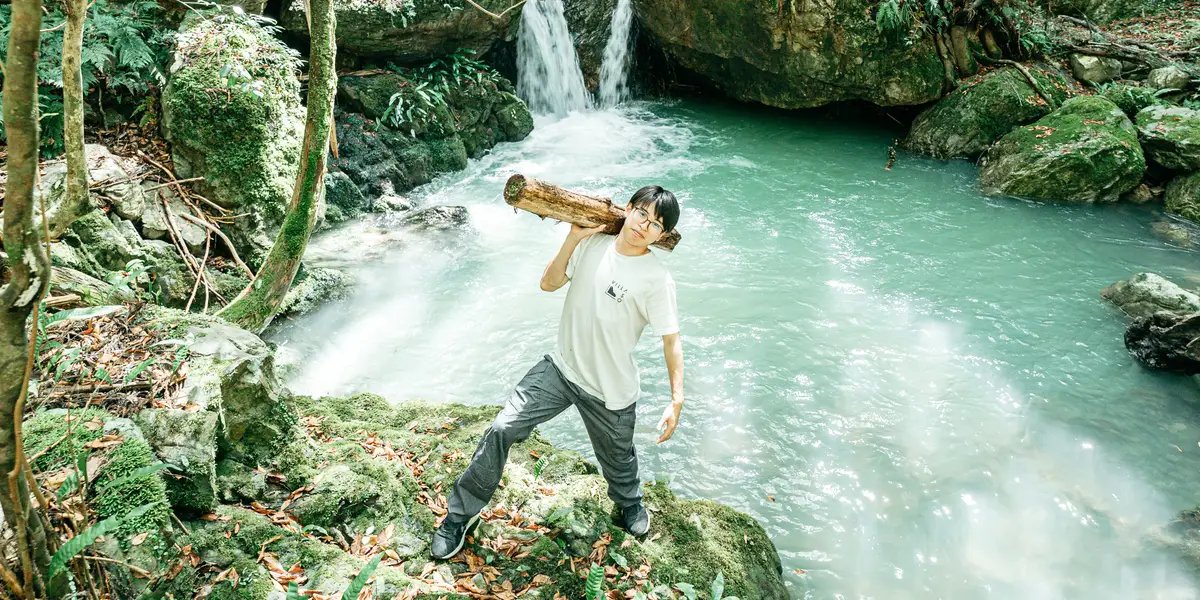
This as-told-to essay is based on a conversation with Koyo Murata, 25, the founder and operator of the Villa ASO guest house in Taiki, Mie Prefecture, Japan. His words have been edited for length and clarity.
I grew up in a quintessential countryside town in Japan with about 8,000 people. My elementary and middle schools had only about 100 students combined. There are even fewer children there now.
After school, we’d play in the river or organize soccer matches in the park. I felt lucky to be surrounded by rivers, mountains, and the sea.
Looking back, I realize my hometown, Taiki, was already part of a broader trend in Japan.
Rural towns like it are disappearing as people move to Tokyo. The capital is where you find the best jobs. Most kids who grow up in small towns like mine dream of making it to the big city.
I got to live that dream
I moved away at 19 to study electrical engineering at Mie University; after graduating, I spent three years in Tokyo working in construction management and later in independent sales.
My life was full, but I didn’t like how crowded the city could be. The greater Tokyo metropolitan area consists of nearly 37 million people. The trains were always packed, and people seemed more uptight than the friendly folks back home. Over time, I began to realize how valuable life in the countryside really was.
Provided by Koyo Murata
That’s why, in August 2025, I decided to move back home. In Japan, we call it a “U-Turn” — when someone leaves for the city and later returns to their hometown.
My parents and older brother now live in Tokyo and run their own businesses. I wanted to challenge myself by building a career of my own. At the same time, I wanted to find a way to share the beauty of the Mie countryside with the rest of the world.
The opportunity came when my parents called me one day to tell me that an abandoned community center in our town was about to be knocked down.
Provided by Koyo Murata
My father said, “This could be your chance to do something with it.”
That’s when I made my U-Turn and moved back to Taiki to start my own business and find a new use for the old building. I began a project to transform the former community center into Villa ASO, a guest house for visitors to the area.
Reviving the old
The former community center was a gathering place for local residents and also served as an evacuation assembly point. But it had been sitting unused for 10 years.
When I started my company, NexusTown, my idea was to renovate the building and turn it into a guest house that could accommodate groups of up to 8 people. I hope to bring more tourism to our shrinking town.
I borrowed about 10 million yen, or $62,000, from my brother’s company and received another 10 million through a government-backed startup loan from the Japan Finance Corporation.
Provided by Koyo Murata
Over three months, we hired a construction company to complete 70% of the work, but the remainder was DIY — just me and some friends. It was hard work; none of us had any experience in renovation. I also had to teach myself how to market the guest house, how to put it on Airbnb and Booking.com, and how to set the right prices.
In December, when it officially opened, and I saw our first guests enjoy their stay, I was glad I had done it.
Provided by Koyo Murata
Making it a success
In January, we were operating at 30%, in February 60%, and by March we’d reached 100%.
Our guests have included college students on spring break, multigenerational families, and working adults from all over the country. So far, we’ve had only one group of inbound tourists from abroad, but I hope we can host more overseas visitors in the future. The house is close to the Kumano Kodo, an ancient pilgrimage route that attracts hikers and travelers from around the world.
Provided by Koyo Murata
People who come to Villa ASO get to enjoy the same mountains, river, and sea that I did when I was growing up. They can slow down and enjoy the stars at night. They can meet the warm people of Mie.
In addition to the villa’s private sauna, there’s also a natural onsen, or hot spring, three minutes away by foot that I always recommend and which guests can visit for free.
The villa costs on average 28,900 to 33,700 Japanese yen, or $179 to $208, for two guests, with 5,000 yen added for additional party members.
Provided by Koyo Murata
In the future, I’m hoping to connect the villa experience with local restaurants and activities like seated meditation and harbor fishing.
My goal is to revitalize the town’s economy, and my work is never done. Along with managing the guest house, I also work for a talent-matching agency. I’m always thinking of new ways to renovate and improve the villa. I hope to recoup the investment in about three to four years.
Provided by Koyo Murata
The future of small-town Japan
The declining population of Taiki worries me. I don’t think the town will ever vanish entirely, but it may eventually be merged with another township. It makes me sad to think that could happen to the place where I was born.
If this project can help even one or two more people fall in love with my hometown, I’ll be happy.