
Airline industry officials have finally stopped panicking about the Federal Aviation Administration’s soon-to-launch artificial intelligence tool for managing flights and easing congestion in air travel, multiple people familiar with the situation told POLITICO.
Weeks of industry confusion over the FAA’s vague description of its much-hyped plans eased in the past week when agency officials told them they would use the tool in just a limited way at first, said the people, who were granted anonymity to discuss internal conversations.
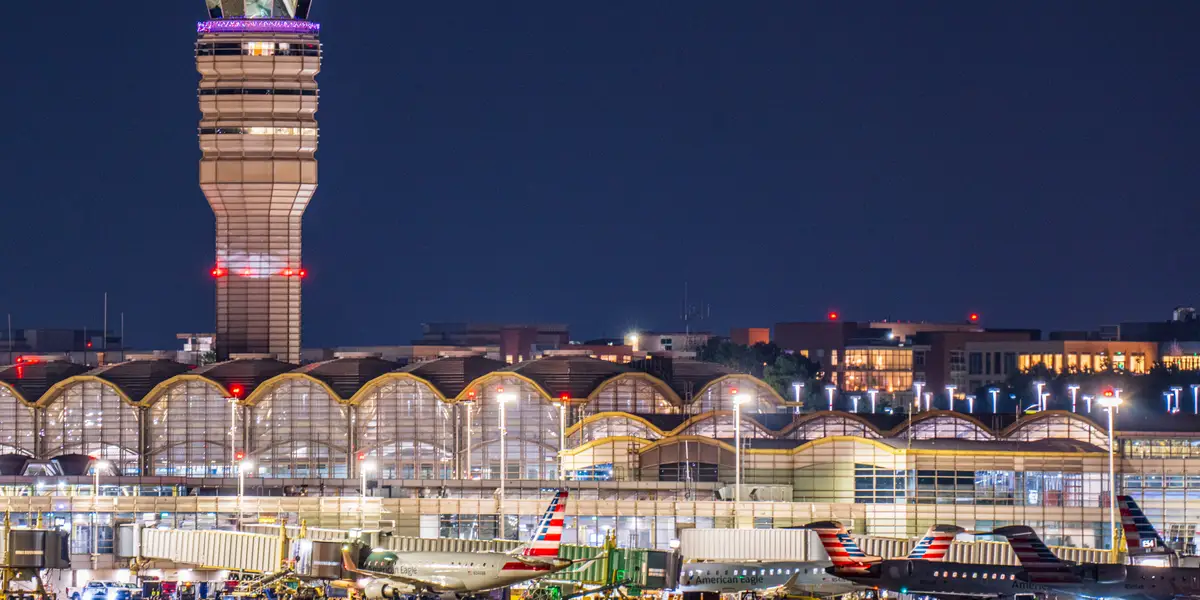
The tool, dubbed Strategic Management of Airspace Routing Trajectories, or SMART, is set to debut in coming days, offering advice to air traffic controllers managing flights for the three airports that serve the nation’s capital, according to two industry officials. The hope, according to FAA Administrator Bryan Bedford, is that after a 90-day testing period the tool will be rolled out on a wider scale.
Before the FAA eased the airlines officials’ concerns, one of their biggest worries was how extensively the AI would be integrated into day-to-day air traffic management, one of the industry people said. “I think that’s what people were freaking out about,” the person said.
Instead, according to another industry official, the SMART tool is not expected to create any new procedures for air traffic controllers or for the airlines. It will simply generate alternative route information that is passed through the FAA’s existing systems and procedures.
Transportation Secretary Sean Duffy has touted the tool, aimed at easing congestion in the skies. But three airline officials said the industry was bewildered for weeks about how the system would work, and that a sustained series of meetings with the FAA had left them with more questions than answers.
“We’ve been requesting and … talking to [FAA] and saying, ‘Let’s narrow the scope of this. Start, crawl, walk, run.’ And I think ultimately that’s what they decided to do,” said one airline industry official, who like the others, was granted anonymity to discuss internal conversations with the agency.
In a statement, FAA spokesperson Hannah Walden said the agency is “moving at record speed to modernize America’s National Airspace System, and SMART will fundamentally change the way we manage our skies.”
“Instead of waiting for congestion or weather to cause delays, SMART helps us see problems coming and act before they do,” she said.
Walden added that airlines have been “at the table” since the very beginning and FAA is “welcoming their feedback as we deploy SMART, which is why we’re taking a slow, methodical approach to the rollout.”
With Duffy and Bedford leading the charge, the FAA has fully embraced artificial intelligence to help tackle some of its persistent problems following a series of high-profile aviation disasters, highlighted by the deadly midair collision over Washington in January 2025 and a fatal March runway crash at LaGuardia Airport in New York. It’s part of a wider overhaul aimed at bolstering the nation’s rickety air traffic control system.
During the discussions, some airline officials fretted that the AI tool could inject chaos by prompting increases in flight cancellations and reschedulings in the name of preventing aviation bottlenecks and avoiding weather-related delays. That could become a costly headache for both airlines and passengers, though nobody involved alleged that the system would compromise safety.
As confusion continued to reign across the airline industry, the FAA convened several meetings last week, including one on Sept. 10 between the major airline CEOs and Bedford. It helped ease many of the airlines’ concerns, two of the airline officials said. According to a fourth airline official, granted anonymity to discuss the executives’ meeting, Bedford presented the FAA’s vision and strategy, and the CEOs’ reception to the plan was “exceptionally favorable and supportive of the effort.”
The CEOs of United Airlines, American Airlines, Delta Air Lines and Southwest Airlines were among those who attended the meeting, several airline and one government officials said.
Duffy hinted this week at the modest ambitions for the tool, which is part of a larger 12-year, $875 million contract effort to modernize air traffic control.
“We have to do a slow roll into the airspace,” he said at a Tuesday talk at the National Artificial Intelligence Association in Washington. And in a recent interview with POLITICO, Bedford said the rollout’s roughly 90-day first phase will focus mainly on testing the system and building airlines’ confidence in its predictions.
How SMART?
Bedford said Tuesday that the FAA will work with airlines to examine specific flights, compare flight paths and assess how accurately SMART’s predictive analytics perform.
SMART will focus, in part, on forecasting where weather systems are headed rather than simply assessing where they are in real time, Bedford said.
“That is a big difference between whether we keep airspace closed too long,” he said. “So how can we make more space available safely, based on better data and better decision-making tools.”
He said the 90-day testing window will give the agency time to determine whether the system performs as expected and whether airlines can trust its recommendations.
While the industry has generally acknowledged the potential of predictive analytics to help manage disruptions, airline industry officials who spoke to POLITICO in recent weeks have also cast doubt on the notion that the technology is ready to immediately transform flight operations. That raises questions about how much the system can actually accomplish at launch and how it will fit into existing airline and FAA processes.
The technology is being developed by Air Space Intelligence, a Boston-based software company that won the contract in June. The company did not respond to a request for comment Thursday, but previously referred questions back to DOT and FAA.
To their understanding, the official who described FAA’s effort to now “narrow the scope” said that the new tool won’t create any new procedures for air traffic controllers. SMART will identify alternative routes, such as in cases of bad weather, and send those recommendations from the “SMART center” — headquartered at the Transportation Department — to an established command center through the FAA’s existing processes.
From there, the information will reach controllers though systems they already use to receive routing information. The key difference is that SMART will generate additional routing options. That could be particularly useful when traffic is backed up at airports, giving the FAA more options to move aircraft out of those bottlenecks and reduce disruptions for passengers, the official said.
That the system will not be integrated in day-to-day air traffic management is “a big relief,” added another airline industry official, who said airlines were approaching SMART with some trepidation over how the system would integrate with their own scheduling and operations systems.
Down to the wire
In the weeks leading up to the rollout, however, these airline officials familiar with the project weren’t completely convinced the FAA had all the details figured out.
The industry officials said at the time they were asking questions such as whether the air traffic controllers themselves would use the AI, whether the software’s developer would be in charge of feeding routing information to both airlines and controllers, and whether airlines needed to train their employees to understand the technology. They also weren’t clear if the airlines could opt out of using the AI system.
Even now, the three airline industry officials said the FAA has yet to answer some of those questions in granular detail, despite the airlines holding almost weekly group meetings with the agency to discuss implementation over the course of three months.
Bedford’s in-person meeting with airline CEOs on Sept. 10 helped quell some of the industry’s concerns about the rollout and offered additional clarity on how the FAA envisions the technology working.
‘When done thoughtfully…’
Top airline officials have publicly expressed measured optimism about the initiative.
United Airlines CEO Scott Kirby said in a statement on Sept. 9 that SMART could significantly reduce delays and cancellations during bad weather.
“If it works as we think it can, it will do more to reduce delays and cancellations than anything that’s happened in decades,” he said.
Similarly, American Airlines CEO Robert Isom said in a statement that he applauded Duffy and Bedford “for their efforts to leverage technology to make the airspace more efficient and safer.” He said the airline is working closely with the FAA on SMART, “which when done thoughtfully and methodically will offer enhanced benefit to the traveling public.”
Airlines for America, the trade group for the many of the major carriers in the airline industry, similarly touted SMART as a potentially transformative tool, saying its ability to strengthen safety, increase capacity and improve efficiency could reduce delays and cancellations nationwide.
“We’re just in the initial stages, but it’s one of the most exciting and bold initiatives taken on by the FAA in decades,” a statement from the group said.
In a statement, Delta Air Lines also said it “fully supports” the FAA’s modernization effort, including the SMART program, and said it appreciated the FAA’s “collaborative approach,” adding that the airline is “actively engaged in the development process.”
This story originally appeared on POLITICO and is courtesy of the Axel Springer Global Reporters Network, which harnesses the resources of the company’s newsrooms to publish ambitious scoops, investigations, interviews, opinion pieces, and analysis. It allows journalists — including those from POLITICO, Business Insider, WELT, BILD, Onet, and Fakt — to collaborate on major stories for an international audience of hundreds of millions across platforms.