
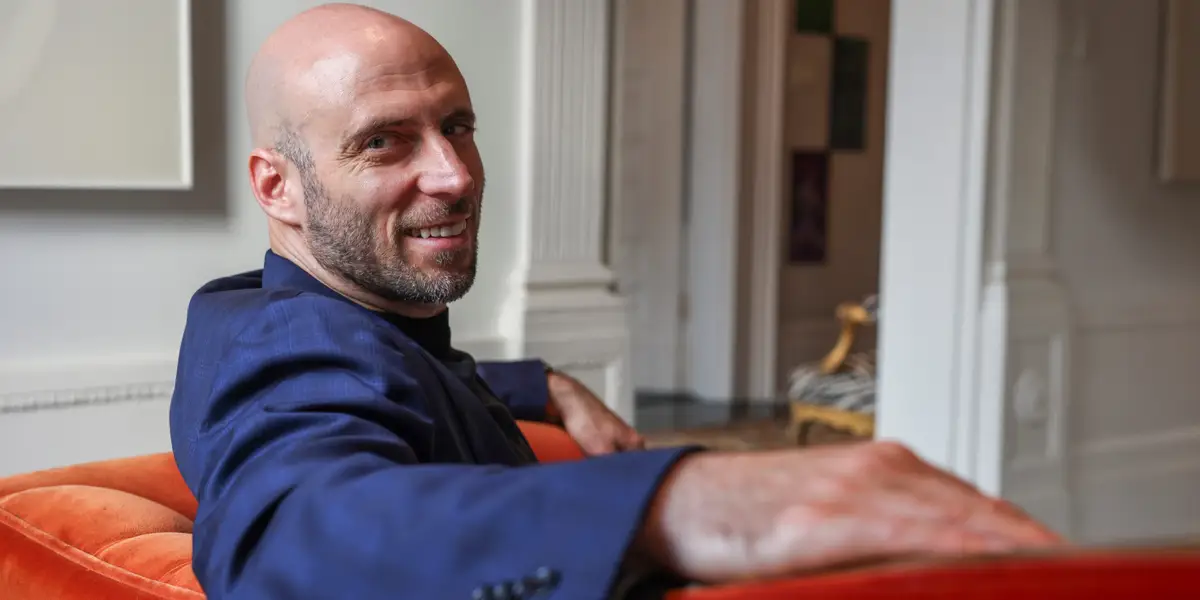
This as-told-to essay is based on a conversation with Lance Zaal, president of US Ghost Adventures. Zaal was the subject of a recent Business Insider story. It has been edited for length and clarity.
When I heard that the Lizzie Borden House was for sale in 2021, I was immediately fascinated. Most people know the famous nursery rhyme: “Lizzie Borden took an axe…”
But few know the history of the home where the crime occurred. They don’t realize that the 1892 case was one of the earliest and most widespread use of crime scene photos. Or that Lizzie was tried by an all-male jury and quickly acquitted, with the case still unsolved.
When I took over the property, those weren’t the scariest details. What was more terrifying was the state of the place. There were rotten doors I could put my hands through, and a toxic workplace full of employees who couldn’t stand each other.
Too often, historic properties are treated as cash cows and not reinvested in. I take the opposite approach: I believe these buildings with difficult and uncomfortable histories need to be cared for and accessible to everyone.
I started with food tours before buying haunted properties
I never wanted to become an entrepreneur. When I lost my job in tech consulting, I planned to get another, but as I did that, I explored creating my own business: food tours. By 2014, I was making more money running tours than I had as a consultant.
Over time, I realized that haunted tours had strong demand and started incorporating them into my company in various cities. Buying the Borden House for $1.6 million was a natural progression for my business — a way to venture into hospitality and have a brick-and-mortar space.
Courtesy of Lance Zaal
Since then, I’ve expanded into other properties with sordid pasts. My company owns the Villisca Axe Murders House — the Iowa home where eight people were killed in an unsolved attack — and the Welty House, the site of fierce fighting during the Battle of Gettysburg. Since 2024, I’ve lived in the LaLaurie Mansion, supposedly New Orleans’ most haunted property.
Highlighting history, not just haunts, is good for business
It’s important to me that these historic places be financially strong and stable. It’s good business to broaden their appeal and not let interest from ghost hunters drown out that of history buffs or the general public.
Because of that, I’ve highlighted the history in each place. At the Borden house, visitors learn about the victims and the criminal justice system at the turn of the 20th century. At the LaLaurie Mansion, people learn not only about the abuse enslaved people suffered at the lands of Delphine LaLaurie, but also the fact that the home was later the site of one of the first desegregated schools in the South.
These are stories of American history and culture. They don’t belong just to ghost hunters or paranormal chasers — though we welcome those visitors. They belong to all of us.
I’ve experienced things I can’t explain
I try to keep an open mind when it comes to the paranormal. I’ve experienced odd things I can’t explain. It’s rare, but it’s happened.
Once, when I was in 8th grade, my mother and I were housesitting. We saw a door handle rattle, then turn, but no one was there. It was frightening until I researched the home’s history and the people who had lived there. Gaining knowledge made me feel in control of my fear.
In my current house, the LaLaurie Mansion, there are carved angels in the crown molding of one room. They’ve been there since 1832. When I think about all they’ve seen, the house feels sacred to me.
Courtesy of Lance Zaal
Sometimes, hauntings are used to bury the very real, horrible history of a place. I want to turn that around, using lore and legend to bring the history of America to the forefront. It’s not a true story unless you tell the full story. Taking an honest look at our past can help us understand how we got to where we are today.