
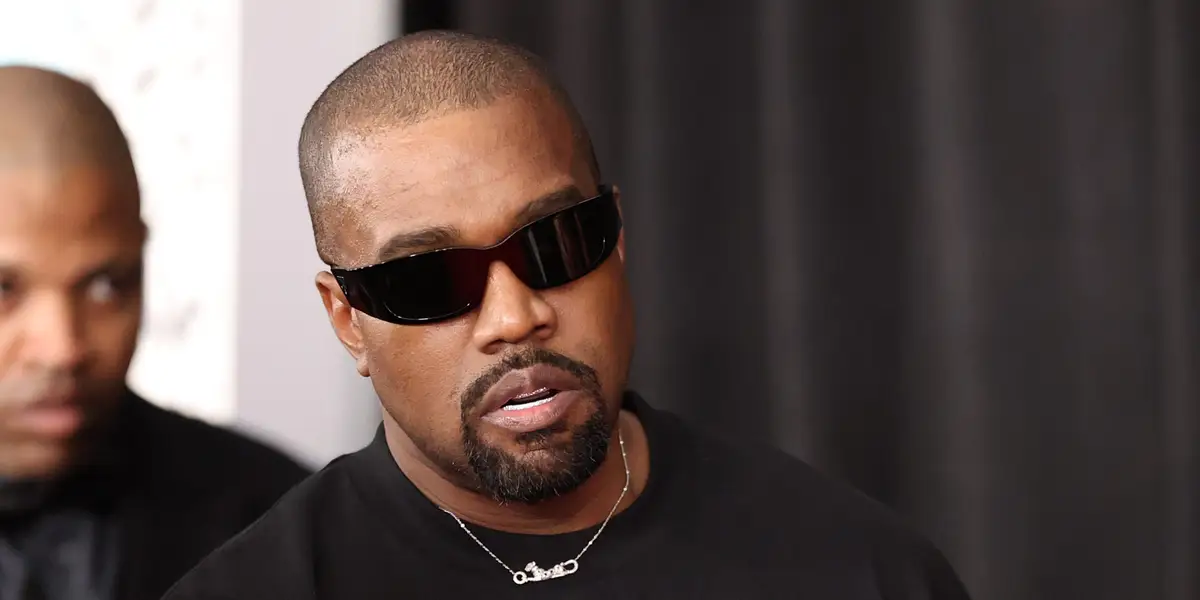
Ye, formerly known as Kanye West, has been blocked from traveling to the UK in light of his history with antisemitism.
The UK government told the BBC on Monday that Ye applied for an Electronic Travel Authorization (ETA) to travel to the UK but was denied on the grounds that his presence “would not be conducive to the public good.”
Ye had been scheduled to headline all three days of London’s Wireless Festival in July, which has since been canceled.
“As a result of the Home Office banning YE from entering the United Kingdom, Wireless Festival has been forced to cancel,” the event’s website reads as of Tuesday morning. “All ticket holders will receive an automatic full refund.”
The government’s decision comes after several of the festival’s sponsors, including Pepsi and Anheuser-Busch InBev, withdrew from the event. Although neither brand explicitly cited Ye as the reason for their withdrawal, UK Prime Minister Keir Starmer had recently spoken out against Ye’s scheduled performances.
“It is deeply concerning Kanye West has been booked to perform at Wireless despite his previous antisemitic remarks and celebration of Nazism,” Starmer said in a statement to the British newspaper The Sun.
After the UK government confirmed that Ye would not be allowed to enter the country, Starmer cosigned the decision in a post on X.
“Kanye West should never have been invited to headline Wireless,” Starmer wrote. “This government stands firmly with the Jewish community, and we will not stop in our fight to confront and defeat the poison of antisemitism. We will always take the action necessary to protect the public and uphold our values.”
Ye did not respond to a request for comment.
Over the past decade, Ye has regularly been criticized for offensive and bigoted remarks, especially those described as antisemitic. In 2022, he peddled conspiracy theories about Jewish people controlling the entertainment industry and openly praised Adolf Hitler. Although Ye lost numerous business deals and brand partnerships in the fallout — reportedly losing his billionaire status as a result — he doubled down in 2025, when he wrote “I am a Nazi” on X and released a song titled “Heil Hitler.”
More recently, Ye took out a full-page ad in The Wall Street Journal for a public apology, linking his outbursts to a 2002 car accident and what he described as an undiagnosed brain injury. He also said his bipolar disorder caused him to lose touch with reality.
“In that fractured state, I gravitated toward the most destructive symbol I could find, the swastika, and even sold T-shirts bearing it,” Ye wrote. “I regret and am deeply mortified by my actions in that state, and am committed to accountability, treatment, and meaningful change. It does not excuse what I did though. I am not a Nazi or an antisemite. I love Jewish people.”
The apology was published shortly before Ye’s newest album was expected to be released. After multiple delays, “Bully” arrived on streaming platforms in late March.
Ye returned to the stage last week for a two-night stint at SoFi Stadium in Los Angeles. Both shows were sold out and reportedly grossed $33 million, proving that despite the UK government’s objections, there is still an appetite for Ye’s volatility among his loyal fans.